






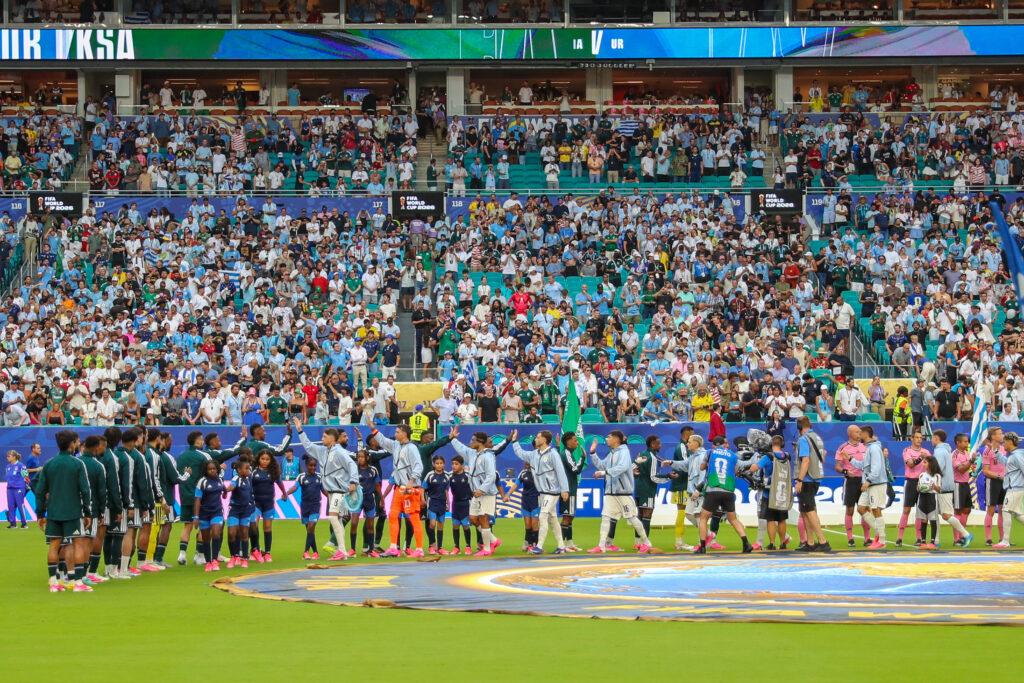
Round three of the 2026 World Cup group stage produced four concurrent 0-0 results—Panama held England to a draw, Croatia and Ghana played out a goalless stalemate, Colombia and Portugal shared the points, and DR Congo drew with Uzbekistan. There were no stoppage-time winners and no frantic late comebacks; all four matches yielded two points apiece, and the standings tightened on the same night. After more than nine decades of World Cup football, this blank page has finally been filled in.
Four 0-0s Reshape Qualification Math in One Night
Information obtained by our correspondents on the ground shows that all four of these matches were scheduled to kick off on June 28 local time, each at a critical juncture in the final round of the group stage. Panama 0-0 England, Croatia 0-0 Ghana, Colombia 0-0 Portugal, DR Congo 0-0 Uzbekistan—on paper the scorelines look unremarkable, but in a World Cup context they are anything but ordinary: these were the only four fixtures on the day’s schedule, and every one of them ended in a draw.
For coaching staffs, results like these mean the qualification picture shifts quickly from “must win all three points” to “first look at goal difference and head-to-head records.” What fans tend to remember is the suffocating tension of the final ten minutes: the side ahead reluctant to push forward, the side behind wary of conceding on the counter, and every match feeling more like a chess game than a sprint before the final whistle. Later the same round, Jordan vs Argentina and Algeria vs Austria also failed to produce a winner, finishing 0-0 as well, pushing the day’s draw rate to a rare high.
Why Did It Take Ninety Years of World Cup History for This Page to Be Written?
A draw on its own is nothing unusual. Across World Cup history, roughly one in four matches ends all square, but those results are usually scattered across different dates and groups—rarely lined up neatly on a schedule with just four fixtures. In 1958, four of eight matches on a single day finished level, yet the other four still produced winners, falling one step short of a full sweep of four draws. 1986 came closer still: with three matches on the day, all three ended in draws—the last time before now that an entire multi-match slate produced not a single winner, in an era when a win was worth only two points and cautious, risk-averse football was easier to justify on the points ledger.
The three-points-for-a-win system debuted at the 1994 World Cup, designed to encourage attacking play and reduce negative stalemates, yet that tournament still saw a heavy draw day with three level scorelines from four matches—the closest precedent to this record before tonight. In the more than three decades since, World Cup expansion, format tweaks, and denser scheduling have made four-game days commonplace, but the “four draws from four” combination never materialized—until this night in 2026.
How the schedule and format “engineered” this record
From a selection and competitive standpoint, four simultaneous kick-offs mean sides from different groups face comparable psychological pressure in the same window: some protecting qualification, some chasing the group summit, others doing the math on goal difference to sneak through. When four group pictures lock up at once, tactics easily converge on “avoid defeat first”—not because one team suddenly turned conservative, but because the points structure at a given stage pushes the risk-reward ratio toward equilibrium.
Under the two-point era of 1986, a draw was acceptable damage limitation for both camps; the three-point system after 1994 raised the premium on winning without eliminating draws, especially in a final group round where the spreadsheet matters more than the scoreboard. This cluster of four draws in 2026 is, in a sense, an extreme statistical outcome finally landing after years of format evolution colliding with calendar design.
Draw wave redraws the groups: who benefits, who gets held back
Four draws on the night meant all eight teams involved walked away with just one point each, and any plan to pull clear with a single win went out the window. For the seeds, a 0-0 is not always a disaster, but it does shrink the margin for error — England held by Panama and Portugal failing to beat Colombia both make the final round or the subsequent tiebreaker math far trickier. For mid-table sides, one point can be a lifeline or merely a deferral of the decisive clash; much depends on whether their group rivals also dropped points elsewhere.
Viewed through the lens of matching training output to match-day demands, nights like this expose not the failure of any single system but the way result-driven setups converge under pressure: energy is rationed toward defending, set pieces become one of the few ways to break deadlock, and substitutions are geared more toward preserving shape than gambling on tempo. Four goalless games does not mean the attacks were entirely flat — more often, in the decisive ten-minute spells, both sides concluded that conceding one more carried a heavier price than scoring one more.
Our view: a small record that rolls into the final round
The line in the history books may look minor, but its weight on the group tables is anything but. Four stalemates will not crown a champion on their own, yet they will shift the mindset heading into the last round — when several teams are locked together on goal difference, one narrow win or loss can set off a chain reaction. For anyone tracking World Cup squad selection and tactical trends, the sharper question is whether future match days will reproduce this pattern of several closely matched games turning conservative at the same time, or whether sides, once the picture clears, will push the attacking line higher again.
What's next and what to watch
The group stage rolls on and every team has limited games left. With the gaps flattened on this night, any result other than a draw in the final round could shake the standings violently. Keep an eye on whether head-to-head records and goal-difference margins become the decisive separators in the next round; whether the seeds that were held will crank up the press in the finale; and whether coaches on similar multi-kickoff nights stick with safety-first plans or are forced to chase risk.
For fans, there were no winners on this night — but the World Cup narrative grew twistier and more precarious because of it. The record is in the book; from here, every updated table will be written on top of those four 0-0s.