











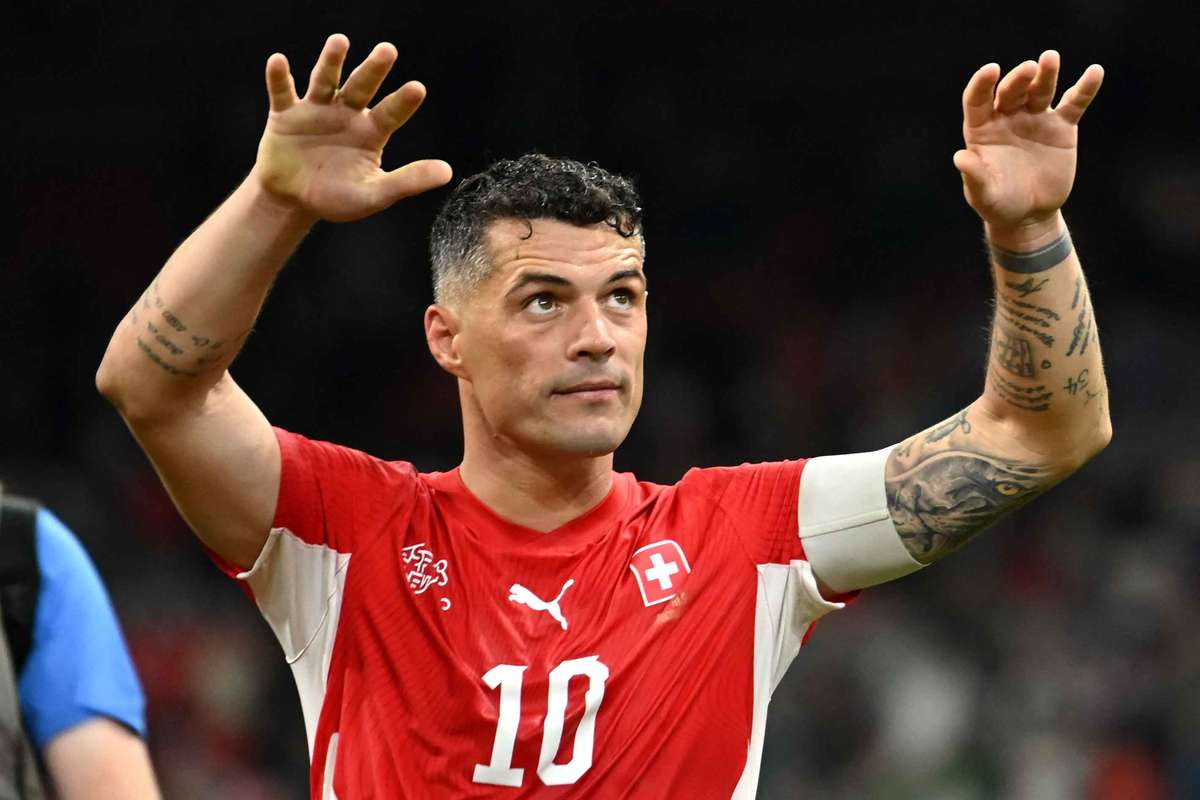
Granit Xhaka arrived at this World Cup already carrying the weight of a long international career. By surpassing 150 appearances in Switzerland's 2-0 round-of-32 win over Algeria, he moved past Xherdan Shaqiri as the most-capped player in Switzerland history. For a midfielder who turns 34 during the tournament, that milestone is as much a statement about physical resilience as it is about loyalty to the national team.
The numbers from the group stage and knockout rounds underline why Murat Yakin continues to build his midfield around Xhaka. With 63 line-breaking passes, the captain shares the tournament lead in that category with Spain's Rodri. That single statistic captures what Switzerland asks of him match after match: absorb pressure, find the forward pass, and unlock runners such as Breel Embolo, Dan Ndoye, Ruben Vargas, and others when defenses sit compact.
A workload that rarely eases
International tournaments punish midfielders who cannot recover quickly. Xhaka has played through three group matches and a knockout fixture in a short window, often operating as the deepest anchor in Yakin's system. Switzerland opened the World Cup with a frustrating 0-0 draw against Qatar, a result that raised questions about rhythm and cohesion rather than outright fatigue. The response came in a 4-1 victory over Bosnia-Herzegovina, followed by the controlled 2-0 elimination of Algeria.
From a fitness perspective, the pattern matters. Xhaka is not merely present; he is repeatedly asked to cover ground between both boxes, organize defensive transitions, and still deliver progressive passes under fatigue. Algeria, ranked 28th in the latest FIFA standings, held 55% possession in their World Cup defeat but managed only two shots on target. Switzerland's ability to stay structurally disciplined while Xhaka managed tempo was central to keeping energy levels manageable across 90 minutes.
History, criticism, and the mental load
Since his debut in June 2011, Xhaka has rarely been a neutral figure. His direct manner on and off the pitch has drawn sharp reactions at home, particularly after the Qatar opener when some domestic coverage questioned the atmosphere around the captain. Xhaka acknowledged that such scrutiny can be partly self-inflicted, yet he also framed his record as something Swiss supporters should take pride in.
That tension between public debate and on-field responsibility carries a physical cost as well. Players who absorb constant external noise often expend additional energy managing concentration and emotional balance. Xhaka has been candid that criticism does not simply bounce off him, and that honesty matters when assessing whether a high-minute captain can sustain peak output deep into a knockout campaign.
His goal celebration against Bosnia-Herzegovina, aimed at critics, was a reminder that motivation and irritation can coexist in the same athlete. For Yakin, the practical question is simpler: when Xhaka is locked in, Switzerland's structure looks stable. When he is stretched thin mentally or physically, the entire team's spacing and rest-defense can wobble.
What the next test may require
With Switzerland ranked 19th globally and riding momentum after Algeria, attention now turns to the next fixture on the calendar. Xhaka could extend his caps record further while also chasing Switzerland's all-time mark for World Cup appearances alongside Ricardo Rodriguez. Both targets depend on availability, and availability at this stage is rarely guaranteed without careful recovery.
Rodri's parallel excellence for Spain, the world's second-ranked side, offers a useful benchmark. Spain's midfield control in the tournament has been built on similar progressive passing and positional discipline. The comparison is flattering for Xhaka, but it also highlights the standard Switzerland expects from its captain in the remaining rounds.
Qatar's own World Cup run, including scoreless draws in recent qualifying-style fixtures, showed how easily a tournament can stall without a decisive midfield presence. Switzerland avoided that trap after the opener, largely because Xhaka kept finding vertical passes when space appeared.
Yakin's indispensable leader
What once looked like a contested role under Yakin has hardened into dependence. The coach's right-hand man is no longer a debate topic inside the camp; he is the reference point for tempo, communication, and competitive edge. At 150 caps and counting, Xhaka represents Switzerland's present and its recent past in the same jersey.
Whether that leadership can hold through another demanding knockout remains the central storyline. The record books already belong to him. The remaining question is whether his body and focus can carry Switzerland through the hardest weeks of the World Cup without the strain showing in the one place it cannot be hidden: the pitch.