












Group H opener: Ranking gap and a 1-1 draw
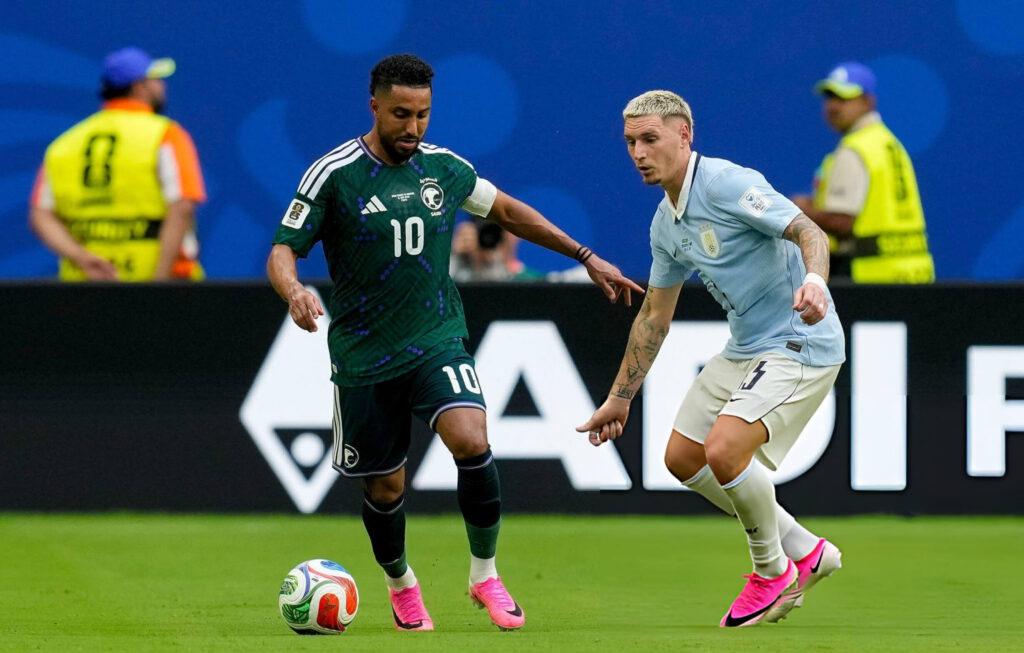
In the opening round of Group H at the 2026 FIFA World Cup, Saudi Arabia and Uruguay played to a 1-1 draw at Hard Rock Stadium in Miami Gardens, with more than 62,000 fans in attendance. According to FIFA’s latest rankings, Uruguay sit 17th and Saudi Arabia 61st—a clear gap on paper. Yet the Green Falcons struck first through more effective set-piece attacking, while two-time World Cup champions Uruguay fought back with sustained pressure after half-time tactical changes. Earlier the same day, Spain and Cape Verde also finished 0-0 in the group, leaving all four Group H sides level on one point after the opening round and the qualification picture completely wide open.
Set pieces rewrite the first half: One corner can be lethal
Under the 48-minute World Cup group stage format, the side that scores first often gains a psychological edge in the battle for points. In the 41st minute, Musab Al-Juwayr’s corner caused chaos in the box. Mohammad Kanoo’s header was parried by Fernando Muslera, and centre-back Abdulrahman Al-Amri pounced on the second ball to slot home. The goal meant more than just the scoreline—it ended Saudi Arabia’s run of failing to open the scoring in 16 consecutive World Cup matches, dating back to their 1-0 win over Belgium in 1994. For Giorgos Donis’s side, set-piece execution is the key weapon to offset their overall disadvantage in possession.
Within five minutes of kickoff, Maximiliano Araujo tested Mohammed Al-Owais with a long-range shot from the edge of the box; Salem Al-Dawsari cut inside and fired wide, and Federico Valverde’s two headers were also kept out by the Saudi goalkeeper. Abdulrahman Al-Amri was booked before halftime. Both sides had similar shot counts in the first half, but Saudi Arabia edged them on shots on target and went in at the break leading 1-0.
Why Did 65% Possession Fail to Deliver Three Points?
After the restart, Marcelo Bielsa made two changes at halftime, and Uruguay’s 4-2-3-1 shape took full control of the ball. Match statistics from this site’s database show Uruguay with 65% possession, 24 shots and 9 on target, 571 passes and an 88% completion rate; Saudi Arabia managed just 7 shots with 3 on target, 35% possession and 316 passes. The numbers were one-sided, yet the scoreline stayed at 0-1 for a long time — a classic World Cup group-stage script: the underdog relies on discipline and the goalkeeper, while the stronger side waits for quantity to turn into quality.
Al-Owais became Saudi Arabia’s most reliable link: Valverde’s header, Manuel Ugarte’s long-range effort off the post, Federico Valverde’s free kick and his stoppage-time strike were all kept out in turn. In the 80th minute, Valverde’s header was saved again, and Araujo reacted quickest to tap in the rebound, 1-1. Brian Rodríguez’s long-range shot then grazed the post, and Uruguay failed to complete the comeback. From a tactical standpoint, Bielsa’s second-half plan to stretch the width and pile on crosses was clear, but Saudi Arabia’s low block plus a goalkeeper in superb form turned “expected dominance” into “an actual draw.”
Group H Level on Points After Four Rounds: Who Needs It More Next?
The 1-1 result leaves Group H standings in rare symmetry: Spain, Cape Verde, Saudi Arabia, and Uruguay are all level on one point. For Uruguay, failing to take all three points against opponents ranked far below them means the pressure will only grow ahead of facing Spain; for Saudi Arabia, claiming a point off a South American powerhouse ranked 17th in the FIFA rankings already counts as a major group-stage gain. The two sides meet again in Group H's second round on Sunday, with qualification still depending on whether they can turn that "first point" into "crucial three points."
From our perspective, what this match most warrants revisiting is the "exchange between efficiency and stamina": Uruguay converted 24 shots into one goal, while Saudi Arabia converted one set-piece opportunity into one goal; under the World Cup's 48-minute format, set-piece defending and goalkeeper stability often matter more than possession numbers in determining whether an underdog can take points off a stronger side. How Group H unfolds from here will depend on whether Bielsa can improve his side's finishing efficiency, and whether Donis can sustain the defensive organization he showed in this match.