

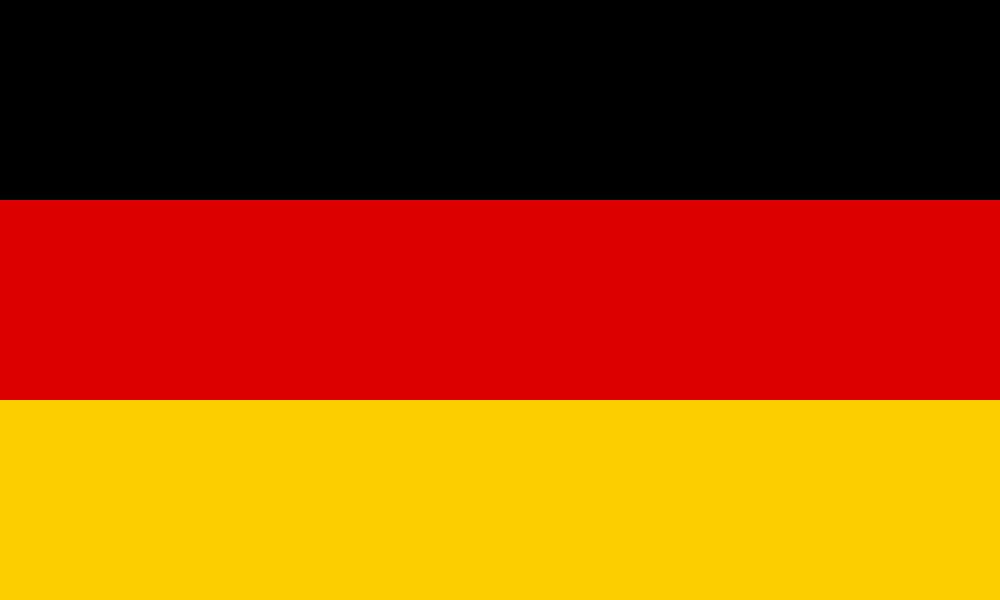



According to information at our disposal, the second round of Group E at the 2026 FIFA World Cup will kick off at BMO Field in Toronto, Canada, as Germany and Ivory Coast go head-to-head. After the opening round, this group has quickly shifted from a clear hierarchy to a situation where each side is getting what it needs while pursuing its own agenda—Germany used their attacking numbers to signal a title-contending ceiling, while Ivory Coast, through clean sheets and physical resilience, showed that African heavyweights can rewrite the script at an expanded World Cup.
Germany: The Group E Benchmark Under High-Press Possession
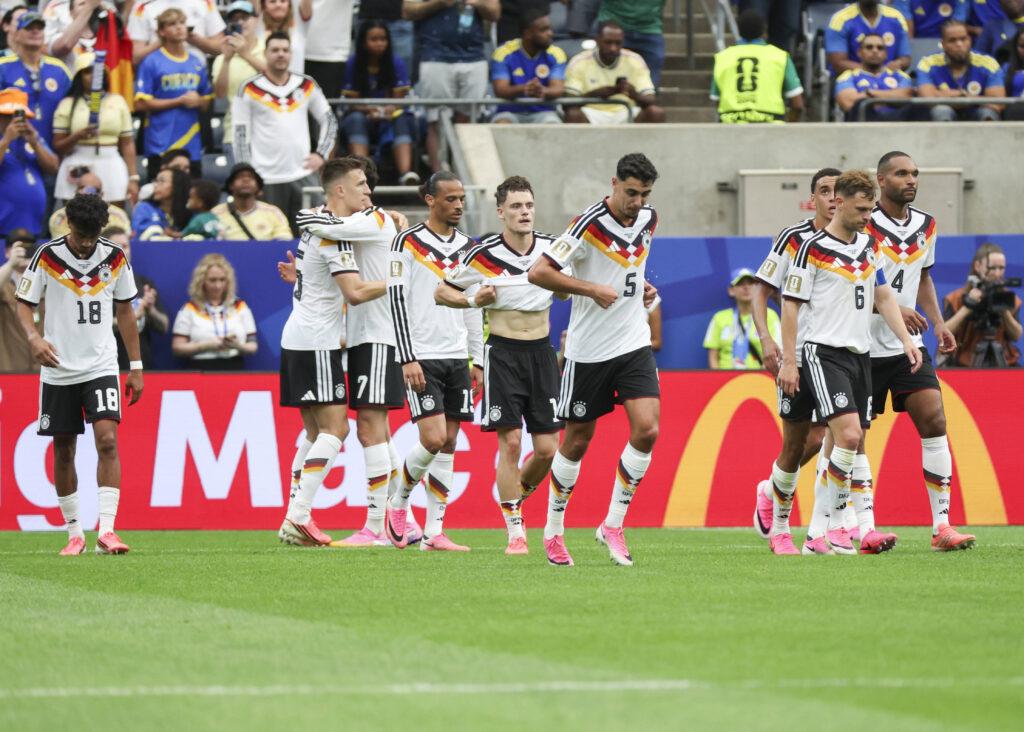
Germany delivered a near-textbook debut in their Group E opener: seven goals scored and only one conceded, 65% possession, 637 passes completed at an 87% success rate. They created six big chances, had 12 shots on target from 26 attempts, plus one that hit the woodwork, maintaining pressure from the first minute to the final whistle. The defense was equally clean—facing eight shots, they allowed only two on target. The numbers on both ends of the pitch explain why observers widely see them as the bellwether for how this group will play out.
What stands out even more is the consistency of their form: Germany are on a 10-match winning streak across all competitions, have scored first in nine of their last 10, and all of their last six games have gone over 2.5 goals. This is not a flash in the pan, but the product of a system built on multiple scoring threats up front, sustained service from midfield, and a back line working in unison to compress space. For the rest of Group E, the question is not whether Germany will score, but whether they can maintain their tactical discipline after conceding and avoid having the tempo of the match swept away in one decisive surge.
Ivory Coast: The Logic of Physicality Behind the Clean Sheet
Unlike Germany’s dominance in possession, Ivory Coast took a different route in their opening match: a clean-sheet win with 15 shots, four on target and one hitting the woodwork; 48% possession and an 84% pass completion rate from 470 attempts—the numbers were not flashy, but they were effective enough. Out of possession they made 29 clearances, won 57% of duels overall and claimed 61% of aerial battles—figures that paint the picture of a team willing to surrender some of the ball, yet solving problems in key areas with physicality and positioning.
Form matters too: Ivory Coast have won their last four matches, and five of their last seven have produced more than 2.5 total goals. That means they are not merely a low-output side content to grind out narrow scorelines; when chances arrive, their front line can finish as well. Against Germany, Ivory Coast’s most realistic plan is to limit second-ball opportunities while maximising transition play and set-piece efficiency—the confidence from a clean sheet in the opener is exactly what gives them the belief to go toe-to-toe with a European heavyweight in Toronto.
2009 2-2: One Draw, Two Football Memories
The official head-to-head record between these two sides is extremely limited—the database lists only one meeting, a 2-2 friendly in 2009, with neither team holding a win and one draw between them. Seventeen years on, personnel and tactical systems have been overhauled several times over, making that stalemate hard to project directly onto tonight’s fixture; yet it at least shows that when Germany push forward and Ivory Coast counter boldly, this matchup does not have to be one-sided. For Ivorian football, every World Cup draw alongside a top-ten opponent is a window to test whether Africa Cup of Nations pedigree can translate into steady World Cup output; for Germany, it is a benchmark for breaking down compact defences on the road in North America.
Rankings, Hosts and Group E Points Arithmetic
From an institutional standpoint, the 2026 World Cup will be jointly hosted by the United States, Canada, and Mexico, with host nations automatically qualifying and benefiting from home scheduling. Germany, a traditional powerhouse ranked 10th in the FIFA standings (1,730.37 points), clearly has ambitions beyond merely advancing from the group stage—they will be looking to secure a knockout-round berth as early as possible in an expanded 48-team format.
Ivory Coast currently sit 34th, up three places from the previous ranking (1,532.98 points). The climb reflects a recent upturn in form, but a clear gap remains between them and the world's top ten—one that will not automatically dictate results on the pitch, yet will shape pre-match resource allocation and public expectations.
The timing of Group E's second round is especially sensitive: another German win would severely limit the margin for error among their group rivals; an upset result for Ivory Coast would force a wholesale recalculation of the race for second place and qualification. For both coaching staffs, rotation, yellow-card accumulation, and the connection to upcoming fixtures are all variables that must be factored into pre-match planning. Our reporting from the ground indicates that the atmosphere in Toronto has tilted toward a genuine contest rather than a walk-through.
A Toronto Night: Three Lines to Watch
First, can Germany convert their 65% possession and six clear-cut chances from the opener into consistent output against high-intensity physicality—Ivory Coast's 57% duel success rate is no accident. Second, can Ivory Coast maintain defensive shape with just 48% possession and improve on the efficiency of their four shots on target; third, set pieces and aerial duels (61% aerial duel success rate) could well prove the key to breaking the deadlock.
Weaving together both teams' opening-round data and recent form, the baseline expectation remains "Germany controlling proceedings, Ivory Coast waiting to pounce"—yet World Cup group stages routinely deliver examples of structure trumping possession. The outcome of Group E's second round in Toronto will not only shape the standings but also test the true gap between established powers and Africa's rising forces on the doorstep of the knockout stage.