

















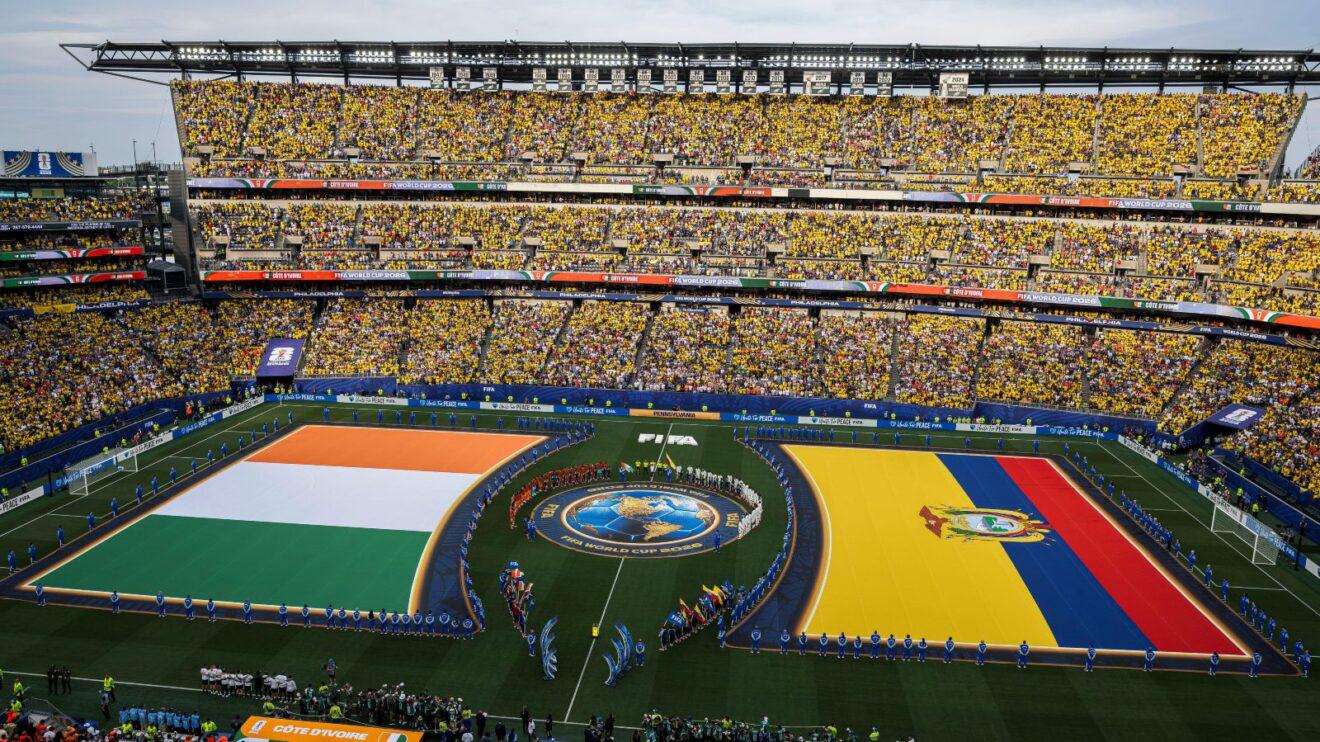
While the outside world is still debating whether Americans truly love soccer, the reality on the World Cup stage has already offered a different answer—through the first 44 matches, cumulative attendance has surpassed 2.85 million, with an average occupancy rate of about 99.6%. Reuters analysis based on FIFA data shows that even with this tournament expanded to 104 matches—a sharp increase from the previous 64—the total attendance is still expected to break the nearly 3.6 million historic record set at the 1994 World Cup in the United States before kickoff of the 64th match of this edition.
The industry logic behind big-venue fill rates
Dan Rascher, a sports economics expert at the University of San Francisco, interprets this as “Americans love big occasions”—they do not want to miss global spectacles. That reflects less the depth of local soccer culture than a habit of consuming large-scale events. Victor Matheson, an economist at the College of the Holy Cross, emphasizes that the United States has a large number of giant professional or convertible stadiums seating tens of thousands, providing the hardware foundation for high-capacity sellouts. FIFA annual reports and Reuters attendance analyses both show that measured by percentage, the seat fill rates at 2026 venues rank among the highest of any World Cup this century, second only to the 2006 World Cup in Germany.
End-stage ticket price samples under dynamic pricing
High ticket prices have not noticeably dampened attendance intent. FIFA is adopting dynamic pricing at the World Cup level for the first time, with ticket prices fluctuating according to demand; take this Thursday's World Cup match between Paraguay and Australia in the World Cup as an example — official last-tier tickets were around $450 near kickoff. Secondary market tracking platform TicketData shows the average "get-in price" for such fixtures is about $798, meaning the cheapest resale ticket available. A FIFA spokesperson responded that pricing reflects market demand and aligns with industry trends, while also releasing 130,000 low-price tickets at $60 each to balance accessibility, but nonetheless facing public criticism over premium pricing strategies.
The Trump administration's tightened entry and travel restrictions have objectively increased the procedural costs for fans from regions such as Haiti, Iran, and Senegal to travel to the United States, but have not yet produced an impact in overall attendance data sufficient to reverse record-setting trends. From a venue operations perspective, this tournament layers high-capacity infrastructure, dynamic ticketing, and global broadcast traffic into a single narrative — operators must ensure not only seat turnover but also the efficiency of security screening flows, temporary media zones, supplies, and post-match cleanup. For a multi-venue system spanning the United States, Canada, and Mexico, maintaining smooth crowd movement with occupancy rates nearing 100% has become a core challenge that sets this edition apart from previous ones.
Paraguay (ranked 40th by FIFA) and Australia (27th) are about to meet in a fixture that also offers a vivid window into this tournament's attendance logic: the former already has a real-world example at this World Cup of winning with low possession, while the latter deploys a more conservative 5-4-1 system to cope with a congested schedule. Whatever the result, fans are still willing to pay for tickets to this top-tier global event — and that may be the bluntest industry lesson the 2026 World Cup holds for stadium and event operators: beneath the noise that America is not necessarily wild about "soccer," the appetite for big-stage occasions is already written all over the seating charts in the stands.