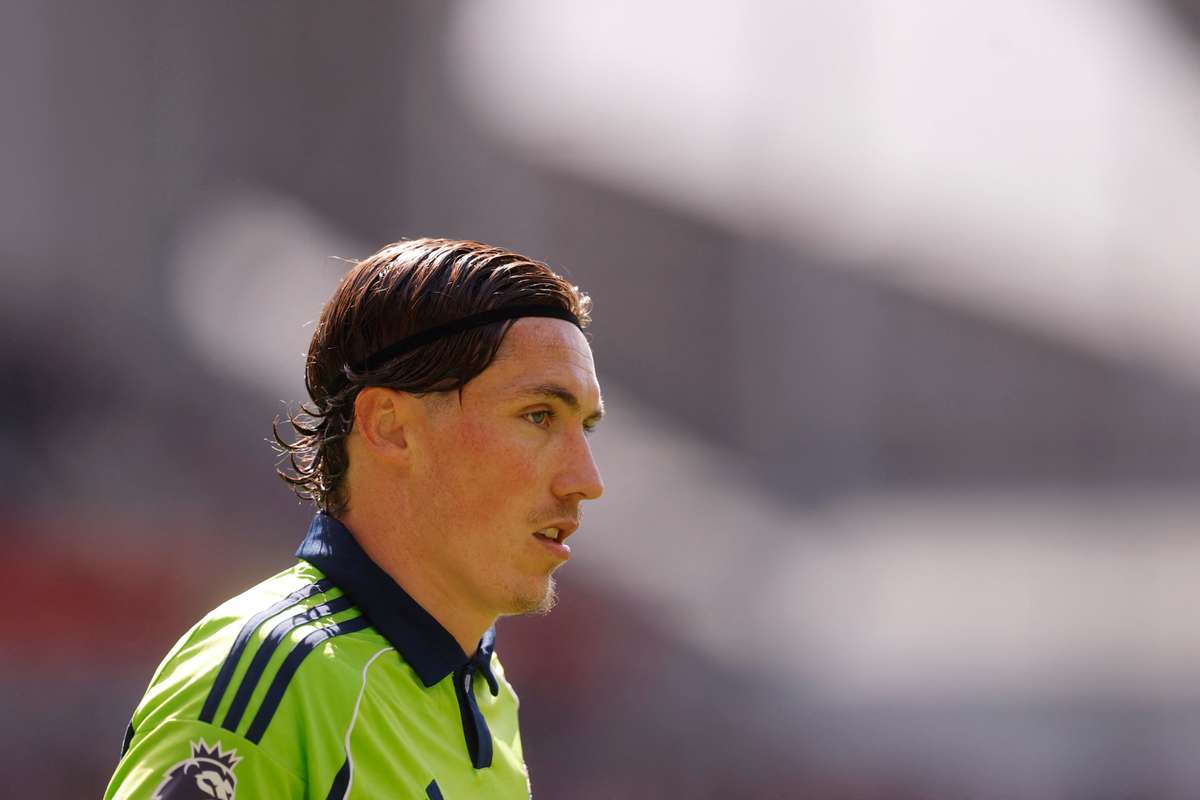















The Netherlands national team received positive news at a crucial juncture before the World Cup kickoff: first-choice goalkeeper Bart Verbruggen rejoined full team training on Friday after a hip contusion. The Oranje will face Japan in their Group F opener on Sunday evening; with just days until kickoff, whether the No. 1 goalkeeper can take his place on the goal line at the Dallas stadium in full fitness will directly affect the entire back line's rhythm in build-up play and psychological confidence.
Warm-up knock and emergency goalkeeper change
The injury came in the final warm-up match before the World Cup. Facing Uzbekistan, Verbruggen landed awkwardly after a save, his hip taking an unexpected blow, and was diagnosed with a hip contusion after the match. The 23-year-old Brighton first-choice goalkeeper was subsequently withdrawn early, with Bayer Leverkusen goalkeeper Mark Flekken coming on as his replacement. What appeared to be a routine substitution thrust the question over the Netherlands' goalkeeping position into the spotlight—when a first-choice goalkeeper suffers an injury in the final warm-up before a major tournament, no team takes it lightly.
From a medical standpoint, a hip contusion is classified as a soft-tissue impact injury, with recovery typically focused on reducing swelling, managing workload, and gradually restoring explosiveness and change-of-direction ability. For a goalkeeper, however, this area is tied to recovery after diving saves, the force generated at the moment of landing, and torso rotation on long distribution passes—latent discomfort is often amplified in high-intensity match situations. The numbers show the Netherlands currently ranked 7th in the FIFA rankings with 1,757.87 points; Japan are 18th, up one place recently, on 1,660.43. There is a gap on paper, but a World Cup opener never follows the rankings script. If a goalkeeper takes the field carrying doubts, that first touch in build-up play can show hesitation—precisely the kind of detail most easily overlooked in high-pressure phases.
Isolated Recovery and Closed-Door Training
In the days after the injury, the Netherlands coaching staff kept Verbruggen isolated from full-team training, putting him on an individualized recovery plan to progressively rebuild full training load. That mirrors the distinction in professional football between "fit to train with the squad" and "fit to start and play 90 minutes"—the former is a rehabilitation milestone; the latter is the competitive decision point.
Friday's session was held behind closed doors; Verbruggen had rejoined the team training sequence, though there has been no official confirmation on whether he completed a full session. For a goalkeeper, involvement in training says more than a simple "participated in training"—penalty drills, set-piece disruption, high-intensity shot-stopping: every segment tests whether the hip can handle changes of direction and ground contact. Information from our reporters on the ground suggests the Dutch camp is deliberately keeping a low profile, avoiding over-commitment while leaving room for Sunday's match-day call.
Flekken: A Stable Option on the Backup Line
If Bart Verbruggen cannot deliver a full-strength performance in Dallas, Mark Flekken is the clearest next man in line. The Bayer Leverkusen goalkeeper has built up steady minutes at club level and is well versed in the modern keeper’s role in build-up play from the back, but a major tournament stage with the national team and coming off the bench in a friendly are two very different psychological equations. The Netherlands’ decision not to confirm the final starting lineup at this stage is also about managing the competitive tension between the two keepers: letting the No. 1 recover with the positive pressure of “possibly starting,” while keeping the No. 2 locked in and ready to step in at any moment, rather than creating internal friction too early.
Dallas opener: schedule and stakes
The Netherlands’ group-stage meeting with Japan kicks off on Sunday at AT&T Stadium in Arlington, Texas, with kickoff at 22:00 CET. The 2026 World Cup is being jointly hosted by the United States, Canada, and Mexico; in a host-nation setup, each team’s opening match often sets the tempo for their path out of the group. For Japan, facing a higher-ranked European opponent, stability between the posts is just as foundational; for the Netherlands, whether Verbruggen can turn “return to training” into a starting role on opening night will directly shape the link between build-up from the back and high pressing.
The impact can be broken down along two lines. On the competitive side, the Netherlands need to take lessons from their friendly against Uzbekistan on grounding and positioning, and avoid more unforced risks at the goal line; on the scheduling side, taking points in the Group F opener can significantly ease the psychological burden going into the second round. Uzbekistan currently sit 50th in the FIFA rankings, having climbed two places recently, and their ability to spring a surprise in goalkeeping terms against the Netherlands in a friendly shows that no pre-tournament match is a mere formality.
Over the next 48 to 72 hours, whether the No. 1 goalkeeper designation shows up in grouped training matches and how heavily the coach addresses the keeper position at the pre-match press conference are more reliable observational signals than guesswork. Verbruggen has already cleared the most sensitive first stage of the recovery pathway by moving from isolated individual work back to full team training; before Sunday, any rational decision should hinge on whether he can take part in high-intensity, goalkeeper-specific work without protection. The World Cup will not wait for a perfectly ideal medical report, but the Netherlands are fully within their rights to keep the variables around a hip contusion to a minimum in this window of information asymmetry — the same logic a side targeting group-stage progression should apply when it comes to caution at the goalkeeper position.