


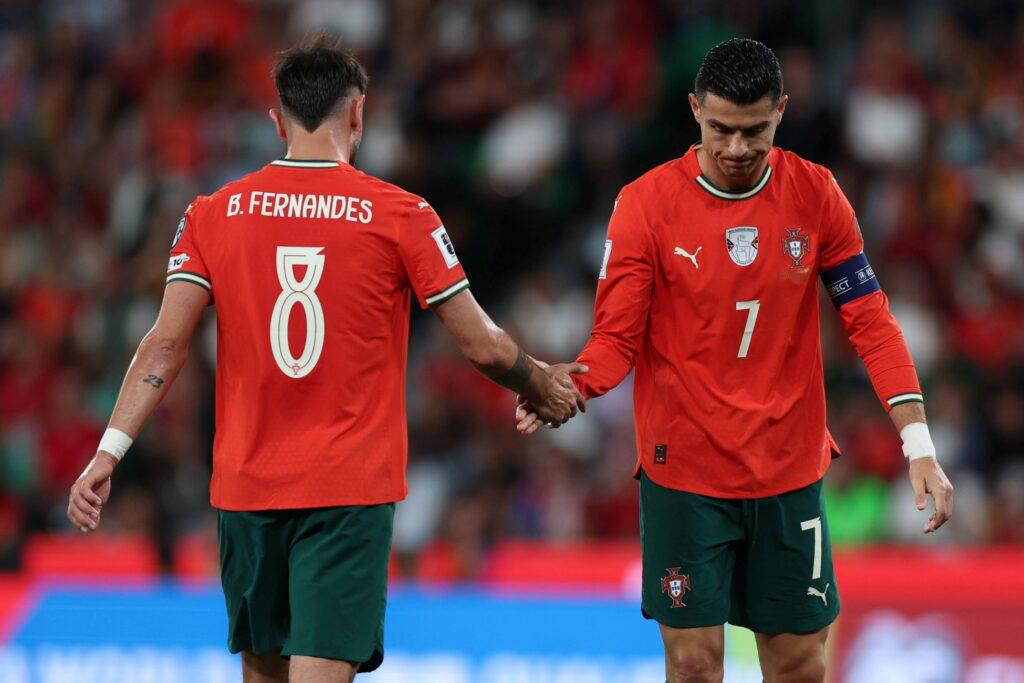
Every World Cup cycle, major websites inevitably roll out a wave of "dream team" lists—many simply stack the highest-rated stars from video games and call it a day. ScoreZ has taken a different approach this time: setting aside reputation and farewell tours, focusing only on qualifying data, form over the past year, current fitness, and each team's title-contending depth. The core question boils down to one line—if you had to win a must-win decider tomorrow, who would you take onto the pitch?
As the 2026 World Cup jointly hosted by the United States, Canada, and Mexico draws nearer, these "data-driven dream teams" keep getting shared across social media. At heart, fans are tired of picking players on sentiment and want to see who actually held up under pressure in qualifying. Cross-referencing FIFA rankings on the site can help calibrate expectations: France has risen to No. 1 (1877.32 points), Argentina No. 3 (1874.81 points), Portugal No. 5 (1763.83 points), and Netherlands No. 7 (1757.87 points)—the four nations precisely underpin this starting lineup framework.
Goalkeepers: Clean sheets are hard currency
The goalkeeper spot goes to Argentina's Emiliano Martínez. He recorded 10 clean sheets in South American World Cup qualifying, while the next-best keeper in the region managed only 6; his penalty-shootout experience and status as the previous World Cup Golden Glove winner give his big-tournament pedigree a solid grounding in the data. In Argentina's recent home qualifier, a 2-0 win came despite facing 20 shots, 8 on target, and the opposition enjoying 73% possession—significant pressure on distribution from the back—and Martínez is exactly the type who can steady that possession-based approach.
Defense: Balancing pace, distribution and pressing intensity
At left-back, France’s Theo Hernández stands out. In Euro qualifying he posted the fastest sprint speed in the qualifiers and was directly involved in four goals down the left; France have gone unbeaten in their last nine competitive matches, with recent 0-0 draws against Italy, Turkey and Belgium underlining their defensive solidity. Canada’s Alphonso Davies is also in the conversation, but leans more on raw pace; Hernández adds positional sense and recovery discipline on top of his sprinting ability, making him the more complete modern full-back.
One of the two centre-backs remains France’s William Saliba. France conceded just six goals in World Cup qualifying, sharing Europe’s best defensive record with Portugal; Saliba boasts a 92% pass completion rate under pressure, offering both stability at the back and the ability to build from deep, while staying fit for two straight seasons — a quiet plus for the long World Cup schedule.
The other centre-back is Portugal’s Rúben Dias. Portugal also conceded only six goals in qualifying, and Dias was the most progressive passer among centre-backs in the same period — he does not just block and tackle, but also helps turn defence into attack. Germany’s Antonio Rüdiger is more aggressive, but also more prone to positional gambles; Dias makes fewer defensive errors per 90 minutes while matching Rüdiger in aerial duel success, fitting the “we have to win tomorrow” selection logic better.
At right-back, the Netherlands’ Jeremie Frimpong leads the pack. No other defender in Euro qualifying topped him for combined tackles, interceptions and progressive carries; he almost turns full-back defending directly into a counter-attacking trigger. The Netherlands’ recent 0-0 away draw with Germany and Portugal’s 0-0 in Wales show that in Europe’s top-tier matchups, end-to-end ability on the flanks is becoming ever more valuable.
What exactly is this squad trying to pick
The question isn’t “who’s the biggest name,” but “who’s most likely to win right now.” France’s back line rests on the world’s No. 1 defensive system; Portugal shares Europe’s fewest goals conceded with France; Argentina’s goalkeeper has pulled clear in South America with clean sheets; and the Dutch right-back has locked in the answer on the flank with all-around numbers—five players from four different federations, all having passed the qualifying pressure test.
From a media standpoint, this list has caught fire for two reasons: first, it directly calls out the weaknesses of popular picks such as Davies and Rüdiger, which easily sparks partisan debate among fans; second, it turns World Cup qualifying stats into “must-starts for do-or-die games,” which fits today’s content habits better than simply stacking star names. If midfield and attacking picks follow, it’s worth watching whether France and Portugal can keep their clean-sheet run going late in European qualifying, and whether Argentina’s goalkeeper can carry his low-risk distribution in the 73% of matches where his side dominates possession through to the knockout stage.
For everyday fans, the next round of talking points is just as clear: France face Turkey again in November, while Portugal and the Netherlands must keep sharpening their defensive chemistry through a high-intensity closing stretch of European qualifying. Dream teams are always just debate material—but the players who truly earn their place at the 2026 USA-Canada-Mexico World Cup are always the ones who’ve already proved themselves in qualifying.