











When Portugal and Colombia played out a 0-0 draw in their final World Cup group-stage match, Roberto Martínez was no longer facing the debate over whether to call up Cristiano Ronaldo, but a sharper question: on the threshold of the knockout stage, what can this 41-year-old legend still offer the team?
A Squad Decision That Cannot Be Avoided
For Martínez, taking Ronaldo to the tournament was almost never a yes-or-no question. This could be Ronaldo's last World Cup, and given his place in Portugal's history, leaving him out would require stronger justification. The problem is that when "emotion" and "competition" clash on the same 23-man squad list, the coach must answer: is keeping a younger, more active striker more likely to help the team go further than keeping an iconic figure?
This is not a challenge to Ronaldo's historical status—like Luka Modrić, both are benchmark figures in their countries' football history, and they were once teammates at Real Madrid. But being a benchmark does not mean the best solution right now. When a team aiming to go deep in the knockout stage entrusts a key attacking role to a player in his early 40s, every tactical detail comes under magnified scrutiny.
Against Colombia: The Gap in Influence Behind the Data
The user wants a direct translation output only - no markdown, no explanations. Let me translate the Chinese sports news fragment to English while preserving the HTML tags and link structure.
Against Colombia, the match was anything but dull. Colombia had 24 shots and 6 on target, with 55% possession; Portugal had 13 shots and only 2 on target, with 45% possession. The score stayed 0-0, but the two sides created danger in very different ways.
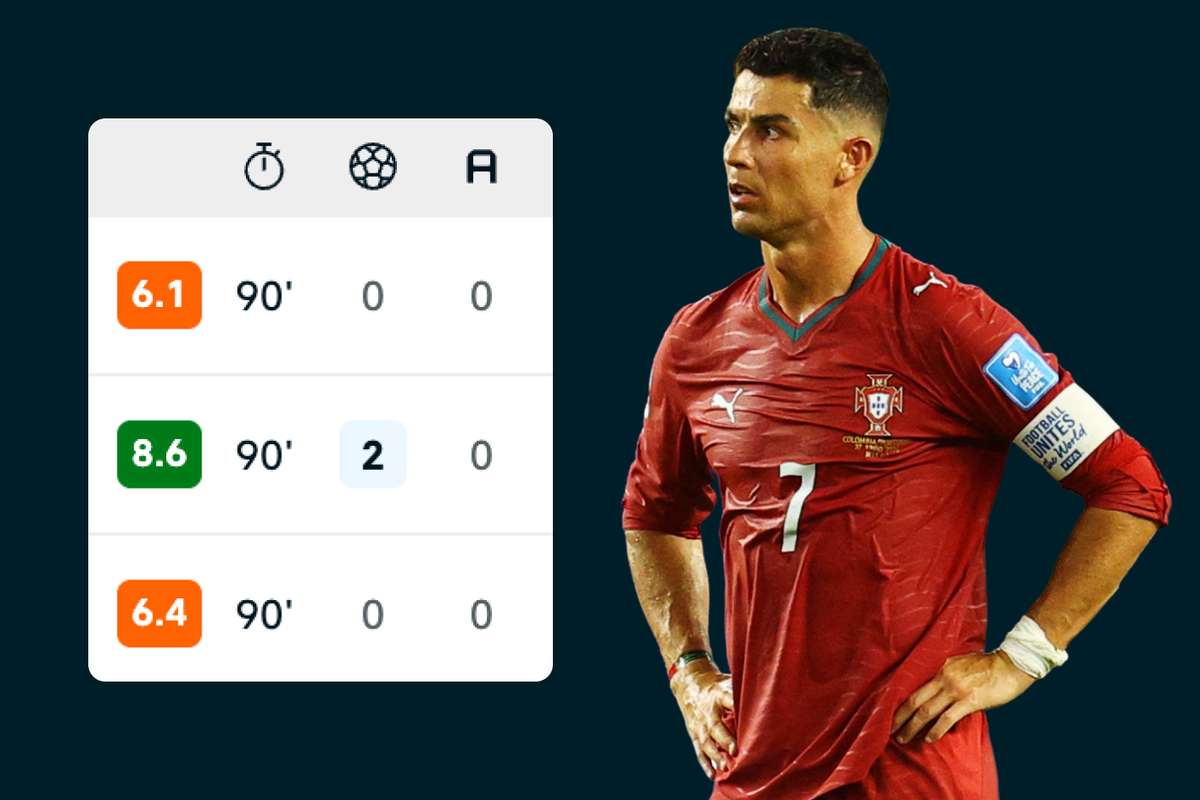
Ronaldo took 3 shots, tied with João Félix for the most on the team, yet only 1 was on target. What stood out even more was his presence in the box: he had only 2 touches inside Colombia’s penalty area, one of them a shot that missed the target. By contrast, Luis Díaz had 7 touches in Portugal’s box, and Arias had 6 — this is not just a numbers game; it reflects attacking movement, frequency of support, and overall influence.
Passing and one-on-ones: former strengths gone quiet
Narrow the lens to individual technical output, and the problem becomes clearer. Ronaldo’s pass success rate that day was 81.5%, the lowest on the Portugal squad; with 35 touches and 22 completed passes, his completion rate was clearly below players with similar sample sizes.
What may worry Martínez even more is not a single misplaced pass, but the complete absence of two abilities long considered Ronaldo’s trademarks: no attempted dribbles and no involvement in aerial duels. For a striker used to changing the game with individual quality in key areas, when both weapons are sheathed at once, his role up front shrinks sharply.
There was little on the defensive side either: no attempted tackles and no interceptions completed. That is hardly Ronaldo’s traditional strength, but at a World Cup where every ball counts, if a forward cannot offer a minimum level of involvement at both ends, the coach’s tactical balance is forced to tilt toward other positions.
Martínez’s dilemma: icon versus immediate impact
Martinez can certainly answer the criticism with “Colombia didn’t score either”—a 0-0 means there was no defensive collapse. But World Cup knockout rounds don’t reward “not conceding” alone; Portugal need someone who can break the deadlock when the game stalls. When the squad’s biggest names can’t sustain pressure inside the opposition box, the coach’s setup has to lean on other areas to compensate—and compensation only goes so far.
On FIFA rankings, Portugal (5th) sit above Colombia (13th), so they aren’t outgunned on paper. Yet in the final group game against a direct rival, the attack failed to deliver output that matched the team’s ambitions, turning “Was bringing Ronaldo the right call?” from post-match talk into a structural question.
Key choices before the knockout stage
For Martinez, the real test isn’t explaining the past—it’s defining the future. Ronaldo’s experience, set-piece threat, and locker-room influence still matter, but if the on-field numbers keep showing he can’t reproduce his peak all-round impact in high-intensity games, the coach must make a cooler-headed call: adjust his role and minutes, or hand crucial time to younger players more willing to attack the box?
World Cups never lack stories of late-career heroes, but they also never lack the cost of delaying renewal for sentiment. Martinez has already decided to call up Ronaldo; next, he must prove again and again in every do-or-die match that the decision wasn’t made at the expense of the team’s depth and ceiling.