









On June 27 Beijing time, the final round of the 2026 World Cup group stage closed in Houston. Cape Verde, a nation of just over half a million people, drew 0-0 with Saudi Arabia and advanced as group runners-up on the back of three draws—marking the country’s first-ever appearance in the World Cup knockout stage and making them the third-smallest nation by population ever to reach the tournament.
From a stunning draw in Madrid to a composed finish in Houston
To understand why this 0-0 mattered so much, you have to rewind to the opening round of the group stage. Back then, Cape Verde played their first-ever World Cup match against European champions Spain. Most expected a one-sided affair; instead, it finished 0-0—an African side ranked outside the top 60 in the world holding FIFA’s No. 2 side to a draw on debut.
That result set the tone for the entire group: Cape Verde were no fluke, but a team with clear tactical discipline and defensive resilience. They kept picking up points with draws, finishing the group stage with three stalemates and advancing in second place.
Final-round data: dominant possession, but goals remain the hard part
Back to this night in Houston. Looking at the technical stats, Cape Verde lined up in a 4-1-4-1 formation with 51% possession, 15 shots and 2 on target, 451 passes at an 85% success rate, and 4 corners. Opponents Saudi Arabia used a 4-4-2, with 49% possession, 7 shots and 3 on target, 442 passes at an 81% success rate.
The numbers paint a picture of an evenly matched stalemate: Cape Verde held a slight edge in controlling the game, but still lacked a cutting edge in front of goal—all three group-stage matches ended in draws, with zero goals scored and conceded, a stark contrast between a solid defense and a blunt attack. For a team aiming to advance, a 0-0 in the final round is an acceptable result: one point is enough to secure second place in the group without having to push forward recklessly.
Head coach Bubista: a press conference draped in the national flag
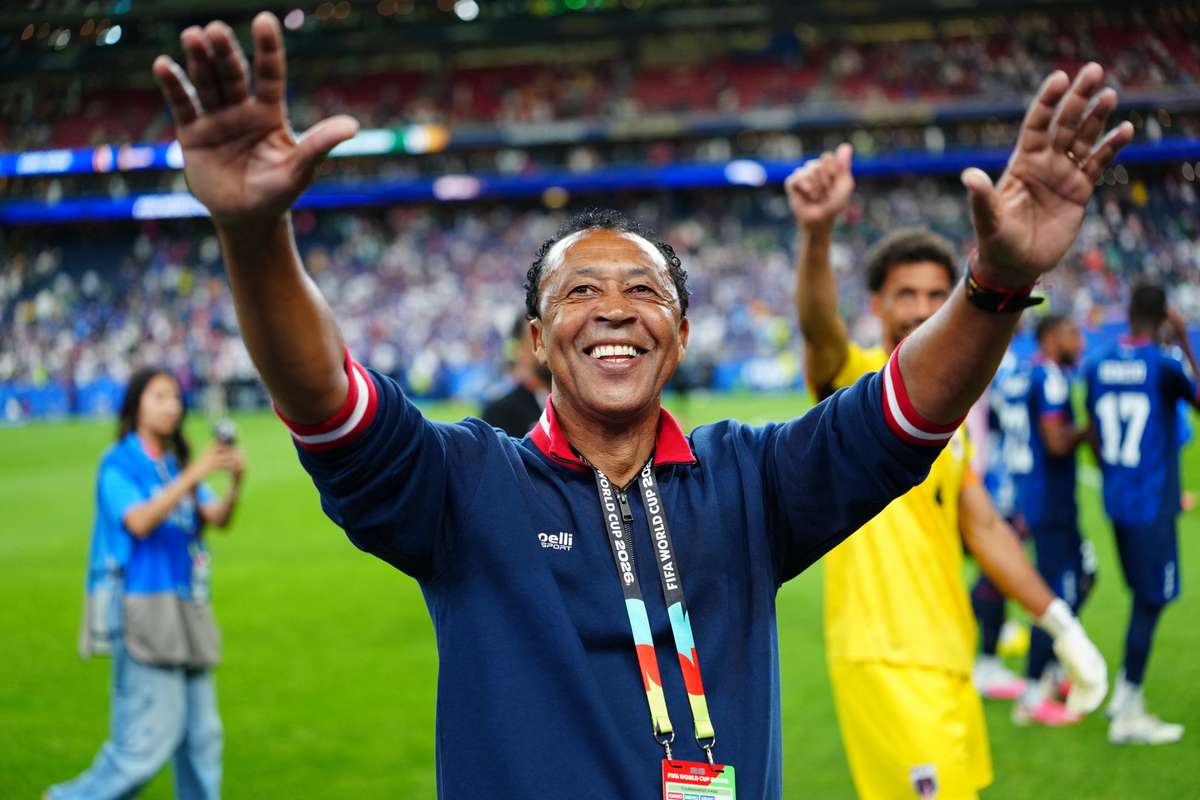
After the match, Bubista walked into the press conference draped in the national flag—a moment that said it all on its own. This was not just a summary of a football match, but a moment for an island nation to show itself to the world.
"For us, nothing is impossible," said the manager known by a single name. "We ourselves and the people of Cape Verde should be proud of what the team has done."
The West African island nation has a population of just over half a million, and many fans stayed up late to watch the Houston match. The head coach admitted that with the team ranked 67th in the FIFA rankings and all three group-stage matches ending in draws—including holding Spain to a draw on debut—"First of all, we're already proud just to be playing against Argentina. Of course, this is cause for joy for the team, the players, and all our citizens."
A Small Nation's World Cup Mission
Bubista went further in broadening the perspective: "From the start, one of our goals was to show the world our country. To face Argentina and Messi at a stage like this, regardless of the result, is a wonderful thing for Cape Verde."
He urged other so-called "minnows" to draw strength from Cape Verde's run: "We represent our country, we represent Africa, and we represent small nations around the world. This is our mission—we prove by example that if you work with focus and determination, you will reach your goal sooner or later."
Miami Showdown: The Next Hurdle
On July 3, Cape Verde will face Argentina in Miami. Ranked third in the FIFA rankings, the latter boasts one of the most influential attacking units in world football today. For the island nation that has just made history, this is undoubtedly the toughest knockout test of their careers.
But from their three clean sheets in the group stage, Cape Verde's defensive system has already been tested against opponents with starkly different styles, such as Spain and Saudi Arabia. How to maintain defensive solidity while improving attacking conversion will be the tactical question Bubista must answer before the knockout stage.
Recap Conclusion
Cape Verde's path to the World Cup is an inspirational arc written in draws: holding the European champions to a draw in their debut, securing the points needed for qualification in the final group match, and the head coach draped in the national flag to convey national pride. They may not be favorites to win the title, yet they are undoubtedly one of the most story-rich teams in this tournament—and "nothing is impossible" is the loudest footnote this island nation of five million has left the world.