









A highly anticipated World Cup Group I clash at Gillette Stadium in Foxborough produced a performance where the data and the result lined up closely. A crowd of 64,146 watched France beat Norway 4-1, with
First-half triple threat: three goals in 32 minutes set the tone
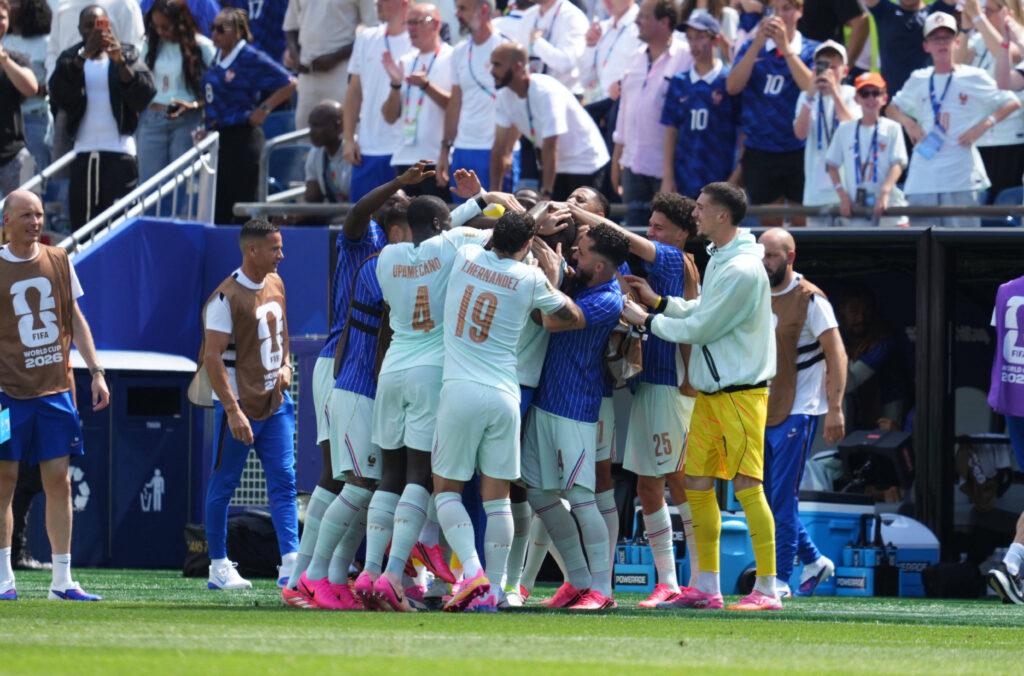
The shape of the match was rewritten early. France lined up in a 4-2-3-1 and Norway in a 4-3-3, but the latter clearly struggled to rotate and respond between the lines. In the 7th minute, Dembélé opened the scoring; in the 20th minute, Kylian Mbappé played another through ball and Dembélé made it 2-0. Norway replied in less than a minute—Thelo Aasgaard scored in the 21st minute from an Andreas Schjelderup assist, briefly making it 2-1.
However, France's counterattacking quality immediately widened the gap again. In the 32nd minute, Dembélé completed his hat-trick, and at halftime the Blues led 3-1. Before the break, France had 63% possession with 14 shots and 8 on target; despite Norway's goal, they failed to wrest back control of the game. Mbappé repeatedly exploited the space between fullbacks and center-backs to break through the press, which was one of the main drivers of France's first-half statistical edge.
Missed penalty and stoppage-time fourth goal: key moments decide the margin
After the restart the tempo changed somewhat, as Norway pushed higher and earned a chance to shift the momentum. Oscar Bobb won a penalty, and Jørgen Strand Larsen stepped up in the 50th minute, but Mike Maignan saved it, leaving the score at 3-1. This detail proved crucial in the data: Norway had 10 shots and 4 on target for the entire match, lacking enough quality in front of goal apart from the penalty, while France, after taking the lead, used substitutions to control the tempo and steer the game into a more familiar possession-based pattern.
In stoppage time, Désiré Doué scored the fourth goal from an assist by Bradley Barcola, bringing France's team display to a fitting close. The final 4-1 scoreline largely reflected both sides' ability to take their chances.
Data dashboard: comprehensive dominance in possession, shots and final-third penetration
The full match statistics further explain why France looked steadier throughout the broadcast. Possession was 57% to 43%, with 480 successful passes out of 557 attempts for an 86% completion rate; they took 18 shots with 9 on target, both well above Norway's 10 shots and 4 on target. Entries into the final third were 58 to 41, and accurate through balls 3 to 0—this contrast shows France not only had more of the ball, but also moved it into dangerous areas more often.
On the defensive side, 54 ball recoveries and 18 clearances also reflected the discipline of Didier Deschamps's side even after taking the lead. Norway were not without chances, but the efficiency with which key moments were handled decided how this Group I encounter would shape the standings.
Ranking context and group implications
In light of the FIFA rankings, France currently sit 1st with 1,877.32 points, while Norway are 31st with 1,550.94. The gap on paper was further magnified by the data in this match: France already had a strong sample in the World Cup 2026 campaign—a single game with 4 goals, 18 shots, and 57% possession—and this 4-1 win over Norway was very much in line with the dominant style shown in their earlier technical numbers.
For those following the broadcast and schedule, this night game at Gillette Stadium sent a clear signal—France has secured its group standing in Group I through attacking efficiency and key defensive moments (Maignan saving a penalty). As the tournament progresses, how to maintain that first-half transition quality will be the key variable in whether Deschamps's team can continue its momentum.