

















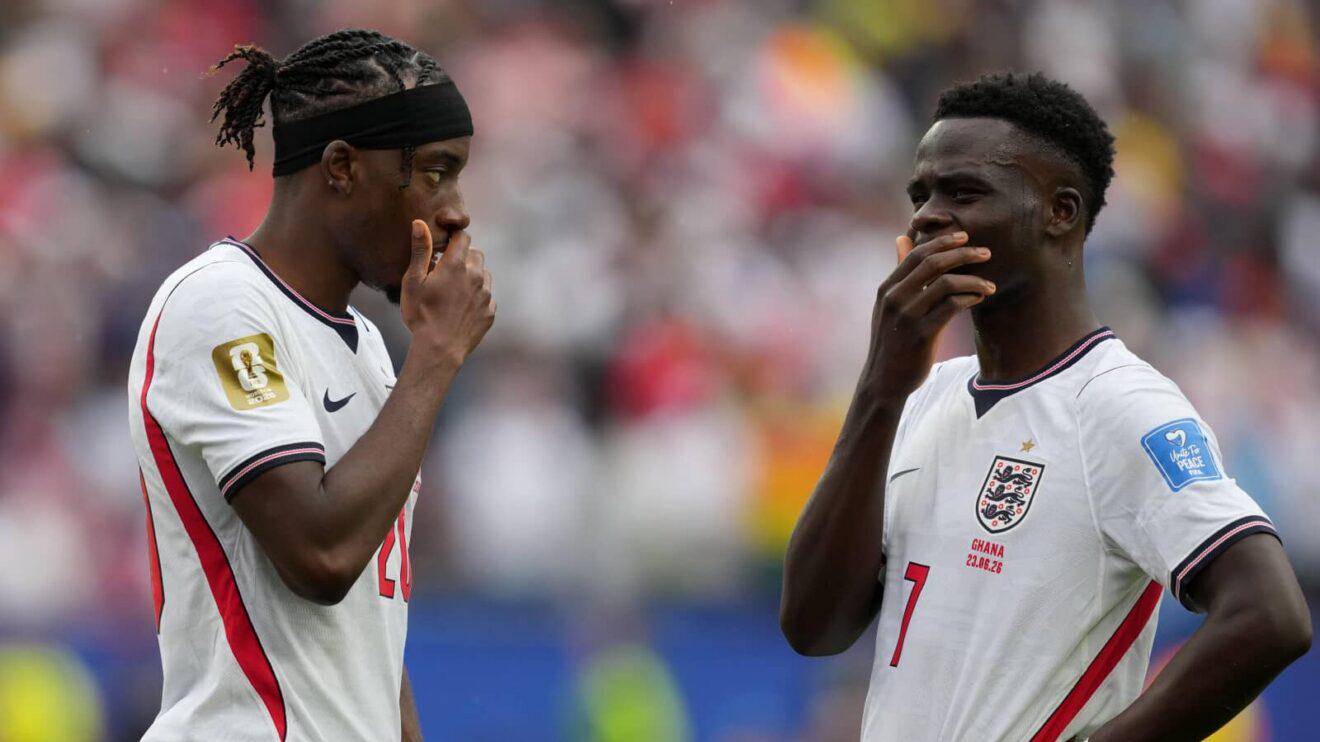
On Saturday in New Jersey, England beat Panama 2-0 on goals from Bellingham and Harry Kane, clinching top spot in the group and setting their Round of 32 path. On paper it was a win, but the match was far from straightforward—after Tuchel made five changes to the starting lineup, the Three Lions struggled for long stretches to break down Panama’s compact defense, and only found a way through in the second half once their opponents’ fitness and composure began to slip.
The pressure line behind the turnover numbers
Former Premier League striker Troy Deeney, in his CBS Sports analysis, turned the lens to another psychological thread: the high turnover rate among three wide players. Citing the figures he referenced, Saka lost possession 14 times, Rashford 20, and Madueke, who came on as a substitute in the 63rd minute, seven. Against the site’s technical stats—England with 67% possession, 17 shots and six on target; Panama with just two shots on target and 33% possession—the heavy turnover count on the flanks stood out all the more sharply: possession did not automatically translate into threat; the issue lay in decision-making and where players’ minds were focused.
Denini used exceptionally harsh language, calling the three “arrogant and clueless.” His logic was clear: on the international stage, the opponents across from you are likewise adults fighting for their national teams; Panama players on the World Cup stage would treat facing England as a career-defining moment, channeling fiercer resistance to turn “being underestimated” into extra defensive motivation. If Saka and the others still clung to the club habit of “beat me and you win,” mistakes would escalate from individual errors into structural tactical flaws.
Key moment: The platform was there, but the payoff got worse
Denini remembered Madueke’s first touch after coming on—a forced dribble that sent the ball out for a goal kick. Rashford repeatedly cut inside on his right foot to shoot; even after defenders read the pattern, he refused to adjust, and wasted chances kept piling up. Denini contrasted the two halves: in the first he felt the center backs and midfield were “building the platform and distributing”; in the second Panama grew more confident, space opened up, and the ball reached the flanks more often—exactly the window for one-on-one wide play to pay off—yet the three “got worse.”
This was the gap between World Cup context and club context. England, fourth in the FIFA rankings, faced 33rd-ranked Panama with clear statistical advantages, but psychological pressure never flows in one direction—when a strong side exhausts its mental reserves on ineffective individualism, possession becomes a mirage of paper wealth without real payoff. Saka’s return to the starting lineup after injury was already a stress test; Rashford deployed on the left carried the same burden of “must prove it immediately.” When the platform was built but the final pass or shot was wrong, criticism shifted from emotional venting to quantifiable statistical indictment.
A rational view of the result: Some delivered on the psychological front
Worth noting with a cool head, Bellingham and Kane delivered psychologically at the decisive moment—their goals shaped how the group would play out. In the swings between wins and losses, the real dividing line is often not who criticizes whom, but who can turn the platform into goals. Tuchel needs more than rotation to manage fitness; he needs his wide players to recalibrate their decision tree under pressure: when to take risks, when to link play, and when to create clear-cut chances for the center forward.
The 2-0 win secured three points, but the ball-loss data from that Deni group will linger in Tuchel’s tactical review for a long time—unless the players themselves make that mental adjustment first. The knockout rounds are where you prove whether it is resilience or arrogance, and England’s World Cup prospects ultimately cannot be written solely in possession-rate tables.