




At midday on June 22, 1986, in Mexico City, the 1986 World Cup quarter-final got underway. The clash between Argentina and England would ultimately be defined by two moments replayed again and again—Maradona’s handball goal, and that run from halfway past five players before chipping the ball into the net. The latter was later voted the greatest goal in World Cup history. Yet if you pull the camera away from the slow-motion replay of the goal and freeze on the final whistle—the No. 10 bowing his head to kiss the deep blue shirt on his chest—you’ll find another piece of history equally worth remembering.
A blue shirt entirely different from the previous round
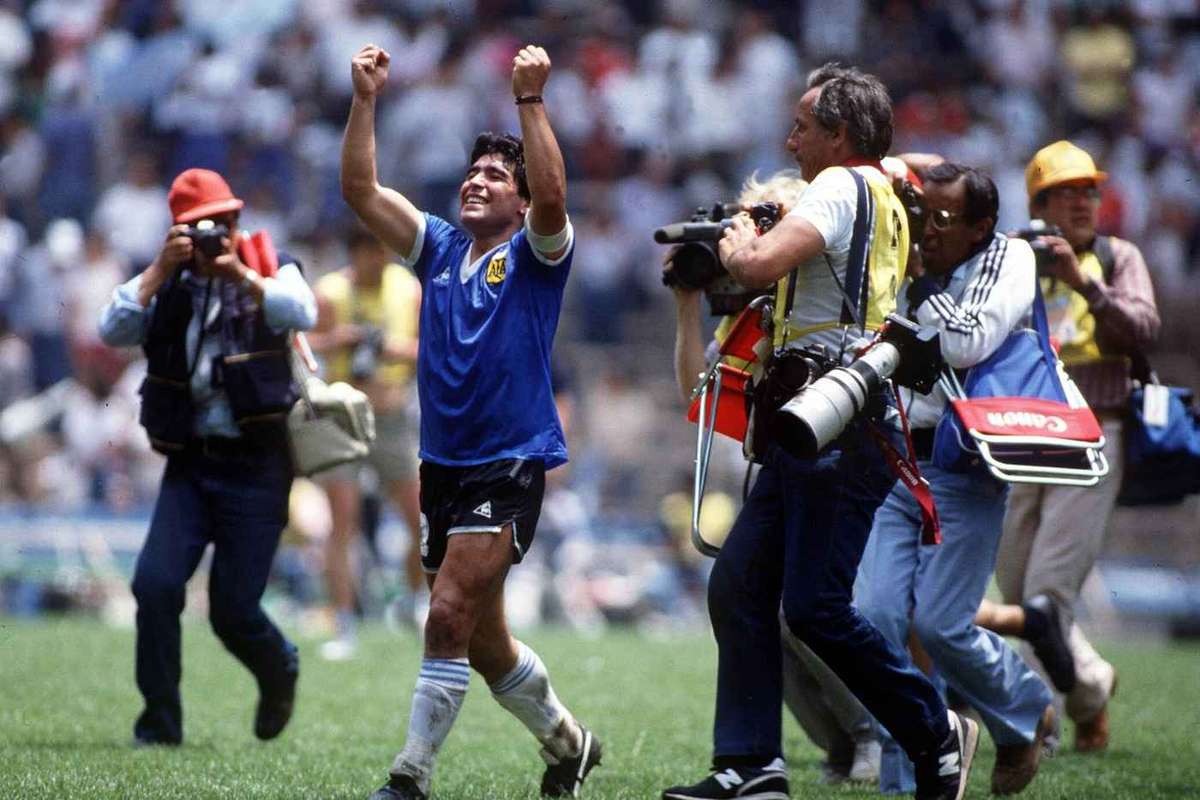
In that match, Maradona was not wearing the same kit he had worn against Uruguay in the round of 16. The white V-neck was deeper and more pronounced, and the shirt also featured two vertical stripes of differing shades. More crucially, this outfit was not the official second away kit prepared in advance by the manufacturer, but a “stopgap solution” rushed together just one day before the match.
The problem began with the persistent heat and humidity in Mexico City. In the Uruguay match, although Argentina won 1-0, the players sweated heavily under the combined effects of high temperature, humidity and altitude, and even the specially made primary shirts struggled to wick moisture fully. At Bilardo’s request, Argentina’s preferred kit was made by Le Coq Sportif using a special breathable fabric intended to reduce physical drain on the players; but after the round of 16, the team had to switch to the blue second away kit, and the head coach immediately asked the manufacturer for 38 spare shirts with the same Air-tech technology.
72 Hours Wasn't Enough — They Had to Find Answers Locally
The brand rejected the rush order, citing fewer than 72 hours until the match against England. The Argentina delegation had no choice but to search Mexico City for dark blue jerseys that met the requirements—the right shade, with the French brand's rooster crest still on the chest. According to information in our possession, those involved went to the Tepito area to hunt for kits and completed the modifications in an extremely tight window. That is how Maradona came to wear the "unofficial" blue shirt in that classic showdown.
Beyond the Jersey, It Was Still Maradona's Solo Act
The jersey story keeps being retold because it sits atop one of the most dramatic 90 minutes in football history. That day, Maradona first changed the scoreline in controversial fashion, then silenced the doubters with pure technical brilliance. The image of him kissing the shirt after the final whistle bound this hastily altered dark blue jersey to the "Hand of God" and the "Goal of the Century" as a single visual symbol.
Four decades on, Argentina still sit third in the FIFA World Ranking with 1,874.81 points; England are fourth. That 1986 match has long been written into World Cup history, and this jersey—forced by heat, humidity and tight deadlines to be improvised on the ground—has instead become a distinctive footnote linking tactical demands, logistical constraints and a legendary individual performance. It reminds us that some classics are forged not only in the second the ball hits the net, but also in the details where sweat soaks the fabric and numbers are stitched on overnight.