









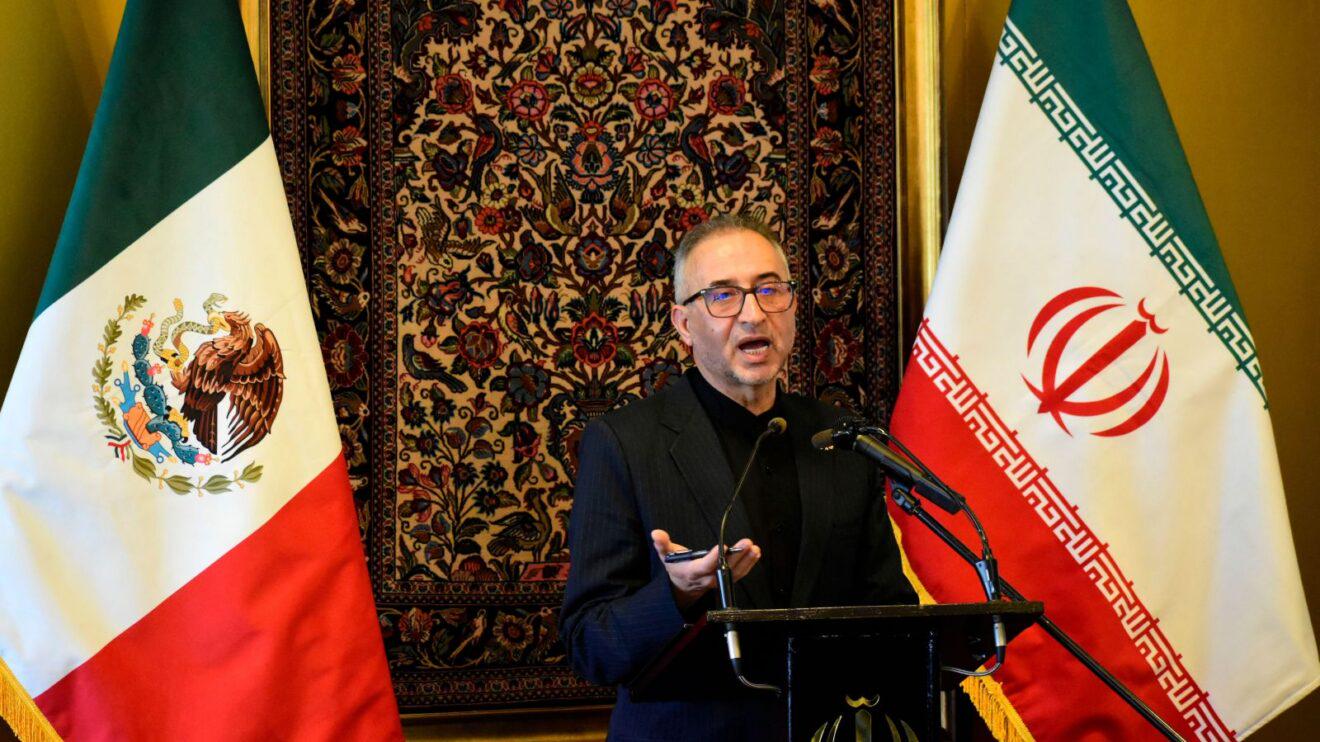
Because the United States failed to meet its obligations as host by not processing visas for the Iran national team and fans and by refusing full hospitality, Iran’s ambassador to Mexico, Aboulfazl Pasandideh, traveled to Tijuana on May 28 to thank Mexican President Claudia Sheinbaum in person for agreeing to take on the delegation’s hospitality arrangements, and to point out that the U.S. had not fulfilled its responsibilities as host nation.
Host obligations unmet: a double gap on visas and base camp
Pasandideh stressed during the visit that World Cup host nations must issue visas to participating national teams and traveling fans so supporters can travel to matches to back their side; as of his remarks, those visas had still not been issued. That aligns with Washington’s earlier reluctance to let Iran’s squad remain in the United States for the full June 11–July 19 tournament window, allowing only “match-day entry”—creating a dual gap at the institutional level: FIFA framework access rights on one side, and a narrowed host reception under security and diplomatic considerations on the other.
Sheinbaum had said on May 25 that, after FIFA approached Mexico, the country agreed to host the Iran delegation; the team would be based in Mexico and cross into the United States only on group-stage match days. Iran FA president Mehdi Taj announced over the weekend that the team’s base would move from the originally planned Arizona site to the U.S.–Mexico border city of Tijuana; FIFA confirmed the change on Monday. For a squad about to play three straight matches abroad, cross-border commuting means the training base, recovery rhythm, and logistics must be reorganized in a “two countries, one city” model rather than the traditional single-country camp buildup.
Schedule pressure stacks: all three Group G matches in the United States
According to the published schedule, Iran have been drawn into Group G, with all three group-stage matches to be played in the United States: against New Zealand in Los Angeles on 15 June, against Belgium in Los Angeles on 21 June, and against Egypt in Seattle on 26 June. Venues are spread across California and Washington state; the straight-line distance to Tijuana may not be extreme, but cross-border clearance, travel windows and match-day assembly times will still be core variables in logistics support—any visa or border delays will directly squeeze time for pre-match adaptation and tactical meetings.
On-site data show that the Iran national team are currently ranked 21st in the FIFA rankings on 1,615.30 points, down one place from 20th in the previous listing and 1.72 points lower. Ranking swings alone cannot explain their World Cup prospects this time around, but they suggest Asian heavyweights still need to steady their form in official matches during the 2026 cycle; with sudden base changes and fragmented itineraries, the importance of workload distribution and form management will be magnified.
Historical reference: World Cup survival logic with low possession
World Cup history on file offers a useful comparison: at the 2018 tournament in Russia, Iran drew 1-1 with Spain on 26% possession, seven shots (two on target), 16 fouls and two yellow cards; against Morocco they won 1-0 on 33% possession, nine shots (two on target). Both sides used a 4-1-4-1 shape, the classic profile of compressing space and hitting on the break. If Iran stick to that pragmatic counter-attacking approach in 2026, cross-border participation is more likely to affect sleep and travel quality in the 48 hours before kickoff than to force a sudden rewrite of the tactical system itself.
Institutions and geopolitics: who is underwriting “eligibility to compete”
From a policy standpoint, the issue cuts across three layers. The first is host-nation obligations: whether transit and hospitality are delivered in line with FIFA statutes and hosting pledges is central to the tournament's credibility. The second is third-party hosting: when the host country cannot or will not provide full hospitality, whether and how a neighboring country steps in raises questions about cross-border law enforcement cooperation and security coordination. The third is fan rights: if visas remain unavailable for an extended period, traveling supporters cannot be there in person, undermining both the tournament's community character and its commercial expectations—this ties into a fan-centric "people's tournament" view: the World Cup is not only a professional stage for 24 players, but a public sporting event shaped by whether ordinary fans scattered around the world can legally and safely follow their national teams.
The U.S. declining to provide hospitality for the full run and Mexico stepping in on base-camp hosting addressed the immediate floor—teams have somewhere to stay and a way to get there—but did not automatically settle the legal dispute. The fact that visas still have not been issued means the problem may spill beyond "national team bases" to media, staff, and even supporters. FIFA's confirmation of the base relocation on Monday shows it is trying to bridge the gap through administrative coordination, but whether that triggers a more formal dispute-resolution process will still depend on subsequent visa issuance and communication among the parties involved.
What to Watch Next: Three Bottom Lines and One Professional Take
For readers, the next two weeks are worth tracking along three lines: first, whether U.S. visas for Iran and related personnel are cleared in bulk; second, transit times along the Tijuana–Los Angeles–Seattle corridor and whether a full training session can still be completed the day before a match; third, whether FIFA releases clearer public guidance on host-nation obligations. If visas remain unsettled before the opening match against New Zealand, organizational risk will not drop to zero even if Mexico has backstopped the base-camp issue.
On paper, Mexico stepping in as host is pragmatic damage control, not a perfect substitute: cross-border preparation will raise hidden costs; Group G opponents Belgium, Egypt and New Zealand each play a different style, and Iran needs to use its limited joint-training window to lock in set-piece patterns and transition efficiency rather than burning mental energy on logistical disputes. If visas and match-day travel schedules hold steady, Iran can still replicate the 2018 survival path of low possession and high discipline; otherwise, institutional uncertainty itself becomes the biggest non-sporting variable at this World Cup.
The next focal point remains the June 15 opener against New Zealand in Los Angeles—the first real test of whether the base-camp plan actually works.