










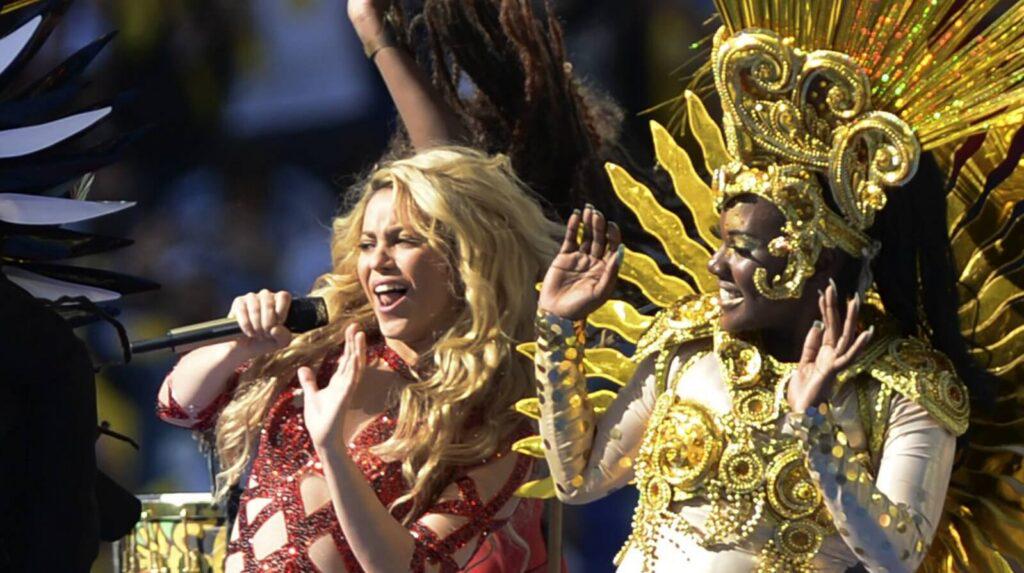
At the end of May, the 2026 World Cup entered its final countdown. All 48 participating teams were racing to finalize their squads before the June 1 squad registration deadline, host cities were stepping up preparations for FIFA Fan Festivals, and stadiums were putting the finishing touches ahead of kickoff. But what truly pushed pre-tournament buzz to a fever pitch was FIFA’s historic announcement on May 14: for the first time, the World Cup final will feature an NFL-style halftime show—landing almost in tandem with a raft of pre-tournament rule changes pushed by the International Football Association Board (IFAB) and FIFA from late April into early May.
Fifteen Minutes of Tradition, Rewritten
For many longtime fans, the World Cup final halftime has always meant tactics boards, hydration, and the manager’s team talk. Players typically get only a 15-minute window to regroup, and large-scale performances have long been reserved for the opening ceremony rather than halftime. With the 2026 final moving to MetLife Stadium in the New York/New Jersey metro area—an NFL home venue—the logic of the venue has changed, and the halftime slot has been repriced: it is no longer just “a breather for the players,” but designed as a global broadcast entertainment peak.
This is not simply “adding a song-and-dance segment.” For FIFA, this is borrowing the Super Bowl halftime show’s distribution model on football’s biggest stage: breaking a single match moment into a three-part attention economy of “match—halftime—match.” For players and coaching staffs, the rhythm of rest, locker-room communication time, and the deployment window for the second half will all come under pressure from the length and choreography of the show—which is also the practical backdrop for the necessary fine-tuning at the rules level.
Madonna, Shakira, BTS: The Charity Ledger Behind the Free Performance
According to official information, Madonna, Shakira, and BTS will headline the final’s halftime show, with all three performing free of charge. The performance’s revenue orientation is not box-office splits, but the FIFA Global Citizen Education Fund: funds will go to grassroots projects across 200 countries and regions, with part also earmarked for the FIFA Football for Schools program.
Binding "entertainment" and "philanthropy" to the same window is a classic FIFA playbook for defusing controversy—when critics question the World Cup's over-commercialization, education funds and school football programs pull the narrative back toward "football's connection to society." From the lineup, the three artists span different generations and regional markets: Madonna embodies the enduring reach of pop culture, Shakira continues her hold on Latin America and global audiences, and BTS bring built-in mobilizing power across demographics and languages. The free performances themselves send a signal: the stage is not a last-minute mash-up, but is being treated as a "second home ground" for final day.
Chris Martin curates, Global Citizen produces
The show is set for July 19 at MetLife Stadium, with Coldplay frontman Chris Martin serving as curator and Global Citizen co-producing alongside Done + Dusted and Live Nation. The curator role means the setlist, visuals, and narrative pacing will be organized around a global viewing audience rather than a single country's taste—closely matching the World Cup final's audience structure.
How the story breaks out of football into music
From a purely sporting angle, this news is easily reduced to "a halftime show was added to the final." But from a communications standpoint, what it really changes is the entry audience on final day. Top-tier music IP such as BTS pulls large numbers of non-core football viewers into the same live timeline—they may come for their idols, but stay on screen after kickoff.
FIFA's dynamic ticketing mechanism quickly translates that extra attention into pricing signals. On May 7, officials raised the World Cup final's "best available" tier to $33,000—a sharp jump from earlier levels that observers widely linked to the subsequent halftime-show announcement. The logic is straightforward: when the final is redefined as a sports-plus-entertainment mega-event, scarce-seat pricing no longer tracks team quality and matchup suspense alone—it layers on cross-demographic demand driven by the performance.
For host cities, this also means a shift in traffic patterns: fan festivals, peripheral spending, broadcast ad inventory, and social media buzz could all spike again around July 19. For broadcasters and sponsors, the halftime show offers an extra window for brand integration; for the average viewer, it becomes a public debate over whether the World Cup still “belongs” to football fans—and the debate itself is traffic.
Final rule tweaks before kickoff
Alongside the halftime show, IFAB and FIFA announced a series of pre-tournament rule adjustments in late April and early May. Not every detail has been disclosed, but the timing says plenty: with the 48-team squads locked in, fan festivals in full swing, and stadium handovers in the home stretch, the rulebook was still being fine-tuned at the “last mile.”
Factoring in the halftime show, such changes likely touch the seams between competitive fairness, sideline procedures, rest intervals, and broadcast scheduling—any clash with the performance flow would be magnified on a global stage on final day. For the teams, what really matters is whether these tweaks affect substitutions, tactical timeouts, medical treatment, or the rhythm of the second half; for the organizing committee, the challenge is translating NFL venue operations know-how into FIFA competition language.
Pre-tournament timeline at a glance
What’s most useful for readers is putting the scattered pieces back on a timeline: June 1 is the squad deadline; July 19’s final will carry both the title and the first-ever World Cup final halftime show. In between, fan festivals, warm-ups, and squad announcements will keep feeding the “entertainment-heavy final” narrative.
What to watch next: the champion, or the show—who defines this World Cup?
The expanded 48-team 2026 World Cup already sits at a crossroads of format, schedule, and commercialization. The final halftime show pushes that tension to the fore: it could sharply lift global viewership and visibility for charitable fundraising, or it could partly rewrite “the final” in the public mind as a Super Bowl-style spectacle.
From a professional standpoint, what is worth tracking is not the celebrity lineup itself, but three kinds of outcomes: whether $33,000-tier tickets keep moving after the official announcement, whether retention among non-football audiences can turn into long-term football spending, and whether minor rule tweaks produce noticeably different enforcement in the knockout stage. If all three tilt toward breakout crossover appeal, the 2026 World Cup final could become a case study cited again and again; if the competitive side sparks controversy over rest and scheduling, it would serve as a cautionary tale for the next round of tournament rule revisions.
With only days left until the June 1 squad deadline, teams are still making their final roster calls—and the debate over whether the final belongs to football or the global entertainment industry has already kicked off.