

















Semifinal matchup: seed meets qualifying dark horse
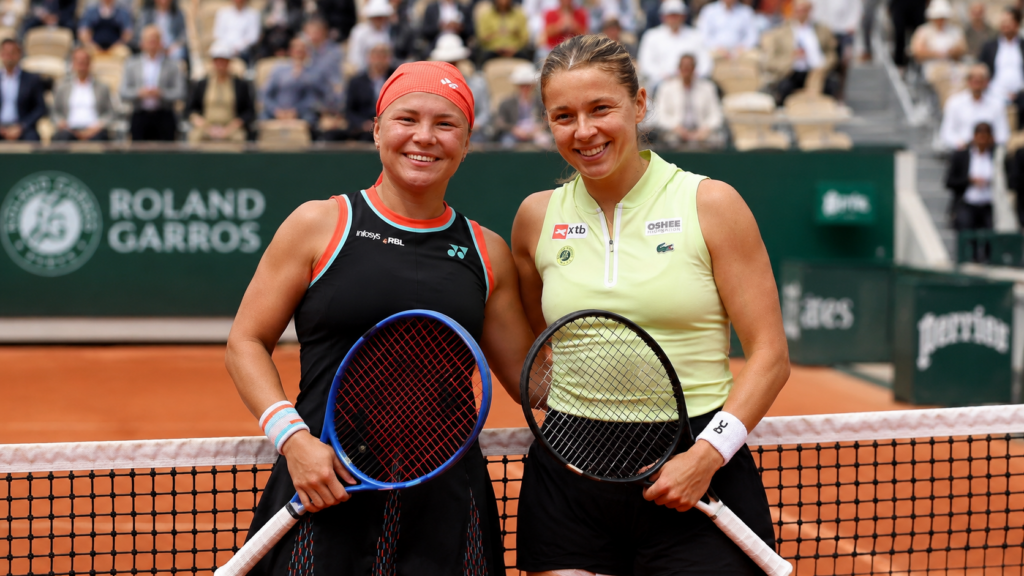
The second women’s semifinal of the 2026 French Open will be played on Roland Garros’ biggest stage, Philippe-Chatrier Court. No. 25 seed Diana Shnaider, the Russian left-hander, faces qualifier Maja Chwalinska of Poland, with the winner advancing straight to the women’s final. Both are left-handed, producing a rare “lefty vs lefty” dynamic on clay, and this match condenses the upsets and resilience of this Paris fortnight.
Shnaider has followed a classic seeded path: five straight wins in the main draw, matching the standard main-draw route into a Grand Slam semifinal. At around 5ft 7in, she leans on steady depth off the baseline and enough pressure on the first ball to often gain the edge in neutral rallies; her seeding also fits her ability to handle the heavy second-week schedule at a major.
Chwalinska’s story reads more like a classic qualifying run: eight wins in Paris—three in qualifying, five in the main draw—more matches and more physical toll, but also a rhythm fully sharpened. At around 5ft 5in, she too hits left-handed and handles spin and changing trajectories on clay; when her serve and return confidence are both firing, the form she built in qualifying often carries into week two.
Clay-court stage and tactics: backhand exchanges in the spotlight
Philippe-Chatrier rewards patient point-building, changes of angle, and mixing height and pace. When two left-handers meet, the familiar “forehand cross-court into the backhand” pattern is flipped overall, and cross-court exchanges from the deuce side often sit more central and stay tighter than usual. This match looks more like a tactical puzzle than a pure slugfest—a better fit for clay-court tempo and the mental hurdle of a semifinal.
From the trends, Schneider fits the mold of a seed who “finds her rhythm on the clay”; Chwalinska is the type who “trades extra matches for steadier form.” The additional qualifying rounds show up in the numbers as a more reliable first serve and fewer double faults, but they also mean her body and schedule reserves face a tougher test—if the semifinal stretches into long exchanges, whoever can use the second serve and return to “pull rallies into a length they’re comfortable with” may well hold the key.
Paris serve and return numbers: the gap is in the details
Source statistics show the two were close on serve during Roland Garros, but Chwalinska held a slight edge in “consistency.” Across five matches, Schneider posted a 69% first-serve percentage and 56% first-serve points won; her 60% second-serve points won is a healthy level for clay. She totaled seven double faults for the tournament (about 1.4 per match) and four aces, suggesting she relies more on placement and rhythm than on serving through opponents outright.
Chwalinska over eight matches: 73% first-serve percentage, 63% points won behind the first serve; second-serve points won also at 60%, level with Schneider—hinting both can grind out points in longer rallies. Six double faults in total, under one per match on average, is an important pillar of baseline confidence for someone who came through qualifying into the main draw.
What advancement means and what to watch
Whoever advances will rewrite this year’s French Open women’s story: on one side, a seed cashing in ranking and draw edge at the crunch moment; on the other, a qualifier turning “three extra matches” into a final ticket. For the WTA rankings and the Grand Slam title race, the semifinal is already a season watershed—the finalist will face a completely different kind of pressure: Schneider leaning toward “depth plus first-strike pressure” control, Chwalinska toward “left-handed angles plus pace changes” to break down opponents.
When watching, focus on three battle lines: first, in cross-court exchanges from the ad side, who wins the fight for the higher contact point and ball control; second, on second-serve points, who does a better job pinning the opponent in passive defence (both players' second-serve points won stand at 60%, so placement quality matters more than raw pace); third, the "hidden scoreboard" of unforced errors and double faults—Schneider hit seven double faults to Chwalinska's six, a narrow gap, but under semifinal pressure, whoever cracks first is often more decisive than the ace count.
The expert read is that this match won't turn on "who can end the point in one shot," but on who can use the patience red clay allows to turn the more awkward angles in a left-hander's matchup into a primary line of attack. Schneider's edge lies in a shorter seeded path and a fuller tank; Chwalinska's edge is a higher first-serve percentage and first-serve points won, plus a hotter touch through a long run. Once the evening breeze and crowd noise rise on Philippe-Chatrier, whoever can extend rallies will be closer to the final.
The biggest post-match storyline is how the finalist handles the winner's first-serve strategy and baseline depth on championship day—if Chwalinska advances, her "eight campaigns in Paris" sample will face an even sharper stress test; if Schneider gets through, she must prove her seeding can deliver on the final stage.