















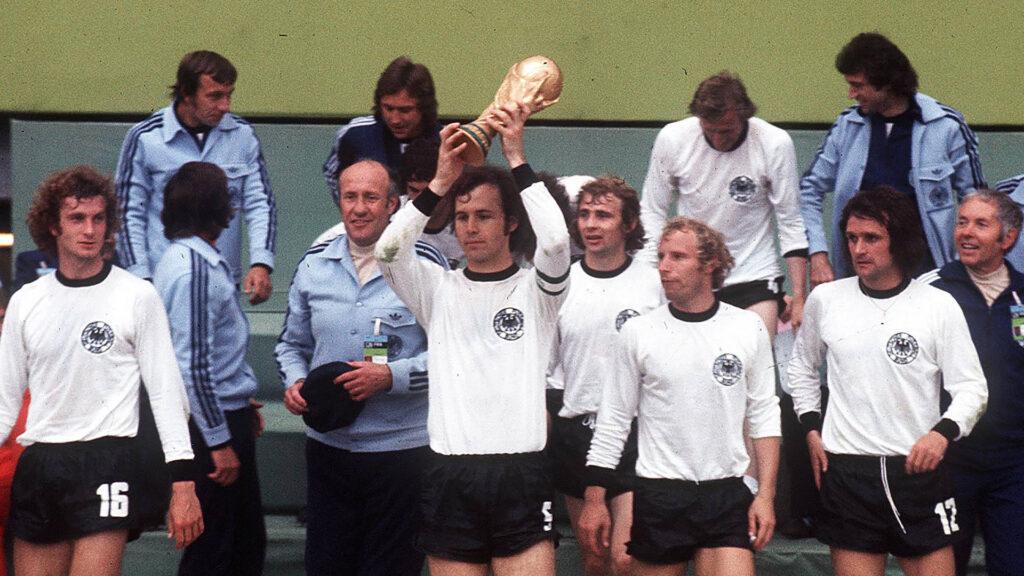
Half a century after the 1974 FIFA World Cup in West Germany came to an end, a best XI pieced together from full-tournament performances and rating data still places Cruyff at the tactical heart—even though the Netherlands lost the Munich final 1-2 to West Germany and fell just short of the title. Total Football left behind the journey; the trophy went to the Federal Republic of Germany, and this 3-5-2 lineup sets out to answer a simple question: who truly drove the games.
How the lineup was built
In goal, Sweden’s Hellström held the spot: steady under pressure across the full month, clean in the chaos. In the back three, Beckenbauer organized progression to sweeper standards; Yugoslavia’s Buljan read danger early and tackled cleanly; Breitner pushed forward from the left, both advancing play and punishing opponents’ mistakes. In midfield, Bonhof was West Germany’s highest-rated engine—he began the tournament on the bench, then became the pivot in possession through patient work in training and the coaching staff’s trust. Deyna brought changes of tempo, Neeskens handled timing, pressing and runs into the box; Yugoslavia’s Acimovic’s two-way technique also made the cut. Cruyff was given license to roam freely between the half-spaces and the defensive line.
Up front, Poland’s Lato locked up the Golden Boot with seven goals; Edström provided the focal point, link-up play and attention in the penalty area. The eleven spanned West Germany, the Netherlands, Poland, Sweden, Yugoslavia and Argentina—like a mirror: this World Cup was not one team’s solo show, but a composite ranking after multiple football philosophies collided across the same schedule.
Cruyff: Best in the XI despite missing the title
The official Best Player honor went to Cruyff, and the numbers are hardly surprising. Across seven matches and 630 minutes, he averaged a Sofascore rating of 8.90; he posted perfect 10.0 scores against Bulgaria (June 23) and Argentina (June 26), with 9.4 and 8.6 respectively against Sweden and West Germany. On the output side, he contributed three goals and three assists, six big chances created, 4.7 key passes per game, 84.7 touches per game at an 80% pass completion rate, 4.7 successful dribbles per game at a 67% success rate.
Looking back from the bench, this kind of data reads more like a “full-team tactical manual”: Cruyff tied the Netherlands’ movement, passing and pressing into one rhythm, and teammates only had to follow his triggers. Losing the final to West Germany does not diminish his dominance across the tournament—the Best XI selection is built on seven games of accumulation, not the emotion of a single 90 minutes.
Championship foundation and bench-to-starter turnaround
On the West German side, Beckenbauer and Breitner formed a calm, disciplined defensive foundation; Bonhof’s story felt more like a dressing-room lesson in growth: start on the bench, earn the starting spot through training attitude, and ultimately become West Germany’s best player on the data sheet. Championship sides are often built not only on 11 starting names but also on players willing to shuttle between the bench and the lineup while maintaining tactical discipline.
The Netherlands’ 2-1 defeat to West Germany in the final put “the aesthetics of Total Football” and “the margin for error a champion needs” in the same frame. Lato’s seven goals reminded people that the scoring charts and the Best XI can overlap but are not the same thing; Hellström and Edström represented Nordic players delivering stability in key matches rather than one-off flashes.
From the coach’s seat: meaning beyond the squad list
If you only recite the scorelines, this Best XI is little more than another post-match roundup. What makes it worth reading is how it captures growth through sustained presence: Bonhoff rising from the bench to the heart of the side, Cruyff turning individual talent into a replicable team language, and Beckenbauer using positional intelligence to keep risk at the back to a minimum. The history lesson of 1974 football often teaches young coaches three things—trust repetition in training, give key players sensible freedom, and after a losing final, still acknowledge the value of an entire tournament’s campaign.
Fast-forward to the present: the Netherlands, Argentina and Sweden remain fixtures on the world football map—the Netherlands are seventh in the FIFA rankings with 1,757.87 points; Argentina are third with 1,874.81; Sweden are 38th, up four places from the previous edition. The echo of the 1974 squads lies not in reproducing those scorelines, but in showing how some national teams turn a generation’s tactical experiments into a lasting cultural asset.
For readers revisiting 1974 footage, it helps to compare by position: first watch how Cruyff pulled all three lines of the Netherlands together, then how Bonhoff’s arrival multiplied West Germany’s midfield options, and finally contrast Lato’s finishing with Hellström’s reading in front of goal. The data supply the answers; what football truly preserves is still the warmth of people finding each other across a full season.