








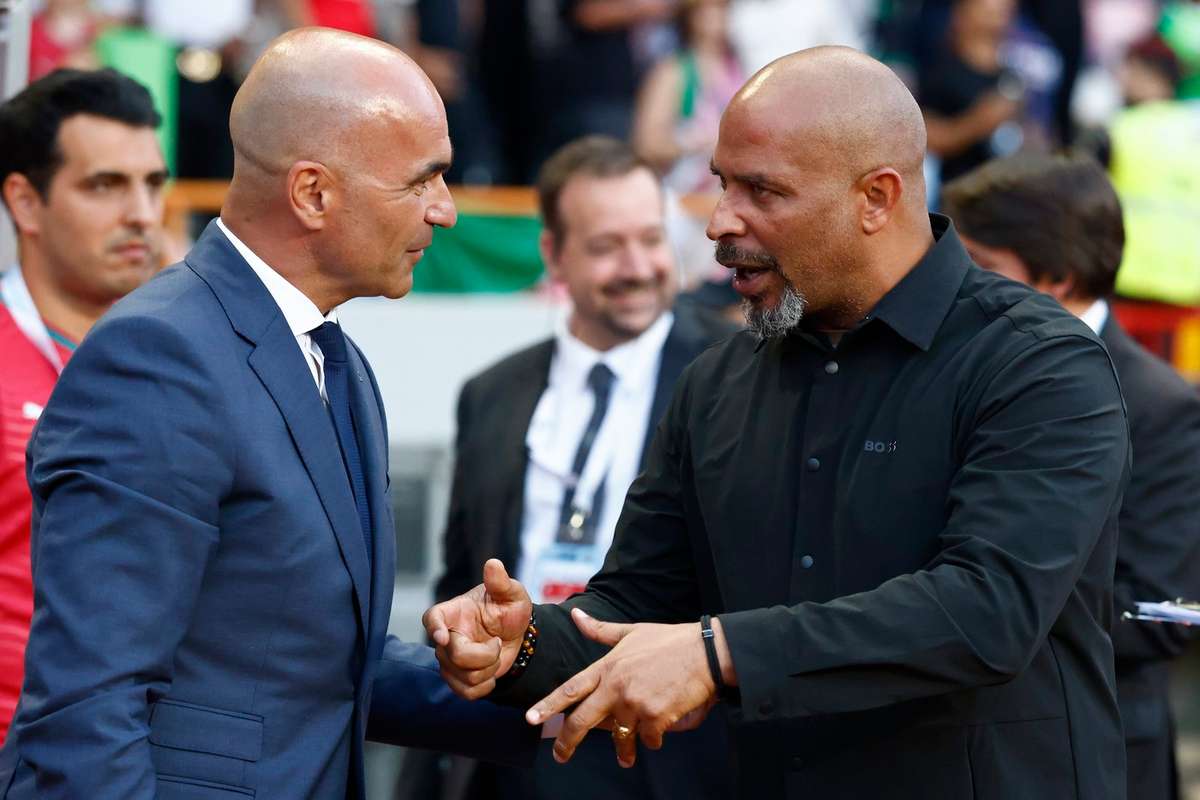
The Nigerian Football Federation’s decision to keep Eric Chelle in charge of the Super Eagles closes a long stretch of uncertainty and reframes a familiar question in Nigerian football: whether short-term results or long-term structure should decide who leads the national team.
Chelle, 48, will remain at the helm of the three-time African champions after agreeing a new deal with the federation. The move follows months of speculation about his future after Nigeria’s 2026 FIFA World Cup campaign ended in the CAF qualifying playoff final with defeat to DR Congo.
Where the Job Stands After Qualifying
Chelle was appointed in January 2025, replacing Finidi George, who resigned just two months into the role. His brief was clear: guide Nigeria through the final phase of World Cup qualifying. That objective was not met when the Super Eagles fell in the playoff decider against DR Congo.
On paper, the gap between the two sides remains visible in the rankings. Nigeria sit 26th in the FIFA table on 1585.09 points, unchanged from the previous cycle. DR Congo have climbed two places to 46th on 1478.35 points. The playoff outcome still stands as the defining result of Chelle’s first full qualifying cycle, but it does not, on its own, settle the debate over whether continuity or change is the better response.
Why Aleshinloye Backs the Renewal
Aleshinloye, a UEFA B licence holder and one of Europe’s emerging data and match analysts, believes retaining the former Mali international is a step in the right direction. In his view, the federation’s choice can work only if it is matched by genuine support and patience rather than treated as a cosmetic fix after a failed campaign.
“Personally, I’m a big fan of coach Chelle,” he said in a direct interview. “I think it’s a positive decision, provided it’s backed with genuine support and patience.”
His argument is structural rather than sentimental. Nigerian football, he said, has repeatedly paid for a lack of continuity.
The Cost of Constant Turnover
“One thing Nigerian football has lacked over the years is continuity in its structure,” Aleshinloye said. “We are too quick to change coaches whenever results don’t go our way, and that makes it difficult to build a clear football identity.”
That pattern has practical consequences. Tactical systems take time to embed. Player roles depend on repeated work on the training ground. Trust between staff and squad cannot be manufactured in a single camp. When a federation reacts to one elimination by replacing the head coach, the next appointment often inherits the same unstable conditions that contributed to the previous failure.
Aleshinloye frames success in broader terms than match plans alone.
“From my experience as a coach, success isn’t just about tactics,” he said. “It’s about relationships, trust, consistency, and giving players time to understand a philosophy.”
Merit, Risk, and What Happens After the Signature
The contract extension has drawn scrutiny because it follows a missed World Cup target. Aleshinloye rejected the idea that the NFF took an unnecessary gamble by keeping Chelle, the Franco-Malian coach who previously worked across club and international football.
“I believe the decision was based on merit,” he said.
“From what I’ve seen, Chelle is an excellent manager, and he has assembled a strong technical team, including Daniel Ogunmodede.”
He also acknowledged the limits of any appointment. Every coaching hire carries risk because football offers no guarantees. What separates a sound decision from a reckless one, in his reading, is what the federation does once the contract is signed.
“Of course, every coaching appointment comes with an element of risk because football offers no guarantees,” Aleshinloye added. “What ultimately determines whether such a decision is successful is what happens after the contract is signed.”
That post-signature environment is where he placed the heaviest emphasis. The NFF, he argued, must resist the temptation to interfere in football matters and instead give the head coach stability, patience, and a clear planning framework.
Support That Extends Beyond the Dugout
For Aleshinloye, renewal only makes sense if it is tied to operational backing. Proper planning, consistent technical staffing, and a pathway from grassroots football to the senior national team are not optional extras in his model; they are conditions for the coach to translate ideas into results.
“Now that the NFF sees his worth and has renewed his contract, they must provide him with the right environment to succeed through proper planning and support,” he said. “I believe we will see an impact in the team’s stability, improve the team’s identity, and develop a pathway from grassroots to the national team.”
That last point matters for a federation that has often been judged on senior-team outcomes alone. Without aligned development structures, even a capable head coach is left selecting from a pool shaped by uneven domestic competition, irregular youth integration, and frequent changes in leadership above him.
Reading the DR Congo Result in Context
The playoff loss to DR Congo should not be erased from the record. It ended Nigeria’s immediate route to the 2026 World Cup and capped a qualifying cycle that will define public perception of Chelle’s tenure. At the same time, treating a single knockout tie as the sole measure of a coach’s suitability can mirror the very instability Aleshinloye warns against.
DR Congo’s recent competitive profile shows a side capable of grinding out results even when not dominating possession. Across recent fixtures in their qualifying environment, they have repeatedly secured draws in tight matches, reflecting a pragmatic approach that can punish teams expecting open control. Nigeria’s higher ranking and greater historical profile did not translate into playoff security, which is precisely the kind of outcome that tests a federation’s appetite for patience.
Aleshinloye’s position is not that the elimination should be ignored. It is that the response should be calibrated. Replacing the coach without fixing the structural issues that surround the role would repeat a cycle Nigeria has run many times before.
What Stability Could Change
If the federation follows through on the support Aleshinloye describes, the benefits he expects are incremental rather than instant: clearer playing identity, less disruption between camps, and stronger alignment between the senior team and lower age groups. None of that removes the pressure on Chelle to produce in the next competitive window. It does, however, give him a fairer platform to do so.
The coming phase will test both sides of the arrangement. Chelle must show that his technical staff, game model, and man-management can lift Nigeria above the inconsistency that marked parts of the qualifying campaign. The NFF must show that contract renewal was not merely a delay tactic but the start of a more disciplined governance approach.
Aleshinloye stopped short of predicting trophies or automatic qualification for future cycles. His case is narrower and, in that sense, more credible: continuity backed by merit and institutional support gives Nigerian football a better chance to build something durable than another hurried reset ever could.