

















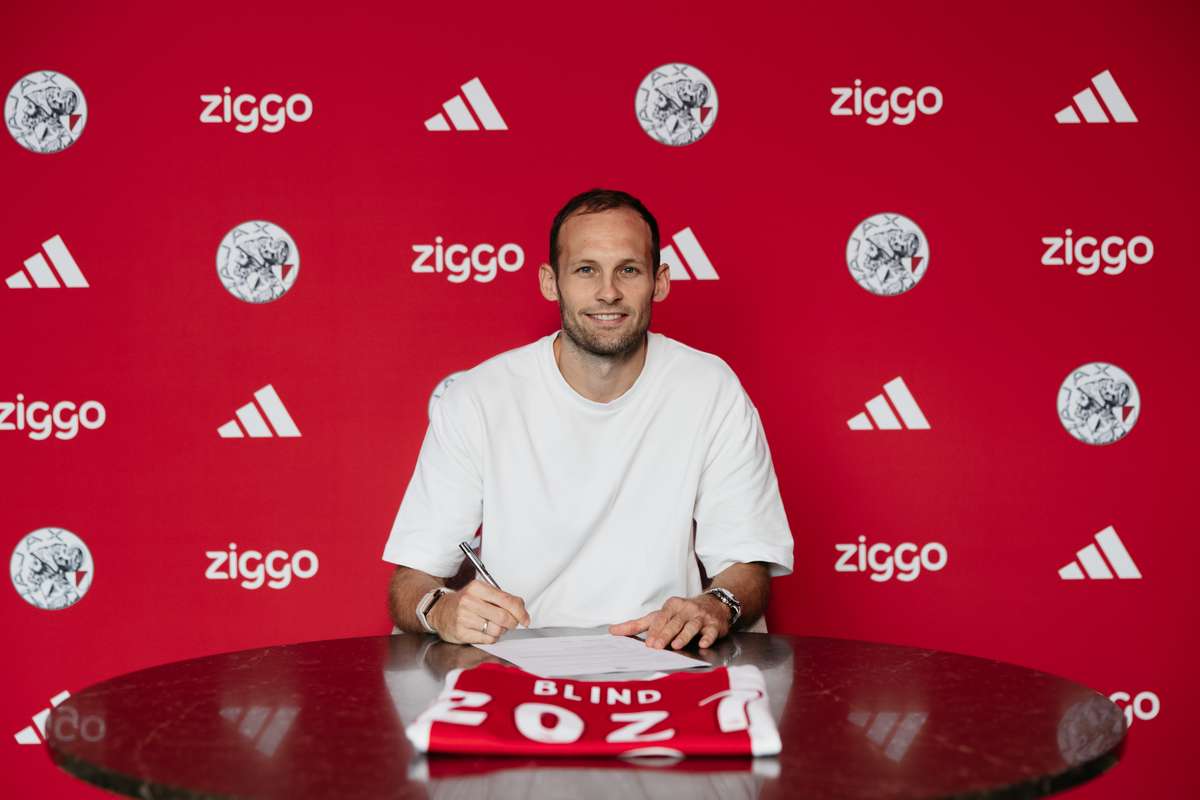
Daley Blind is back where the story started. The 36-year-old signed a one-year contract with Ajax after his deal at relegated Girona expired at the end of June, making him a free agent and sending him home for what the club and player are framing as a career-ending spell in Amsterdam.
For supporters who have watched this arc unfold across three decades of Dutch football, the move lands with the weight of familiarity rather than surprise. Blind made his professional debut for Ajax in December 2008, grew into a cornerstone of the side, and left for Manchester United in 2014. He returned in 2018 and picked up where he left off. Now he is back again—not as a prospect, not as a stopgap mercenary, but as a veteran whose presence carries institutional memory.
A Trophy Thread That Runs Through Blind
The numbers attached to Blind’s Ajax career are difficult to ignore. He has played 333 games for the club across his first two spells. With Ajax, he has won seven Eredivisie titles, two Dutch Cups, and two Johan Cruyff Shields.
There is a statistic that follows him like a shadow in Amsterdam: Ajax have won all of their last seven Eredivisie titles with Blind in the squad. In every season since 2011 in which he was not part of the group, the club went trophyless in the league. Correlation is not destiny, and football never owes anyone a neat narrative—but that pattern is too consistent to dismiss as coincidence alone. Blind has become part of the club’s winning texture: calm in possession, reliable in transition, and steady enough to anchor a dressing room when younger players need a reference point.
His recent chapter in Spain ended on a harder note. Girona’s relegation from LaLiga closed out a stint that did not carry the same silverware glow as his Amsterdam years. That context matters. Blind is not returning as a conquering hero from abroad; he is returning as a professional who has seen the bottom of a league table and still believes he has something to offer at the highest level of Dutch football.
What Ajax Are Buying—and What They Are Signaling
Technical director Jordi Cruyff welcomed the signing with language that sounded less like transfer-market theater and more like internal alignment. On the club website, he said it was “great to see Daley returning to the club where it all began for him,” adding that Blind “brings experience, composure and quality, and that can help this squad straight away.” Cruyff framed the move as a “logical step,” arguing that someone with Blind’s background and personality fits what Ajax are trying to build.
That phrasing is worth reading closely. Ajax are not selling this as a nostalgia signing for the stands alone. They are describing a functional addition: experience, composure, quality—three words that translate, in plain terms, to leadership on the pitch and stability off it. For a club that has cycled through ambitious projects and impatient timelines, bringing back a player who already understands the house rules is a quieter kind of ambition.
Blind has already joined Ajax’s training camp in Garderen, which suggests the club wants immediate integration rather than a ceremonial announcement followed by a delayed arrival. At 36, every week of preparation counts, and Ajax appear to be treating this as a football decision first and a symbolic one second.
One Year on the Pitch, Then a Seat in the Dugout
The contract structure tells the longer story. Blind signed for one year in Amsterdam and is expected to move into a coaching role after the 2026-27 season. That detail shifts the entire framing of the transfer. This is not merely a veteran extending his playing days where the crowd chants his name loudest. It is a mapped transition: player now, staff member next.
Ajax have been here before with club icons, though every case carries its own risk. Embedding a beloved figure into the coaching structure can strengthen culture—or blur accountability if results turn. Blind’s advantage is that he has already lived inside the club’s rhythms twice. He knows how Ajax want to play, how the environment demands standards, and what it means to represent a club that treats its academy and first team as a single conversation.
If the post-2026-27 plan holds, his final season as a player becomes a live audition for his second career. That is a lot of pressure dressed up as a farewell tour. Then again, Blind has spent much of his professional life performing under the expectation that Ajax must win—and often do so while looking like Ajax.
Michel, Girona, and a Reunion With Purpose
Blind’s return also intersects with another familiar name. Michel, who managed him at Girona, signed a two-year deal with Ajax in June. Blind has spoken warmly about that working relationship, saying he “really likes to work with Michel” and that he appreciates “his philosophy of playing—building up from the back, with many positional changes and attractive football.”
That alignment matters more than a shared passport or a shared previous employer. Modern Ajax identity is not static; it is negotiated every season between sporting directors, managers, and the players asked to execute a style that looks effortless on highlight reels and brutal on the body. If Blind and Michel already trust each other’s football language, the adaptation period shortens. For a one-year contract with a coaching pathway attached, shortened adaptation is not a luxury. It is the whole point.
What This Means for Supporters Watching the Loop Close
Fans will feel this signing in different registers. Some will hear only the romance of a club icon coming home to finish where he began. Others will ask whether sentiment can survive contact with a demanding league schedule. Both reactions are fair. Ajax have chosen a path that weds emotion to structure: a proven winner on the field, a planned mentor off it, and a connection to a manager whose ideas Blind already endorses.
There is also a quieter fan truth here, the kind that rarely leads transfer headlines: people invest in careers that feel coherent. Blind’s story—debut in Amsterdam, detour to England, return and dominance, Spanish hardship, home again—is coherent even when it is not flawless. Supporters do not require perfection. They require honesty of effort and a sense that the player still respects the badge.
The Bottom Line
Daley Blind’s third Ajax spell is easy to summarize in headlines and harder to evaluate in October. On paper, Ajax get a free, experienced defender who already belongs to their trophy history. In practice, they get a bridge: between past and future, between the dressing room and the coaching staff, between a relegation ending in Spain and a club that still expects to win at home.
If Blind stays healthy and Michel’s system clicks as quickly as both men believe it can, this may look like one of the most sensible moves of the summer—soft on the heart, sharp on the spreadsheet, and unmistakably Ajax in tone. If not, the club will face the usual questions about sentiment in squad building.
Either way, Amsterdam has welcomed back a player who helped define its winning era—not to relive it blindly, but to help write the next line before he steps off the pitch for good.