

















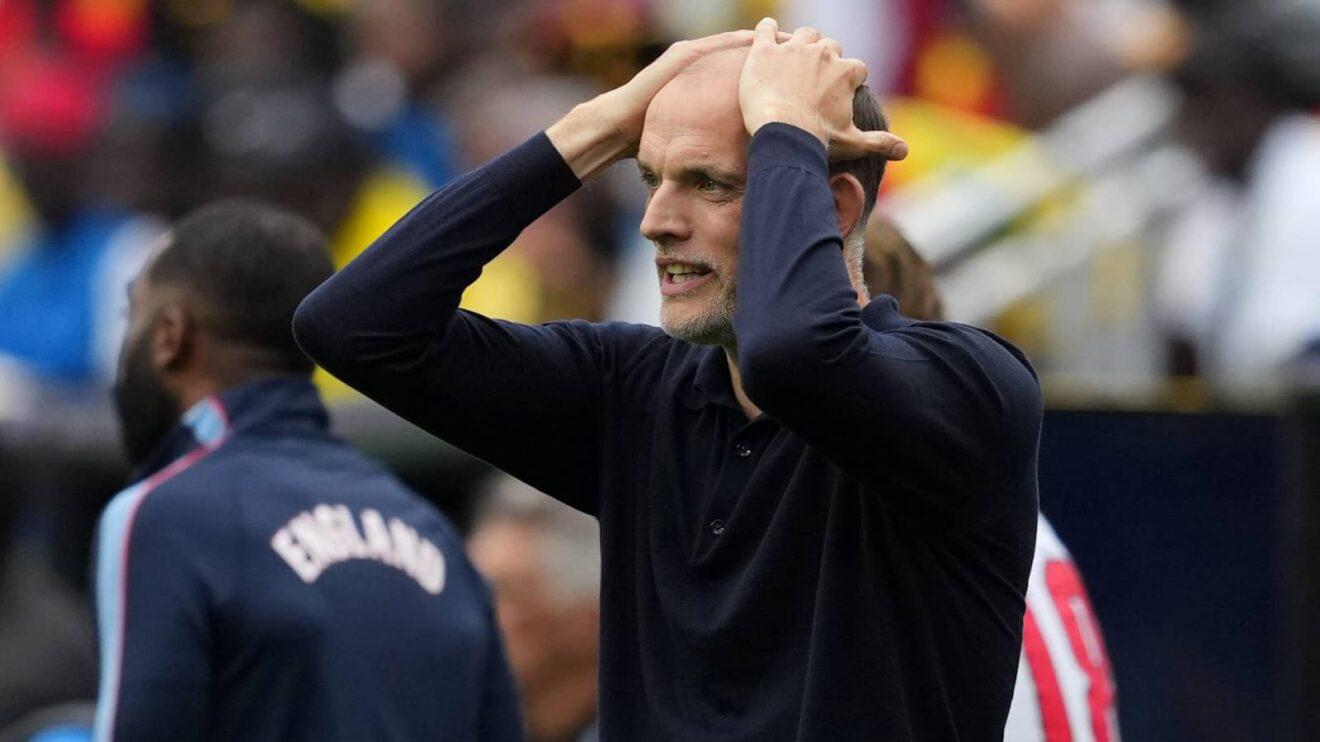
周六晚的 L 组收官战,英格兰对阵巴拿马的首发名单一出,外界最先盯上的不是边路换了谁,而是中场轴心怎么排。图赫尔在赛前发布会上给出了一套可复盘的选择逻辑:伤病清单、黄牌管控、破密集防守的提速需求,共同框定了这一次五处轮换。
伤病清单:三人带伤,仅安德森留阵
里斯·詹姆斯、德克兰·赖斯与埃利奥特·安德森近期均带伤作战,三人之中只有即将加盟曼城的安德森进入首发。另有消息称,詹姆斯的伤势相对更重,存在缺席英格兰淘汰赛首战的可能;赖斯则被明确安排轮休,不出现在对阵巴拿马的首发阵容中。
这意味着英格兰中场结构必须重组。赖斯缺席时,贝林厄姆将回撤,与安德森组成更靠后的 midfield pairing;同时,贾雷尔·夸萨、尼科·奥赖利、摩根·罗杰斯、布卡约·萨卡与马库斯·拉什福德进入首发,整体轮换幅度从对阵加纳时的两处调整,扩大到了五处。
图赫尔对此的态度很直接:"我们准备充分,场上是一支强队,接下来要证明什么、迈出下一步并赢下比赛。"在他看来,板凳深度允许在大范围换人的同时,仍派出具备竞争力的阵容。
提速破密:密集低位防守下的战术回应
图赫尔把轮换目标说得很清楚——"加快比赛节奏"。在对阵加纳一战中,英格兰面对对手全员退守的低位防守,进攻推进偏慢、边路渗透效率不足,最终未能取得进球。图赫尔多次强调,当对手以十人乃至更多兵力压缩空间、投入防守时,比赛节奏一旦拖慢,破密成本会急剧上升。
Therefore, this change was not simply a case of “pick whoever is in form,” but was built around the tactical theme of “raising the tempo.” Tuchel admitted the team “still has things to improve,” but the core aim of the starting adjustments was clear: use more frequent switches of play and more aggressive wide thrusts to break down the low block Panama might deploy.
Wide-unit logic: Saka and Rashford starting was not about “who replaces whom”
When asked whether Saka and Rashford starting meant Anthony Gordon and Noni Madueke had underperformed, Tuchel took issue with the question itself: “You’re too focused on individual positions.”
His explanation leaned toward the system rather than direct swaps: “It’s not as simple as replacing Anthony with Marcus and everything is fixed. Anthony played well, Marcus made an impact off the bench, and now it’s rotation; Noni also played well, and now it’s Saka’s turn to start. This is a wide-unit issue—we attack from the flanks, they’re all part of the system, not just about Marcus or Anthony.”
From a selection standpoint, Tuchel treats the flanks as one unit: the link between wingers and full-backs, the balance between attacking width and defensive recovery, and the timing of forward runs in wide attacks all determine the output together. Starting Saka and Rashford together was a wholesale reshuffle of the wide unit, not a single-point rejection of Gordon or Madueke.
Two threads behind Bellingham dropping deeper: Rice’s injury and yellow-card management
Before the World Cup, whether Bellingham or Rogers would hold the No. 10 role was a major talking point; against Panama, both started—Bellingham at No. 8 and Rogers at No. 10. Tuchel made clear this was directly tied to two factors related to Rice.
First, although Rice had a minor injury, he was fit to play; Tuchel chose to “manage his minutes” rather than run him into the ground in this final group-stage match. Second, Rice was on a yellow card; Tuchel wanted to observe the intensity of challenges, the frequency of duels, and the referee’s card threshold during the match before assessing personnel for the knockout stages. For that reason, Bellingham dropped to No. 8 to partner Anderson, while Rogers took the No. 10 role.
Tuchel's exact words were: "I'll take care of Declan's situation. He picked up a bit of an injury, but he's already available to play — I just want to manage his minutes. He also has a yellow card, so I want to see how this match plays out — how physical it gets, how frequent the challenges are, how strictly the referee cards. I need to form a judgment on that, and Declan understands this as well. So Bellingham will play the No. 8 role, and Morgan will play the No. 10 role."
This was a typical risk-management selection: Rice was not entirely unavailable, but with an injury not fully healed and yellow-card concerns stacked on top, Tuchel chose to use the Panama match as an information-gathering window while having Bellingham take on more deep-lying organizing and advancing duties, with Rogers linking play up front. With Bellingham dropping deeper, the vertical layering of England's midfield changed — Anderson took on a more pure defensive anchoring role, Bellingham at No. 8 handled connection and progression, and Rogers at No. 10 looked for the final pass and space to make forward runs.
Summary: Three layers of consideration behind the rotation
Breaking down Tuchel's five changes this time, at least three strands of logic were running in parallel: intensity management driven by injuries and yellow cards, the need to up the tempo against low-block defending, and a systemic reshuffle of the wide units and the midfield axis. If observers only fixate on "who replaced whom," they'll easily miss what Tuchel was really doing — in the group-stage finale, using controllable rotation costs to preserve the availability and tactical flexibility of key players for the knockout stages.