

















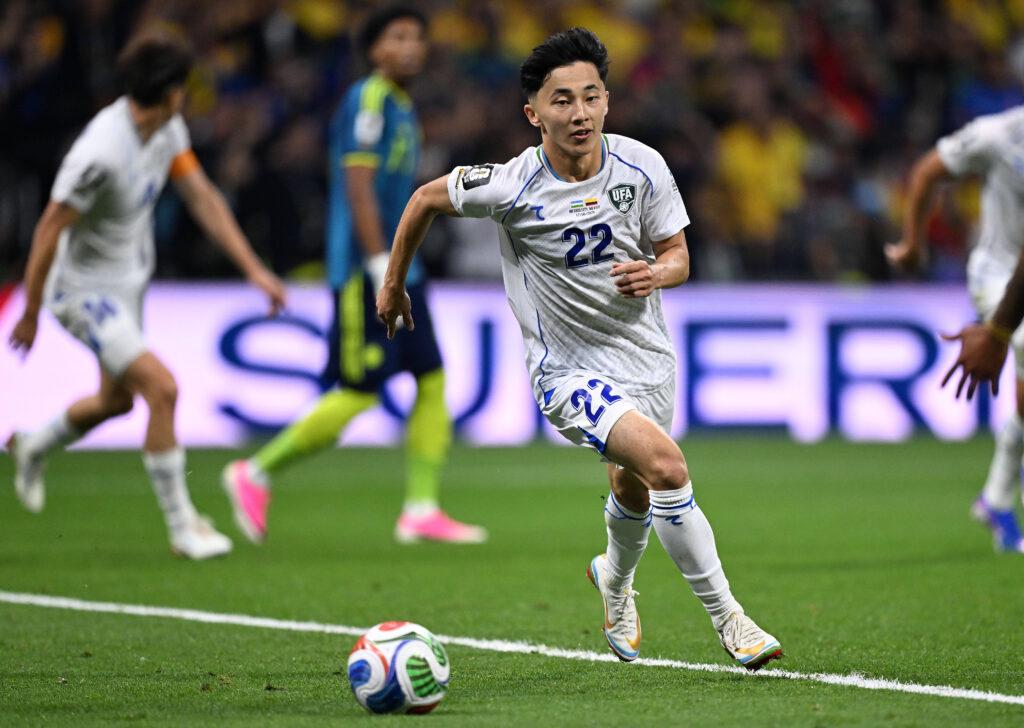
The latest World Cup player sprint speed rankings have been updated, with Uzbekistan midfielder Fayzullaev topping the list at a peak speed of 36.0 km/h. The top five are separated by just 0.3 km/h from first to fifth, making this a classic case of margins decided by the finest of details—on the elite stage, a gap of 0.1 km/h can often come down to a split-second on the first step or half a stride in positioning.
Midfielder on Top: Breaking Positional Stereotypes
The upper reaches of the speed charts have long been dominated by full-backs and centre-backs, but this time a midfielder has taken the lead. Fayzullaev's 36.0 km/h is only 0.1 km/h faster than Stanisic (35.9 km/h) in second place—a margin that looks slight on paper, yet carries real weight. Midfielders must burst into top gear in transitions, track through balls, and burst into space; the demands on explosiveness and reaction time are no less than those placed on sprint-oriented wide defenders.
For fans, these data-driven rankings have become a kind of "second front" beyond the match itself. Some pore over their phones, line by line, comparing the gaps among the top five; others treat peak speed as a window into a player's physical condition. Speed numbers will never replace goals and assists, but they offer a clear-cut dimension: when a game opens up and space stretches, who can still push the accelerator to the floor on the final burst?
0.3 km/h: A Tight Chase Among the Top Five
Positions two through five on the rankings are almost a straight line: Stanić at 35.9 km/h, Singo at 35.8 km/h, and Fonville and Brown tied at 35.7 km/h. From first to fifth, the total gap is just 0.3 km/h—on the pitch, that might come down to one extra stride in the space of a breath.
This tight clustering means the standings could shift at any moment. One cleaner acceleration burst in the next round of matches could nudge the rankings. For viewers tracking player athletic performance, a weekly glance at the speed chart has become a fixed habit: seeing who has found a faster "lane," and who still maintains peak output amid a grueling schedule.
Four defenders in the rankings: speed is now essential for the modern back line
Among the top five, aside from Faizullaev, the other four spots are all held by defenders. Put Stanić, Singo, Fonville, and Brown's numbers together, and the message is clear: in modern football, pace for defenders has gone from a "nice-to-have" to a hard requirement. Quick recovery runs, covering half-space gaps, and shutting down counterattacks—in these situations, raw speed often decides whether a defense can recover before being caught out of position.
The source of each defender's peak speed varies: some hit their limit on overlapping runs, others explode when tracking counterattacking runs. Different roles, same conclusion—defenders who can run, dare to run, and know when to run are earning greater tactical trust on the World Cup stage.
Data Consumption: How Fans "Read the Game" Through Speed Rankings
The full list covers 50 players—the top five are just the tip of the iceberg. For casual viewers, the value of speed rankings lies in lowering the barrier to understanding: without frame-by-frame replays, you can quickly build a reference for "who's faster." Post-match discussions, social media comparisons, and even player tags on merchandise all use this kind of hard data to create a "quantifiable narrative."
From an event economics standpoint, single-stat leaderboards are also part of the content consumption chain. Peak speed is well suited to short-form clips and secondary distribution in highlights, data visualization pages, and fan communities; for brands and rights holders, such lists can also spawn talking points like "Speed King" and weekly sprint updates, turning competitive details into viewing material fans can return to again and again. Fans aren't just buying 90 minutes of football—they're also buying the post-match satisfaction of continuing to "break down the data."
Our Take: Rankings Will Change, but the Logic of Speed Won't
Faizullaev currently leads, but his 0.1 km/h advantage could be overturned at any moment—and that's precisely what makes this list compelling. A midfielder topping the chart shows speed is no longer the preserve of wingers; four defenders in close pursuit shows defensive acceleration has become the norm at the World Cup. What to watch next isn't just whether the rankings will change hands, but whether peak speed can hold up under knockout-stage pressure: stamina, tactical role, and space on the pitch all combine to reveal whose pace is merely a "surface stat" and whose is a genuine "weapon in key moments."
When the next data update drops, the top five will likely shift slightly. For fans, treat this ranking as a match-watching guide — the next time you see a counterattack snuffed out, a successful overlapping run down the wing, or a midfielder suddenly surging forward, check back against the list: did that burst of pace come close to the peak numbers on the chart?