













For young footballers watching the World Cup from campus pitches, training grounds, and career-planning workshops, the tournament is delivering more than dramatic goals. It is offering a real-time masterclass in how officiating shapes outcomes, reputations, and the paths players take toward—or away from—elite careers.
Across the opening knockout rounds, two matches stood out not only for their results but for the sharply different standards applied by referees and VAR teams. One tie flowed with clarity and consistency. The other descended into controversy that could influence how the next generation interprets fairness, discipline, and professional accountability.
When Refereeing Lets the Game Breathe: Brazil vs Japan
The World Cup round-of-16 meeting between Brazil and Japan was, by most accounts, an open, entertaining contest that rewarded ambition rather than obstruction.
Japan set the tone early, taking the lead in the 29th minute through a direct strike from Sano. The goal reflected a broader trend among technically developed national programs: quick transitions, vertical passing, and confidence to shoot from range rather than over-elaborate in the final third.
Brazil responded as the clock wound down, with Casemiro leveling the score and forcing the tie toward extra time. In the 95th minute, Gabriel Martinelli delivered the decisive blow, converting late pressure into a winner that kept Brazil's campaign alive.
Referee Maurizio Mariani earned praise for allowing the match to flow while still punishing fouls that stopped promising attacks. Yellow cards were shown when necessary, but the game was not interrupted by excessive stoppages or inconsistent application of the laws.
For youth players building careers, this model matters. When officials protect attacking momentum without tolerating cynical fouls, creative players feel empowered to express themselves. That environment rewards technical development—the kind cultivated in academy systems across Brazil and Japan—and sends a clear signal that discipline and flair can coexist at the highest level.
A Contrasting Case Study: Germany vs Paraguay
If Brazil-Japan illustrated how good officiating can elevate a match, the Germany versus Paraguay tie exposed the career-altering consequences when standards slip.
Paraguay, ranked 40th in the latest FIFA standings against Germany's 10th, defended resolutely and took a deserved lead in the 42nd minute. Germany, performing below their usual level, found an equalizer in the 54th minute. What followed in extra time became a textbook example of how contentious decisions can overshadow athletic achievement.
Germany believed they had scored again to take the lead, only for VAR to intervene. After review, the referee disallowed the goal for an alleged foul on the goalkeeper. The decision drew sharp criticism: in a contact sport, challengers around the goalmouth routinely jostle for position, and critics argued the goalkeeper went to ground too easily. Disallowing the strike, in that reading, punished normal physical contest rather than genuine foul play.
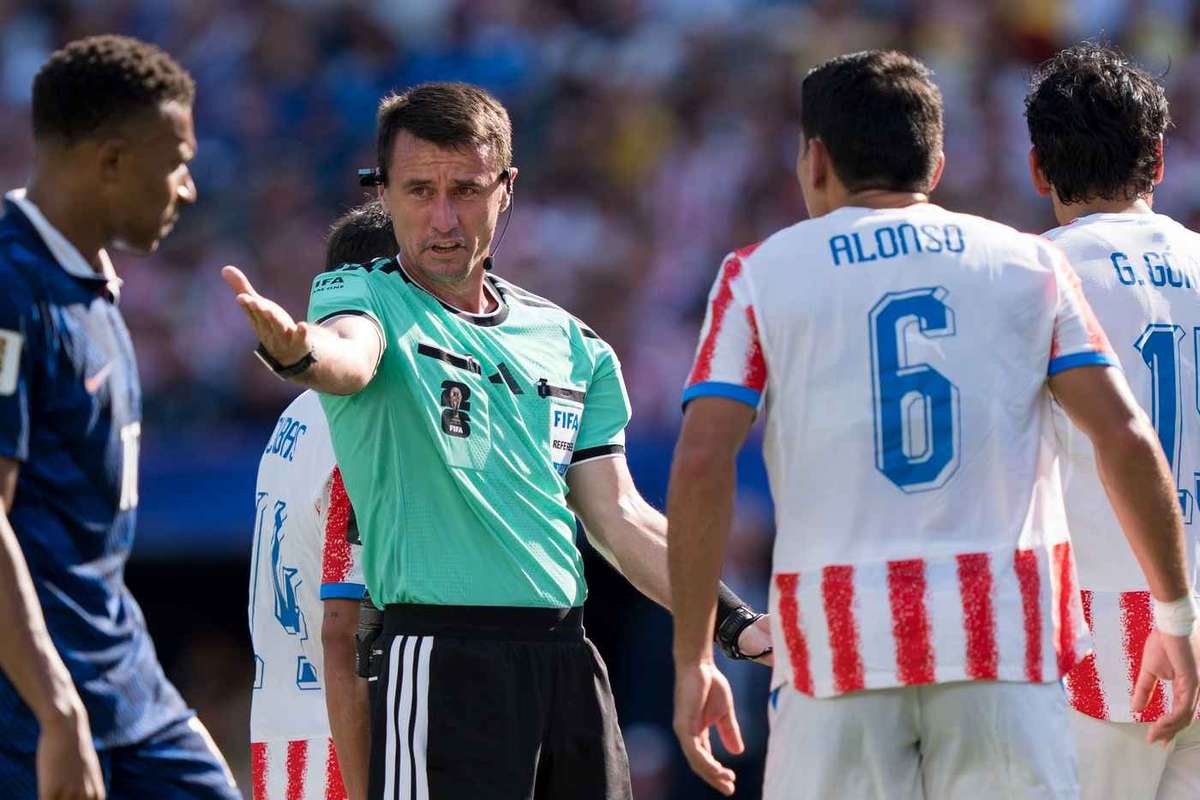
The match then deteriorated. Players lost composure, tensions rose, and the referee worked overtime to maintain control. Amid the chaos, Jamal Musiala escaped with a yellow card for a challenge that many observers classified as serious foul play—a lunge with excessive force that endangered an opponent's safety.
Under IFAB guidelines, any tackle that endangers an opponent or uses excessive force must be sanctioned as serious foul play, typically with a red card. Musiala's challenge, born partly from frustration after the disallowed goal, fit that description for several analysts. VAR's failure to recommend a review left Paraguay to compete against eleven men when they might otherwise have faced a numerical advantage.
Paraguay ultimately claimed a famous victory on penalties. Yet the lasting image for many viewers was not the shootout heroics but the uneven application of technology and discipline—a pattern that can discourage smaller nations while emboldening favorites who survive marginal calls.
What This Means for Aspiring Professionals
College recruiters, academy directors, and sports management programs increasingly stress that modern players must understand officiating as part of their professional toolkit—not something that happens to them from the sidelines.
Three trends emerge clearly from these two matches:
First, consistency builds trust. When referees like Mariani apply the laws predictably, players adapt quickly and matches retain rhythm. Inconsistent standards, by contrast, invite simulation, dissent, and the kind of emotional spikes that derail careers through suspensions or reputational damage.
Second, VAR is now a career variable. Young attackers must recognize that goals can be overturned minutes later; defenders must understand that escaped fouls may still be reviewed. Germany's disallowed extra-time goal is a case study for sports law seminars: what constitutes legitimate contact versus foul play around goalkeepers remains one of football's most debated gray zones.
Third, discipline under pressure separates sustainable careers from short bursts of talent. Musiala's challenge—whether or not one agrees it warranted a red card—illustrates how frustration after a controversial decision can trigger actions with long-term consequences. For players eyeing World Cup squads in 2030 or beyond, emotional regulation is as marketable a skill as first-touch quality.
Ranking Context and the Bigger Picture
The results also reshuffle the narrative around FIFA's current hierarchy. Brazil, ranked sixth globally, survived a test against an improving Japan side sitting 18th. France, ranked first, continues to advance amid broader debates over officiating consistency elsewhere in the bracket. Paraguay's upset path, meanwhile, reinforces that lower-ranked nations can compete when organization meets opportunity.
For students mapping international football careers, these matches offer practical insight: success at World Cup level depends not only on technical ability but on navigating an officiating ecosystem that remains imperfect, human, and occasionally contradictory.
Looking Ahead
As knockout football intensifies, the standard applied by referees and VAR teams will likely determine as many headlines as goals and assists. Brazil and Japan showed what is possible when the whistle supports rather than suffocates the sport. Germany and Paraguay showed the opposite—a reminder that for every Martinelli moment of joy, there is a disputed decision that can alter a nation's summer and a player's legacy.
Young athletes choosing between club pathways, national team ambitions, and academic programs should watch these episodes closely. The modern game rewards those who can perform under scrutiny, accept marginal calls, and maintain discipline when frustration peaks. That is not a lesson found in any textbook—but it may prove the most valuable takeaway of this World Cup cycle.