

















There is a particular kind of exhaustion you carry home from a World Cup summer — not only the emotional kind, though that arrives in its own time, but the physical echo of what you have watched. Your legs ache from standing. Your throat is dry from shouting at sprints that appear without warning. Somewhere between the stadium exit and the last train platform, you replay a defender suddenly becoming a blur along the touchline, or a midfielder arriving again and again in the same corridor of grass as if the pitch had narrowed to a single lane.
The tournament's tracking numbers confirm what terraces across host cities already suspected: this World Cup did not merely reward craft and composure. It rewarded lungs, hamstrings, and the willingness to keep running when the scoreboard and the clock were both telling stories at full volume. For supporters who measure a tournament by atmosphere as much as by results, the data reads less like a spreadsheet and more like a second soundtrack to the summer — the hidden rhythm beneath every roar.
The sprint ledger
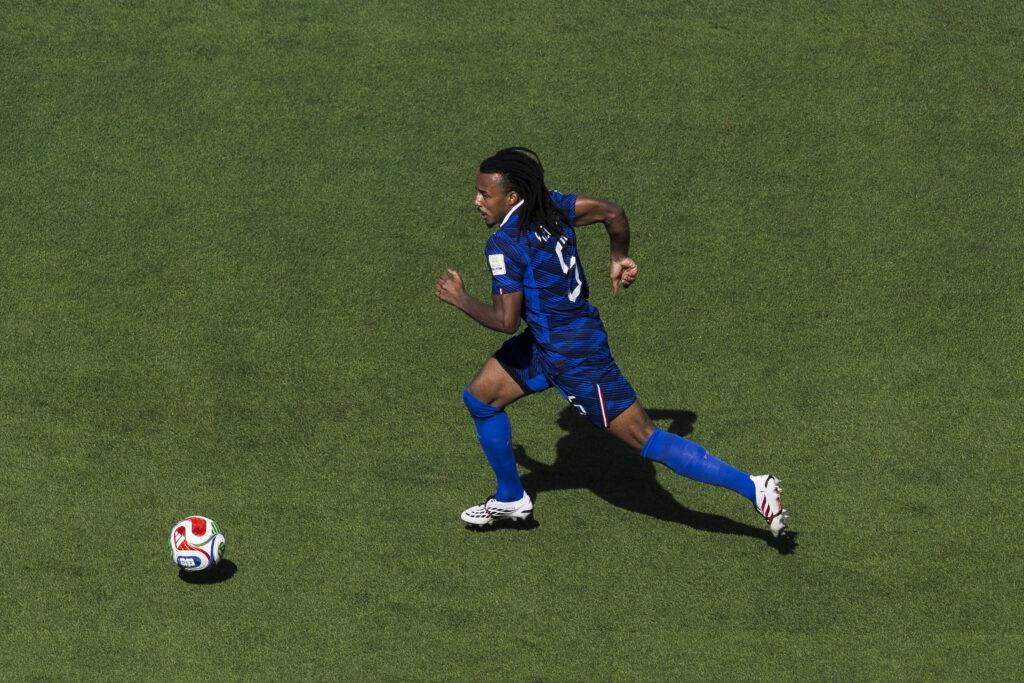
At the sharp end of raw pace, Jules Koundé set the fastest recorded top speed at 36.1 km/h — a figure that lands like a gust through an open stadium concourse. The France right-back did not earn that mark on reputation alone. He earned it in the scattered seconds when a loose ball turned a structured defensive line into a footrace nobody had time to arrange politely. France entered this cycle ranked first in the FIFA standings, and the sight of Koundé accelerating past traffic felt consistent with a side that has learned to weaponize tempo without surrendering control.
Right behind him, Djibril Sow and Uzbekistan's Abbosbek Fayzullaev both touched 36.0 km/h, a reminder that acceleration on this stage rarely respects geography or tactical labels. Croatia's Josip Stanišić and France's Theo Hernández followed at 35.9 km/h, keeping the elite group tightly bunched in a way that would look manufactured if you had only seen it on a screen. In the stands, those margins are almost invisible. On the tracking sheet, they are the difference between first and fifth.
The next pack arrived at 35.8 km/h: Mexico's Julián Quiñones, Antoine Semenyo, Tani Oluwaseyi, Florian Grillitsch, and Neil El Aynaoui. Watching that list is like watching supporters file out after a night game — different accents, different shirts, the same shared admission that speed here was universal currency. Emerging names like Fayzullaev and Oluwaseyi showed they could hang with Europe's quickest for raw pace, which is the sort of detail fans repeat to strangers in line for coffee long after the final whistle.
Mileage as identity
Endurance tells a quieter, more relentless part of the story. Andrés Cubas led all players for total distance covered with 58.3 km across his matches. Youri Tielemans followed at 57.8 km, with El Aynaoui close at 57.3 km. Rodri logged 55.5 km, and Weston McKennie rounded out the top five with 54.6 km.
These are midfielder's numbers in the truest sense — the kind earned between both boxes, in the transitional seconds when a stadium holds its breath before deciding whether to roar or sigh. The margins are slim, almost polite, yet they describe workloads carried across multiple games rather than one cinematic burst. Cubas set the pace for outright volume. Tielemans and El Aynaoui offered a blend of control and coverage that coaches value and supporters feel in the tempo of a match even when they cannot name the statistic behind it.
What stands out is El Aynaoui's dual presence. He appears among the fastest sprints and among the highest cumulative totals, a useful two-way marker of World Cup form that fans tend to recognize before analysts finish annotating it. A player who can arrive first to a loose ball and still be available ten minutes later changes the texture of a game in ways a highlight reel may never fully capture. In crowded fan zones and outside transit hubs, that is the player people point to when they say someone "looked everywhere at once."
When one night asks for everything
Some fixtures demand a different kind of reckoning entirely. Tielemans posted the largest single-match total with 15.1 km during Belgium's 3-2 win over Senegal — a scoreline that feels, in retrospect, like the sort of night where every meter had a price attached. Belgium, ranked ninth in the FIFA standings, produced not only a result that sent supporters home with their voices shredded but a physical ledger that explained how the game was won in the spaces between the goals.
Timothy Castagne was second at 14.7 km in the same contest, as if the fixture had issued a shared assignment and both men accepted without negotiation. Jackson Irvine reached 14.6 km for Australia, while Joshua Kimmich and Ismaïla Sarr both registered 14.5 km — peaks that usually bloom in high-tempo games where transitions arrive in clusters and recovery becomes a luxury.
If you were in the stands for one of those encounters, you likely remember the sensation more than the statistic: the air thickening slightly each time the ball moved end to end, supporters leaning forward as though collective belief might add another gear. Single-match mileage totals rarely make the nightly news, yet they explain why certain shirts looked spent before the hour and why others still found a final sprint in stoppage time.
What the numbers leave behind
Speed charts and distance totals will never replace goals, saves, or the communal gasp of a near miss. Still, they deepen the portrait of a World Cup that asked modern footballers to be artisans and athletes at once. France placed two speedsters in the top five through Koundé and Hernández. Belgium turned Tielemans's endurance into a defining feature of its most dramatic victory. Australia, ranked 27th in the FIFA standings, had Irvine among the single-match leaders, a small but telling detail for a side whose supporters often measure progress in effort as much as in outcomes.
For fans, these figures are less a lecture than a companion memory. They explain why a substitute shirt looked damp before the hour. They explain why a midfielder's touch remained tidy deep into extra time. They give language to the breathless quality so many carried out of the turnstiles this summer — the sense that the tournament was not only played at a high level but lived at a high pulse.
The World Cup remains the stage where reputations are made in obvious ways: a volley, a penalty saved, a tears-in-the-tunnel interview. But underneath those headline moments ran another competition altogether — who could move fastest, who could keep moving longest, and who could make both look inevitable. Long after the last bus leaves the stadium district, that hidden race is often what supporters remember when they close their eyes and hear the crowd again.