












By the time the round of 16 arrived, this pairing had already outgrown a simple bracket line. Canada and Morocco were never just two flags on a schedule. They were a rematch with receipts, a venue with memory, and a contrast in tournament identity sharp enough to travel across time zones before kickoff.
That is the real propagation path here. Neutral audiences do not latch onto every knockout tie equally. They follow the ones where numbers tell a story, where one side is trying to rewrite a stubborn record, and where the other side walks in carrying the weight of recent World Cup folklore. This fixture checks every box.
How the head-to-head became the headline before a ball was kicked
The historical frame is blunt. Canada are winless in four meetings with Morocco across all competitions, with one draw and three defeats. That is not a trivia footnote. It is one of their longest winless head-to-heads on the books, a streak that only a handful of recurring opponents have managed to stretch even longer.
For broadcasters and digital editors, that kind of number does immediate work. It gives the matchup a clear emotional hook for Canadian viewers—break the curse—and a confidence anchor for Moroccan audiences who have seen this script before. Neutrals get the cleaner narrative: can the underdog finally flip a rivalry that has refused to bend?
Morocco’s record against Concacaf opposition at the FIFA World Cup adds another layer. They beat Haiti 4-2 in this year’s group stage and previously defeated Canada in their final group game at Qatar 2022. Two World Cup tests against the region, two wins. That is the kind of clean trend line that travels fast in preview packages and social clips because it sounds definitive without needing extra context.
Canada will frame this as the perfect stage to reverse it. Morocco will frame it as proof that knockout pressure and regional familiarity still tilt their way. Both frames are media-ready, which is why the fixture kept climbing recommendation lists long before teams finished training.
Houston turned from a worry into a talking point
Venue stories matter in how a match spreads beyond hardcore supporters. Canada’s history in Houston, Texas, once read like a cautionary tale. They went winless across their first seven matches there, collecting three draws and four losses. For years that number followed them through friendlies and official games alike, a shorthand for travel discomfort in a market that hosts plenty of neutral observers.
Recent visits changed the conversation. Canada have won two of their last three trips to Houston, drawing the other. The latest data point was a 2-0 win over El Salvador in the 2025 Concacaf Gold Cup, a result that does not automatically guarantee World Cup knockout composure but does give producers a visual before-and-after arc. Improvement in big-stadium environments is an easy storyline to package, especially when the host city sits inside a market that already treats summer football as appointment viewing.
If the setting feels familiar, early nerves shrink. That is not measurable in a tweet, but it is exactly the kind of detail analysts repeat because it humanizes a team chasing history.
Knockout firsts versus knockout habit
Canada’s 1-0 win against South Africa in the round of 32 was more than a result. It was their first ever knockout-stage victory at a World Cup, a milestone that instantly widened the audience beyond the usual Concacaf core. Firsts travel. They become shareable proof that a program has crossed a psychological line.
That win also invited a rare comparison. The last nations to advance through both of their first two knockout ties at a World Cup were Korea Republic and Türkiye in 2002, and both reached the semi-finals before falling there. Historical parallels should never be treated as prophecy, but they are irresistible in preview content because they attach ambition to fact.
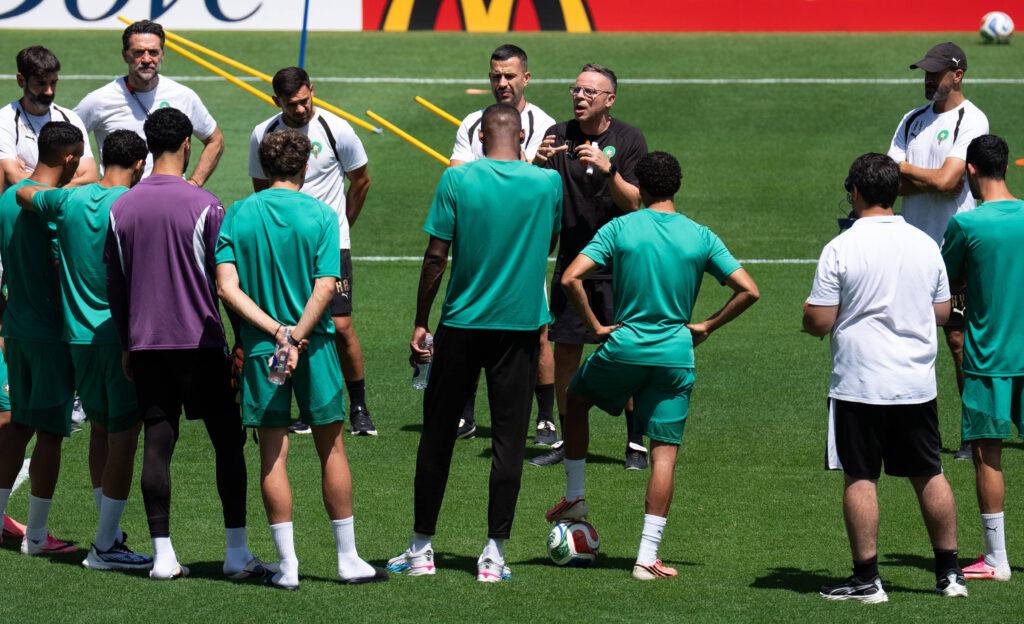
Morocco arrive with the opposite profile: elimination-round habit. Excluding finals and third-place play-offs, they have progressed from six of their last eight knockout ties at major tournaments, with three of those advances coming via penalty shootouts. That depth of knockout experience is a cultural asset for the Atlas Lions, reinforced by a FIFA ranking of eighth in the world compared with Canada’s 30th slot and slight dip on the latest list.
The contrast is the story engine. One side is still selling the idea that this tournament can become unprecedented. The other sells reliability when the margins turn thin.
What recent form adds to the noise
Morocco’s path into this fixture included a 1-1 draw with the Netherlands and earlier group-stage work that featured the four-goal eruption against Haiti. Canada answered pressure with a narrow 1-0 win over South Africa after opening their campaign with a 1-0 victory against South Africa’s regional neighbors in group play, plus a 2-1 loss to Switzerland that still left them alive in the knockout bracket.
None of those lines replace the head-to-head history, but they feed the same preview ecosystem. Rankings gap, venue turnaround, knockout DNA, and regional revenge all stack into one shareable bundle. That is why the fixture kept surfacing in fun-facts lists and watch-guide posts: every angle has a number attached, and every number suggests a plot twist.
What to watch when the narrative meets the pitch
If form follows the map, Morocco will trust their defensive organization and the comfort they have shown against Concacaf opposition on this stage. Canada will lean on the confidence built from that first knockout win and the improved Houston ledger, hoping to finally crack a rivalry that has denied them across four previous attempts.
History does not decide a game. It does, however, decide how far the conversation travels before kickoff. This one traveled farther than most—enough to turn a round-of-16 slot into a cross-border talking point about redemption, reputation, and who gets to write the next chapter.