

















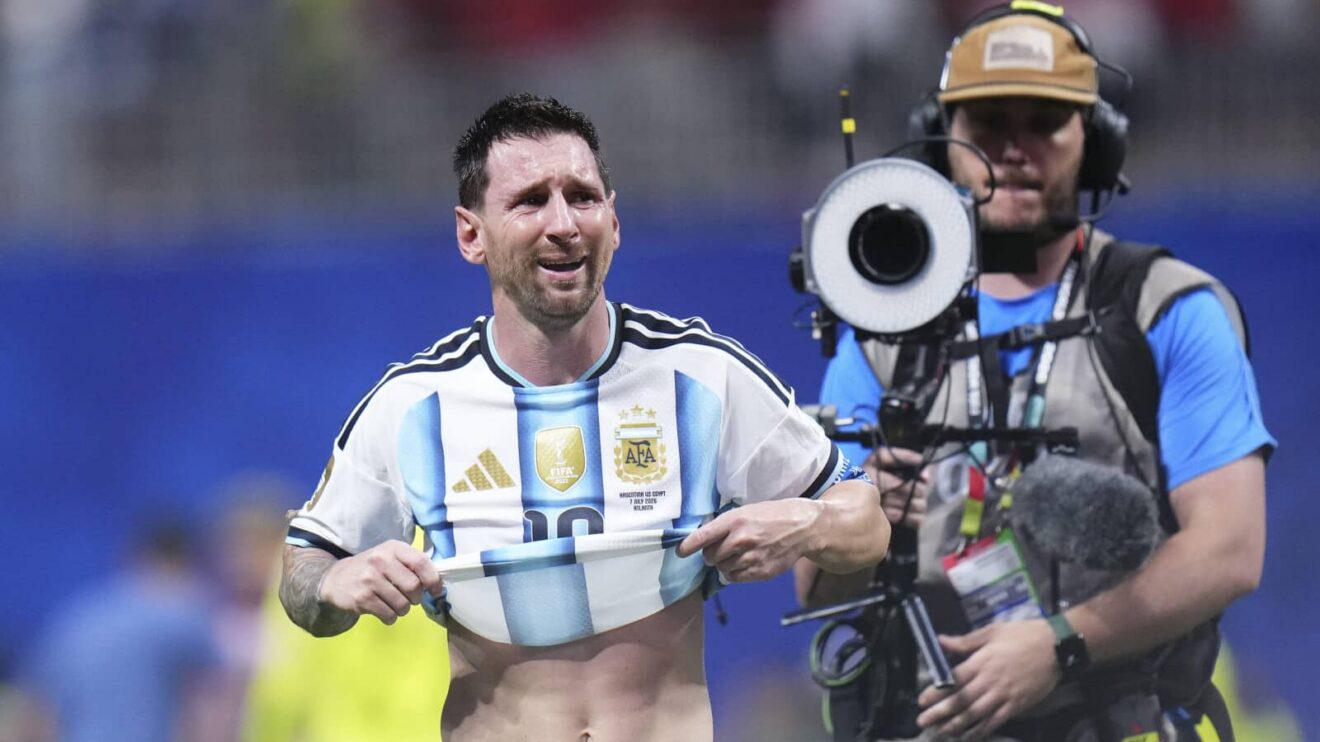
There are nights when a football match stops feeling like sport and starts feeling like testimony. In Atlanta, as the final whistle confirmed a 3-2 victory for Argentina over Egypt in the World Cup last sixteen, the emotion in the stadium was not only about advancing. It was about refusing to accept defeat when everything suggested the story was already written.
For long stretches, Egypt looked like the authors of that story. Yasser Ibrahim rose above the Argentina defence to head the North Africans in front, and Mostafa Zico punished a rapid counter-attack in the 67th minute to make it 2-0. At that moment, the defending champions appeared out of the tournament. The numbers from the night underline how steep the climb became: Egypt finished with five shots and 36 percent possession, yet for more than an hour they carried the heavier emotional weight of belief.
A Penalty Miss That Could Have Broken the Mood
What happened next is why people still talk about this sport in human terms rather than spreadsheets alone. Lionel Messi had a penalty that would have reduced the deficit to 1-1. He missed. In another setting, that moment might have become the headline forever — another cruel chapter in the long public conversation around one man's legacy. Instead, it became the opening line of a different story.
Within thirteen minutes, Argentina produced one of the great collective recoveries of the tournament. Cristian Romero pulled a goal back, Messi scored after a beautiful assist, and Enzo Fernandez added the winner. The turnaround was not merely dramatic; it was instructive. A team ranked third in the world did not panic when the spotlight burned hottest. Under Lionel Scaloni, they kept playing with structure, kept trusting substitutes, and kept behaving as though the result remained unfinished until the referee said otherwise.
That persistence matters beyond trophy cabinets. For millions watching across continents, Argentina's recovery offered a familiar lesson in public life: failure in one moment does not cancel the possibility of repair in the next. Messi has spent decades carrying expectations that would crush most people. To miss from the spot and still re-enter the match as its decisive figure is not only sporting excellence. It is a kind of emotional leadership that communities recognize even when they do not support the team wearing sky blue and white.
Egypt's Frustration and a Game Full of Subplots
The other side of the night deserves equal respect. Egypt arrived ranked 29th in the world and, for much of the evening, played as if rankings were irrelevant. Their discipline, speed on the break and defensive organization forced Argentina into uncomfortable spaces. Supporters of the Pharaohs had every reason to feel aggrieved afterward, with debate continuing over refereeing decisions — including a disallowed goal and a later infringement near their own touchline — that shaped the emotional temperature of the match.
That frustration is part of the social fabric of major tournaments. When a nation invests hope in a squad, every whistle and every overturned attack feels personal. Egypt's campaign may have ended in Atlanta, but the manner of their performance will linger as proof that underdog stories are not sentimental inventions. They are built in real time, through headers won, counters finished and hearts that refuse to quiet down.
Voices From the Booth, Feelings in the Stands
Former players and analysts often speak in tactical language. After this match, many simply sounded human. Roy Keane admitted his voice had gone after watching the comeback, describing the quality of the goals and the refusal to surrender in terms that went beyond analysis. He drew a contrast between sorrow and joy seen across consecutive days in the tournament — sad tears one evening, happy tears the next — and argued that nights like this explain why people keep returning to football despite its cruelty.
Paul Robinson echoed that astonishment, noting how Argentina had looked eliminated before Messi stepped back into the narrative with an assist, a finish and a team reshaped by substitutions that worked. There were, he said, too many subplots for one broadcast to contain.
Not every reaction was celebratory. Gary Neville turned his attention to Lisandro Martinez, the Manchester United centre-back, and questioned his defending for Egypt's opening goal. Neville argued that Martinez had been close to Ibrahim in the aerial duel before stepping off at the critical moment, a lapse uncharacteristic for a defender usually praised for body-to-body intensity. The criticism matters because it connects club identity to international pressure: a player associated with Manchester United can become a focal point even when the larger story belongs to his country.
Why This Result Travels Farther Than the Knockout Bracket
Argentina move on as holders who needed rescue rather than routine progression. That distinction will follow them. Teams that survive through chaos often carry a different kind of confidence — not the confidence of dominance, but the confidence of having looked elimination in the face and answered anyway.
For Messi, the night adds another layer to a career already defined by public emotion. Missing from twelve yards and still deciding the match is the sort of arc that transcends fan rivalry. Parents explain it to children. Supporters replay it in group chats long after midnight. It becomes part of the shared language of resilience.
For Egypt, the ending hurts because the ending always hurts when a nation dares to dream. Yet their contribution to this World Cup was not measured only in the final score. They made the champions uncomfortable, they made a global audience hold its breath, and they reminded everyone that the tournament's social value lies not only in who lifts the trophy, but in who makes the powerful prove they must earn it.
That is the deeper currency of nights like Atlanta. The goals will be clipped and shared, the debates over defending and refereeing will continue, and the knockout bracket will move on. What remains is simpler and more lasting: a match that showed, once again, why people care — because football still has the power to turn despair into tears of a very different kind.