





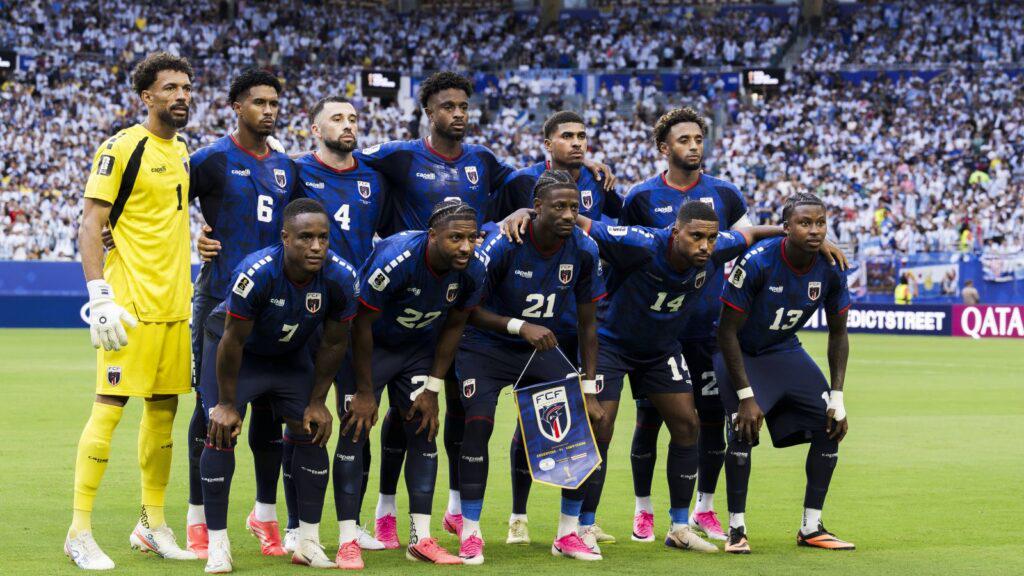
On paper, a World Cup knockout berth was never supposed to belong to a country of roughly 525,000 Cabo Verde arrived at the 2026 tournament and did something far more demanding than a feel-good headline: the Blue Sharks turned a thin squad, long travel cycles, and repeated high-intensity games into the smallest nation's first-ever place in the Round of 32.
That achievement matters because international football is not only a test of technique. It is a test of tissue tolerance. When a federation cannot rotate through dozens of elite professionals the way larger nations can, every selection becomes a medical decision as much as a tactical one. Load, recovery, and availability decide whether an underdog can still compete in the final minutes of a knockout environment.
Why ranking and population only explain part of the story
Cabo Verde currently sits 69th in the FIFA rankings, down two places from its previous position at 67, with 1,366.13 ranking points. Cameroon remains a established African heavyweight at 45th, holding steady with 1,481.24 points. The gap is real, but ranking alone does not capture how a team survives a full qualification cycle and then raises its level on the sport's biggest stage.
Resource disparity tells the rest of the picture in blunt terms. Major football nations operate with enormous professional depth across clubs, academies, and medical departments. Cabo Verde's ecosystem is far smaller, which means when fatigue accumulates or contact injuries appear. In that context, reaching the Round of 32 is not a lucky draw. It is evidence that a compact group managed physical risk better than many bigger programs.
Beating Cameroon was a full-system stress test
The defining checkpoint came in qualifying, when Cabo Verde beat Cameroon to secure its place at the World Cup. That result deserves more than romantic framing. Cameroon brings pace, physical duels, and individual quality across the pitch, the kind of opponent that forces a smaller nation to win moments of contact as well as moments of possession.
For Cabo Verde, the victory was a practical statement about match readiness. Teams with limited depth cannot afford passive stretches after conceding momentum. They must defend actively, limit cheap fouls in dangerous areas, and keep collective shape when legs begin to slow. The win over Cameroon showed that the Blue Sharks had built a base of conditioning and discipline strong enough to absorb pressure from a higher-ranked rival and still find the plays that decide qualification.
What a long qualifying road does to the body
Cabo Verde's recent competitive path underlines how taxing that process can be. Across latest World Cup qualifying fixtures, the team produced a run of 0-0 results against Rwanda, Mali, and Liberia in matches played between September 2026 and March 2027. Low-scoring games are often described as cautious, but physiologically they can be brutal.
When a team repeatedly plays for narrow margins, players stay engaged in repeated sprint-to-press cycles, recovery runs, and aerial challenges without the brief mental release that comes from controlling a comfortable lead. Cabo Verde's ability to collect points through that grind suggests strong aerobic base, organized defensive spacing, and a staff that kept players available through congested windows.
That pattern also helps explain why the World Cup breakthrough the squad how to manage energy across 90 minutes and extra time if required. In knockout football, the teams that advance are often not the freshest on paper, but the ones that waste the fewest steps and recover fastest between actions.
Contact, spacing, and the cost of staying compact
Underdogs usually defend deeper, which increases the number of high-speed transitions they must make from back line to midfield. Over a tournament, those movements add up. Hamstring strain risk rises when players repeatedly accelerate from static defensive positions. Add-in collisions in wide areas and recovery challenges from long intercontinental travel, and squad size becomes a weekly medical conversation.
Cabo Verde's run suggests it solved at least part of that equation through structure. Compact defending reduces the distance players must cover to close passing lanes. Coordinated pressing in selected moments can disrupt opponents without requiring endless high runs. Those details do not appear on highlight reels as often as goals, but they are often what keep smaller nations competitive after the 70th minute.
The opener showed the gap without breaking the team
At the tournament opener, Cabo Verde earned a draw against a much higher-ranked opponent. Without turning one result into a full summary of the campaign, that performance still carried important physical information. The Blue Sharks faced superior individual resources and remained organized enough to take a point on the sport's largest stage.
That kind of result is valuable for a thin squad because it confirms game plan durability. Players learn that the system holds under stress, which reduces panic sprinting and unnecessary extra efforts that accumulate into the next match. For a nation making history, confidence is not abstract. It is the difference between measured defending and desperate chasing.
Why the Round of 32 changes the medical equation
Knockout football removes the safety net of a group-stage reset. One poor hour can end a campaign. For Cabo Verde, that means recovery protocols, minutes management, and travel logistics now matter as much as set-piece preparation. When replacement quality drops sharply after the first eleven, coaches and performance staffs must decide how hard to push key runners in press triggers, who carries set-piece duty, and when to accept a slower tempo to protect hamstrings and groins.
This is where Cabo Verde's story shifts from celebration to science. The world may compare the team to a famous underdog fable, but the players are living through real neuromuscular load. Sleep quality, hydration, cold-water immersion, individualized return-to-play plans, and honest communication about tightness all become competitive tools. A country with fewer elite professionals cannot buy its way out of fatigue. It has to manage it.
What comes next for the Blue Sharks
Cabo Verde has already secured the record that will define this generation: the smallest nation ever to qualify for the World Cup Round of 32. What remains is whether it can keep bodies ready for another 90 minutes of top-level stress against an opponent with greater rotation options.
If the Blue Sharks advance again, it will not be because football briefly forgot economics or population size. It will be because a small group learned how to turn discipline, recovery, and collective effort into a repeatable match model. In a tournament built on collisions and fatigue, that may be the most scientific upset of all.