








The psychological ledger for Senegal reads like a stress test that most teams fail. Two group defeats—to France and Norway—left the Lions of Teranga staring at elimination in World Cup Group I. What followed was not a comfortable cruise but a calculated rebellion: a 5-0 victory over Iraq that secured passage on goal difference while every other three-point side in the pool fell short.
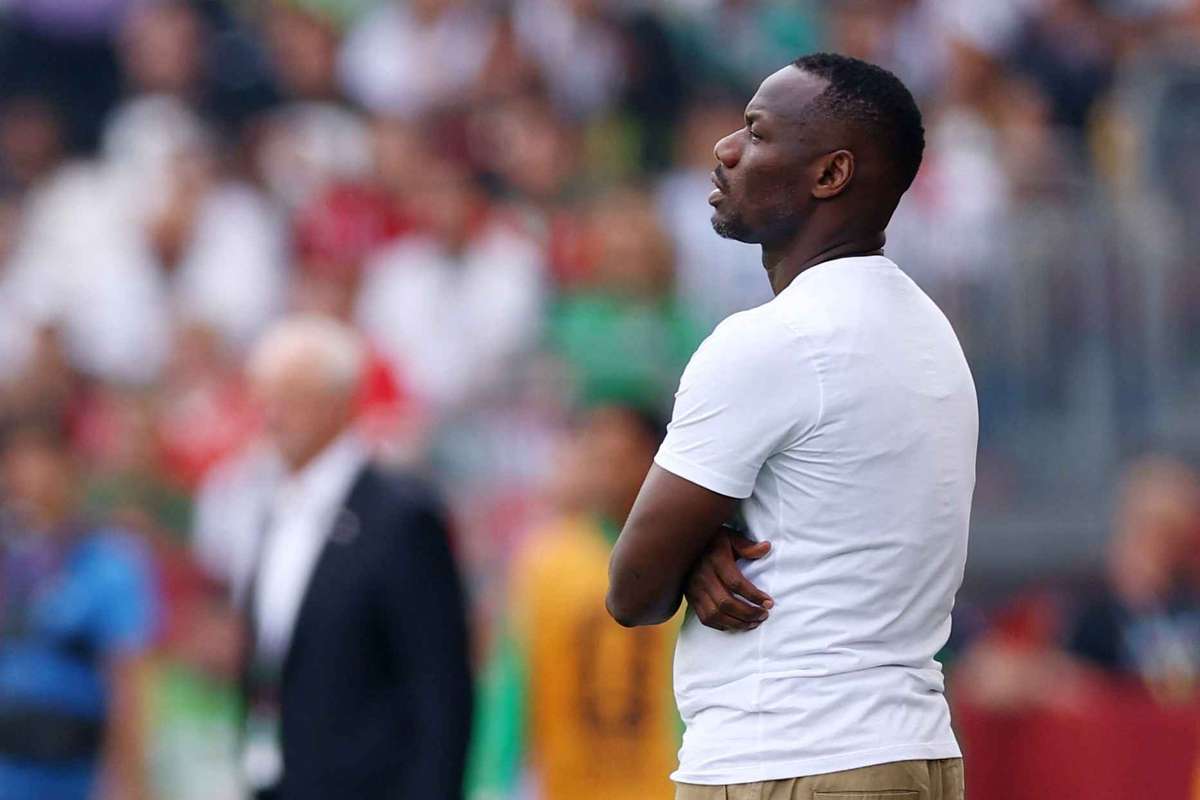
That sequence matters because it reframes how Thiaw wants his squad to enter the round of 16. Senegal became the only team to advance after losing twice—a statistical outlier that can either inflate confidence or invite the wrong kind of complacency. The coach, who started in the XI that delivered the nation's last knockout win at this tournament in 2002, has been explicit about which interpretation he prefers.
From Group Pressure to Knockout Clarity
Speaking ahead of the meeting with Belgium, Thiaw framed Wednesday's fixture as the point where the group stage ends and a separate competition begins. His message was not denial of what happened against France and Norway, but a deliberate mental partition: qualification was earned through resistance, and the knockout bracket now demands a different emotional register.
"We have a lot of respect for Belgium—they showed they are a great football nation," Thiaw said. "We are ready, we are prepared. We know Belgium were first in the group, but we fought hard to get qualification. We knew we had to rebel to gain it, and it's a new tournament that starts. We need a win."
That language is instructive for how Senegal are trying to manage expectation. Belgium arrive as group winners, ranked ninth in the latest FIFA standings with 1734.71 points and a stable position at the top of their pool. Senegal sit 14th at 1688.99 points after a two-place drop, a reminder that their path here was uneven even if the final group table tells a triumphant story.
The data from Senegal's World Cup campaign underscores the split personality Thiaw must reconcile. In their 5-0 group win, they controlled 69% of possession, fired 28 shots with 12 on target, and completed 88% of 590 passes—a profile of a team capable of imposing itself when the stakes crystallize. Yet in defeat elsewhere in the group, they managed only 16 shots and four on target while still holding 58% possession, evidence that territorial dominance did not always translate into decisive moments.
Belgium's own tournament numbers suggest a side that can dominate without always converting. In one group draw they held 70% possession and took 23 shots, yet failed to score. In a five-goal victory, they generated 35 attempts. The contrast defines the tactical puzzle: Senegal must decide whether to lean into the high-volume, high-control model that rescued their Iraq fixture or adapt to a Belgian side comfortable winning territory even when the scoreboard stays tight.
The Mendy Variable
No single player embodies Senegal's current psychological uncertainty more than Edouard Mendy. The goalkeeper was already absent for the Iraq win, and Thiaw confirmed he will not be available for the Belgium match on Wednesday. Mendy returned to his club for treatment before heading back to the West Coast, a round trip that adds fatigue and recovery risk to an already compressed tournament schedule.
Thiaw offered a measured timeline rather than a guarantee. "Mendy went back to his club and he's going to get back to us tonight," he said. "He will be around tomorrow, and we hope he will be fit for the rest of the tournament."
For a squad that leaned on self-belief to survive the group, the phrasing is telling. "We hope" is the language of a manager managing variables he cannot fully control. Mendy's presence stabilizes a back line that must face a Belgian attack that has shown it can produce in bursts even when overall efficiency wavers. His absence forces Senegal to ask whether the resilience displayed against Iraq can hold when the opponent sits ninth in the world and enters as a group winner.
A Continent's Stakes and a 24-Year Clock
Senegal's situation sits inside a broader African narrative at this expanded World Cup. Nine nations from the continent reached the knockout stage—a record tied directly to the tournament's wider qualification window. South Africa and Ivory Coast are already out. Morocco advanced past the Netherlands on penalties. DR Congo, Ghana, Egypt, Algeria, Cape Verde, and Senegal still have their knockout stories to write.
For Thiaw's group, the historical weight is specific. Senegal have not won a World Cup knockout match since 2002—the same era in which their current coach earned his place in national-team lore. A victory over Belgium would end a 24-year wait and validate the AFCON-champion identity this squad has claimed for itself.
That identity, however, was forged in a different competitive rhythm. Knockout football punishes the emotional swings that group survival sometimes rewards. Senegal proved they could absorb two bitter losses and still produce when elimination loomed. Belgium will not offer the same psychological runway.
Thiaw's task is to convert a qualification built on rebellion into a performance built on clarity. His players have already shown they can respond when the margin for error disappears. Against Belgium, the question is whether they can carry that same composure into a fixture where the entire tournament, not just the group table, resets to zero—and where one more win would rewrite a generation of World Cup history.