










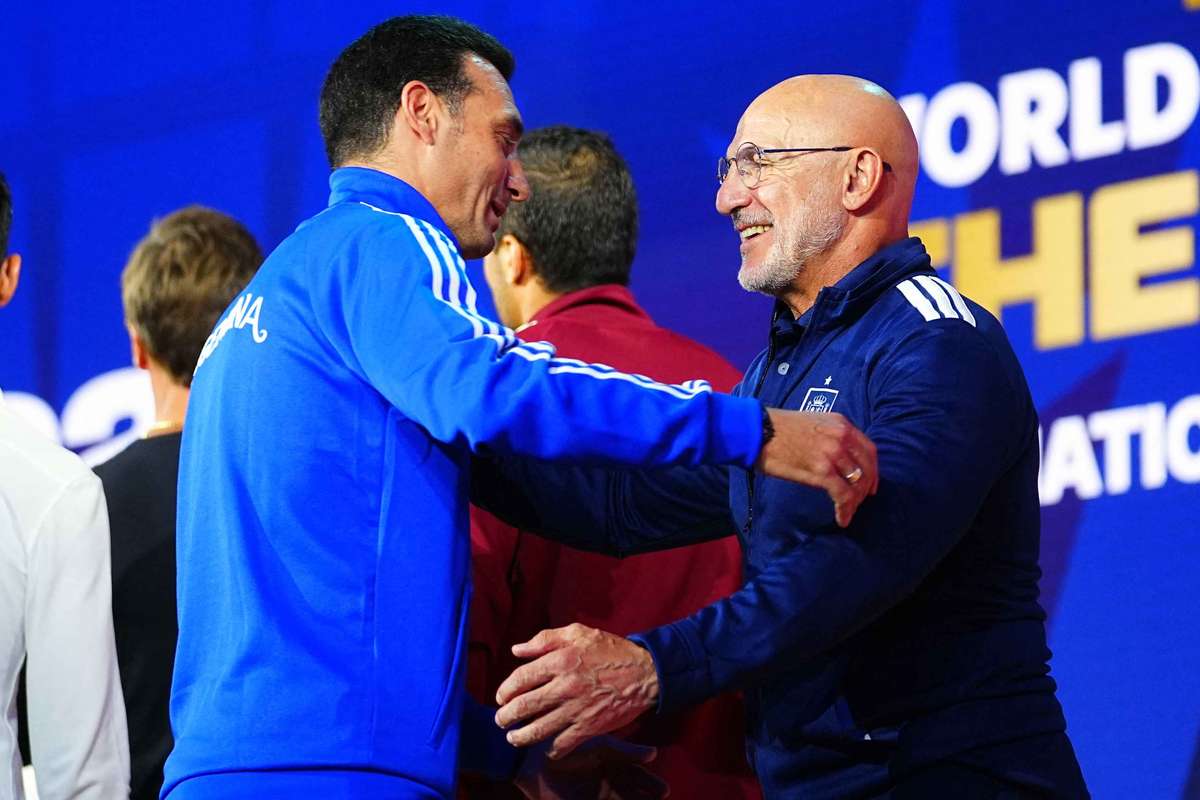
Sunday at MetLife Stadium brings together two men who once shared the same classroom, the same schedule, and the same ambition to build a career on the sideline. On one bench sits Lionel Scaloni, the Argentina coach who lifted the World Cup in 2022. On the other is Luis de la Fuente, the Spain manager who guided La Roja to the EURO 2024 title and now stands one step from the biggest prize in the international game.
The thread between them is not tactical theory alone. In 2017, De la Fuente was holding the chalk while a freshly retired Scaloni sat in the front row at Ciudad del Futbol in Las Rozas. Scaloni had already earned his UEFA B licence in Italy, but his formal climb through Spain's coaching structure ran through the federation's school — with De la Fuente as one of the instructors shaping his understanding of systems, structure, and match preparation.
The Las Rozas connection
Scaloni has never tried to hide what that period meant. Speaking after Argentina's semi-final run through England, he described the bond in plain terms: he had De la Fuente not only as a teacher during his coaching course, but also as someone whose approach left a lasting mark.
"Not only did I have him as a teacher during my coaching course, but I also had a special relationship with Luis because, honestly, I appreciate how approachable he is and the way he is," Scaloni said. "Fate wanted us to meet again in the final today."
For anyone tracking how modern national-team bosses are made, the detail matters. Scaloni completed his UEFA A and then his UEFA Pro after the B licence he had already taken in Italy. De la Fuente, at that stage, was teaching tactics and systems of play to a room that included one of his most dedicated pupils. The classroom did not look like a future World Cup final preview in 2017, but both men were already building the professional foundation that would later carry them to the top of their respective federations.
Montse Tome, the former Spain women's national team coach, was in that same cohort and saw the teacher-student dynamic from the inside. She joined the course through a scholarship some matches, personally encouraged her to enrol. He told her the course would matter for her career. That push put her in the same theoretical block as Scaloni, studying under the same federation staff and working through the same demanding rhythm2>Two paths built in the same school
The schedule at Las Rozas felt less like a football camp and more like school. Trainees worked Monday to Friday, from 9 a.m. to 7 p.m., with theory sessions run to a strict timetable. Because Tome was not based in Madrid and Scaloni lived in Mallorca, out-of-town candidates stayed on site for the full theoretical stage of each level before heading home on weekends.
Each level then continued through practical internships chosen individually, giving every candidate a chance to apply what had been taught in the classroom. That structure explains why Scaloni and De la Fuente now arrive at the final with such different résumés yet such similar professional habits: both came through a pathway that valued repetition, detail, and long-form education over shortcuts.
The paradox of their reunion is that De la Fuente did not look like a future senior national-team coach to everyone in the room back then. He was the instructor. Scaloni was the pupil. Nine years later, the pupil leads a side ranked third in the FIFA standings, chasing a second world title. The teacher leads a team ranked second, aiming to add a World Cup crown to the European championship won2024.
What the final means for both careers
For Scaloni, the final is another step on a route that began as a player, moved through assistant roles, into one of the most successful national-team tenures of the modern era. For De la Fuente, it is the summit of a coaching career that passed through youth development, Spain's under-age teams, and a senior appointment built on continuity rather than novelty.
Neither man needed this stage to prove he could build a team. Scaloni already changed Argentina's competitive identity after years of near misses. De la Fuente already showed he could handle a senior tournament when Spain won EURO 2024. What makes this matchup distinctive is the personal layer underneath the tactical one.
Argentina enter as a side that knows how to win when the stakes are highest. Spain arrive with the profile of a team final underlines how narrow the margin becomes once the last four teams remain.
When the teams walk out at MetLife Stadium, the story will be told in press conferences, lineups, and the choices made under pressure. Long before that, though, the professional link was already written in Las Rozas — one coach teaching, one coach learning, and both eventually earning the right to decide a World Cup final from opposite benches.