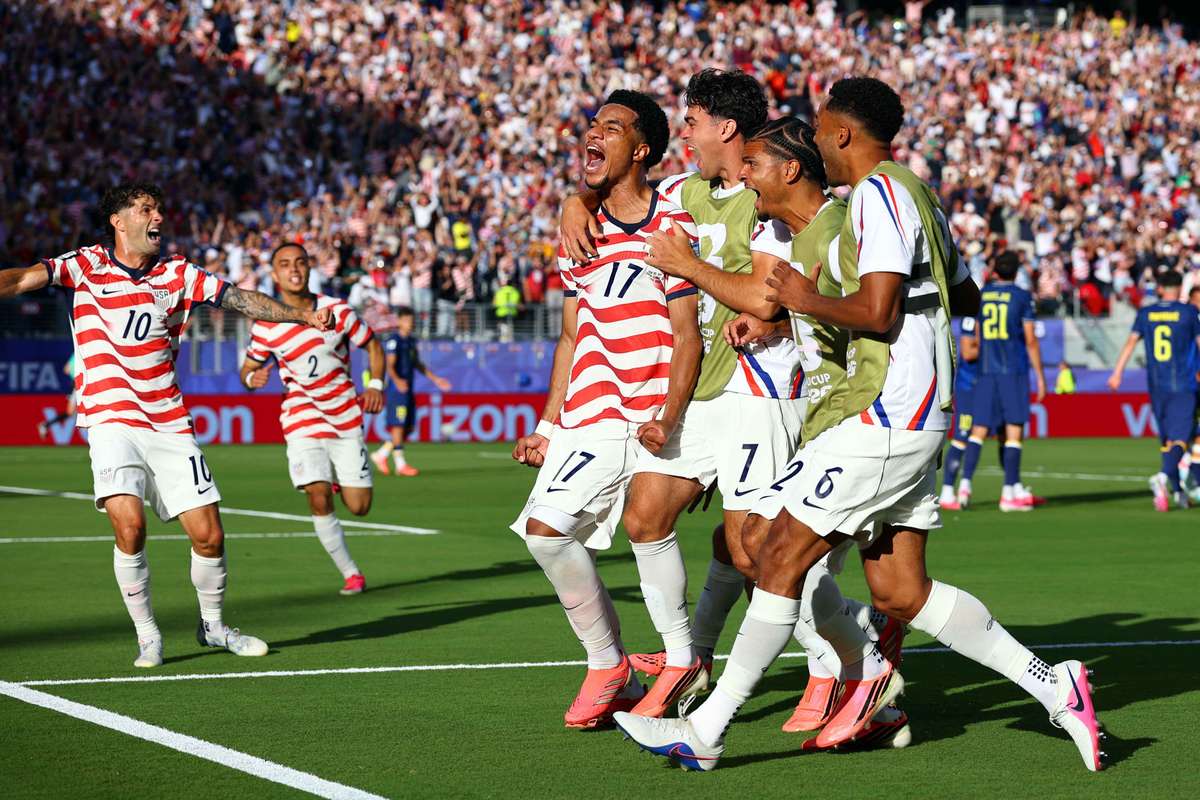


















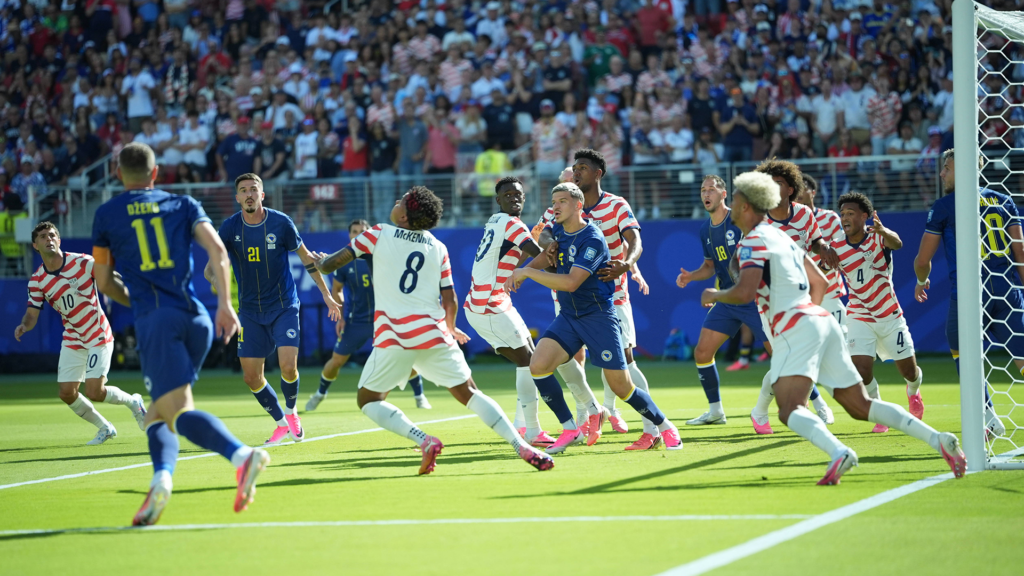
The Round of 32 at the World Cup reached its interval under the California sun with a scoreline that felt less like a surprise than a statement of intent. At Levi's Stadium in Santa Clara, USA led Bosnia and Herzegovina 1-0 at the break, and the numbers behind that slender advantage told a story older than any single match: a host nation learning to impose its rhythm on a tournament stage, and a visitor forced to absorb pressure in a stadium built for spectacle.
There is a particular weight to World Cup afternoons in the Bay Area. Santa Clara sits at the intersection of Silicon Valley ambition and the broader American sporting imagination — a place where crowds arrive expecting narrative as much as noise. On this day, the first half delivered exactly that: a crowded penalty area, a stream of set pieces, and a home side that treated the opening 45 minutes as an audition for something larger than one knockout tie.
A Host That Refused to Wait
Mauricio Pochettino sent his team out in a 4-3-3 and watched them seize the initiative from the first whistle. Possession finished at 62%, a figure that only begins to describe how thoroughly the Americans controlled the tempo. They completed 264 passes to Bosnia and Herzegovina's 165, and the accuracy gap was even more telling: 234 successful passes against 121 for the visitors.
That control translated into territory. The hosts won the corner count 3-2, drew six free kicks, and logged 36 entries into the final third. In that decisive zone, USA went 57 of 75 for a 76% success rate — a sharp contrast to Bosnia and Herzegovina's 14 of 30 at 47%. Touches inside the penalty area finished 19 to 1. Expected goals favored the Americans 0.73 to 0.04. They created and converted the half's only big chance. The scoreboard read 1-0, but the underlying map of the game suggested something closer to a siege.
This was not reckless dominance. Pochettino's side used long balls selectively and effectively, completing 9 of 17 for a 53% clip. Crosses were less precise at 2 of 12, yet they repeatedly kept Bosnia and Herzegovina pinned inside their own box. Duels tilted USA's way at 58% overall, including 9 of 14 in the air. Recoveries finished 19 to 11. Fouls were limited — four for the hosts, six for the visitors — which meant sustained pressure without inviting chaos at the other end.
The Cultural Frame of a Knockout Afternoon
World Cup knockout football carries a different emotional register than group-stage nights. Every touch becomes part of a national conversation. For the United States, ranked 16th in the latest FIFA standings, a home tournament is not merely a sporting assignment; it is a referendum on how far American football has traveled since the days when survival alone counted as success.
Bosnia and Herzegovina arrived with their own history — a football culture forged in a region where identity and resilience are rarely separable from the game itself. The Dragons have long understood what it means to defend with discipline when the odds tilt against them. In Santa Clara, that tradition was visible in long stretches of deep defending, in the willingness to absorb rather than exchange blows. Yet one on-target effort across 45 minutes was never going to be enough against a side playing with the conviction of hosts who believe the moment belongs to them.
Balogun and the Weight of a Single Strike
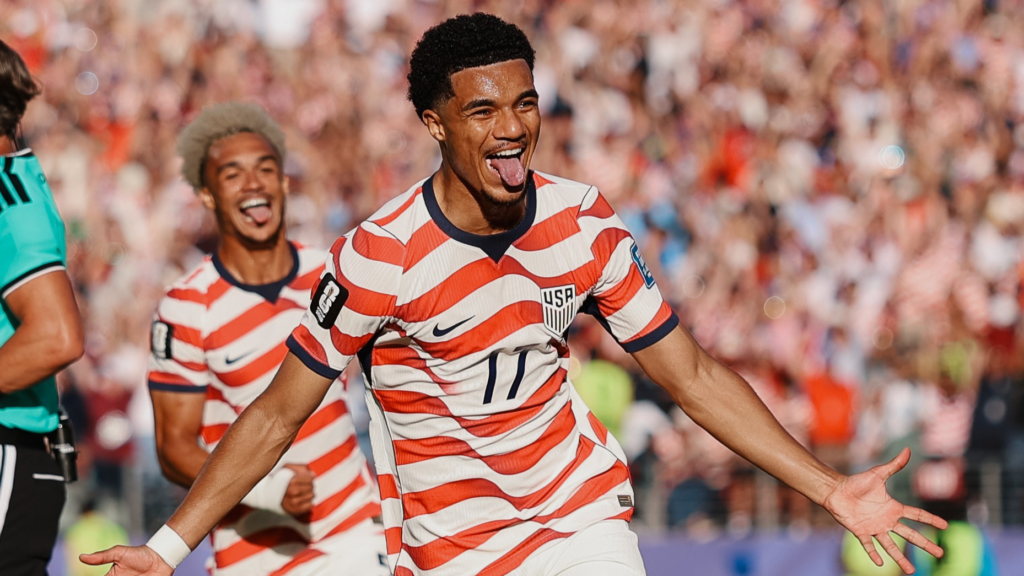
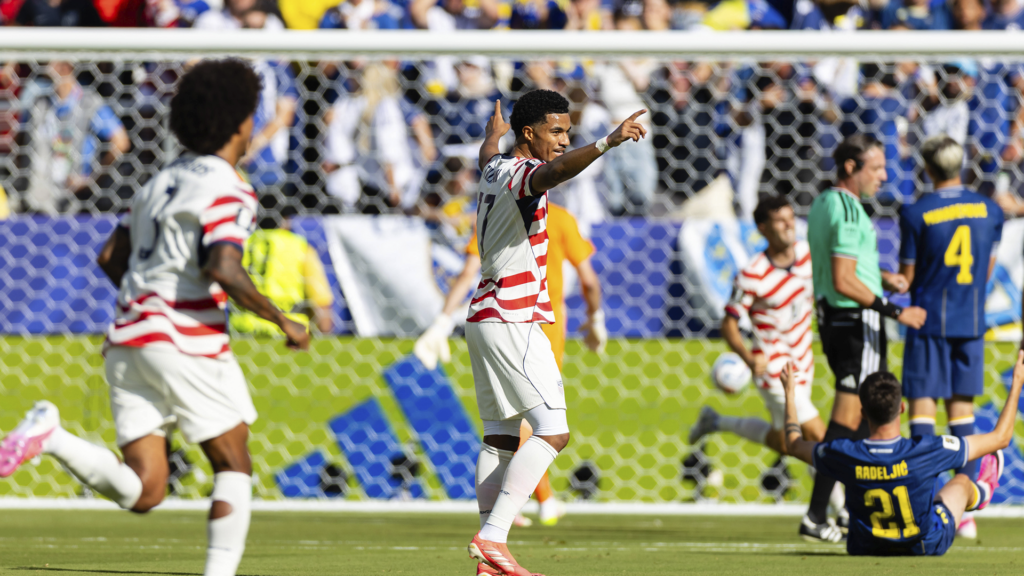
The half's defining moment arrived right on 45 minutes. Folarin Balogun, relentless throughout the opening period, delivered the breakthrough the statistics had been promising. He took four shots, found the target once, and rattled the woodwork in a display that mixed persistence with precision. When the ball finally crossed the line, it felt less like fortune than fulfillment.
Balogun's story has always carried layers beyond the score sheet. Born in New York, raised across continents, and shaped by academies on both sides of the Atlantic, he embodies the modern American striker — a player whose identity resists simple categorization. In a tournament where the host nation searches for faces that can unite a diverse audience, his end product at the interval carried symbolic weight. One goal does not settle a knockout tie, but it can settle a mood.
The half closed after five added minutes, punctuated by aggressive pressing and constant service from wide areas. Bosnia and Herzegovina managed just one shot all told. Shots on target were level at 1-1, yet the quality of those chances split decisively in the Americans' favor. USA produced five total attempts and hit the woodwork once; the visitors never found a rhythm that threatened to rewrite the narrative.
What the Data Says About the Second Half
Halftime leads built on 62% possession and a 19-1 penalty-area touch advantage are not guarantees, but they are foundations. Pochettino's team showed a front-foot temperament — confident in build-up, patient in the final third, and willing to press without surrendering structure. Dribbles finished 2 of 5 for the hosts against 1 of 5 for Bosnia and Herzegovina, small numbers that nonetheless reflected a side comfortable carrying the ball into dangerous spaces.
For Bosnia and Herzegovina, the interval offered a reset and a reckoning. Deep defending had limited damage to a single goal, but the expected-goals gap of 0.73 to 0.04 leaves little room for optimism unless the second half brings a tactical transformation. Set pieces, often the great equalizer in knockout football, had not yet produced an answer. The corner count remained modest, and the free-kick count favored the team already ahead.
A Scoreline That Hints at a Larger Story
At 1-0, the match remained alive, as every knockout tie must. Yet the first half in Santa Clara felt like the opening chapter of a host-nation narrative written in data and desire. USA controlled the ball, the territory, and the emotional tempo. Balogun supplied the decisive punctuation. Bosnia and Herzegovina survived, but survival and progress are not the same thing.
The World Cup's knockout rounds have a way of compressing history into 90 minutes — or, on days like this, into 45. What remains is a second half in which the visitors must find courage without surrendering shape, and the hosts must prove that one goal and a mountain of statistics can become a passage to the next round. In the Bay Area, under a scoreboard that read USA 1-0 at the break, that passage already felt within reach.