

















The round-of-32 numbers tell a split story for England. On one ledger sits a late rescue against DR Congo — Brian Cipenga's seventh-minute opener flipped the opening phase, yet Harry Kane's brace under Thomas Tuchel sealed progression and booked a last-16 date with co-hosts Mexico at the Azteca Stadium. On the other sits a opponent profile that does not resemble a team willing to hand over a second chance.
Mexico arrive at 1 a.m. BST on Monday with four wins from four at this World Cup, zero goals conceded, and a home-environment edge England cannot simulate in a dome. FIFA's latest snapshot underscores the gap in baseline quality — England fourth on 1,825.97 points, Mexico 15th on 1,681.03 — but the more actionable metric for Tuchel is defensive reliability under stress. Mexico have not leaked against South Africa, South Korea, the Czech Republic, or Ecuador. That is not a streak built on low block luck alone; it is a rhythm problem for any side that falls behind early.
Why an Early Goal Changes the Model at 7,200 Feet
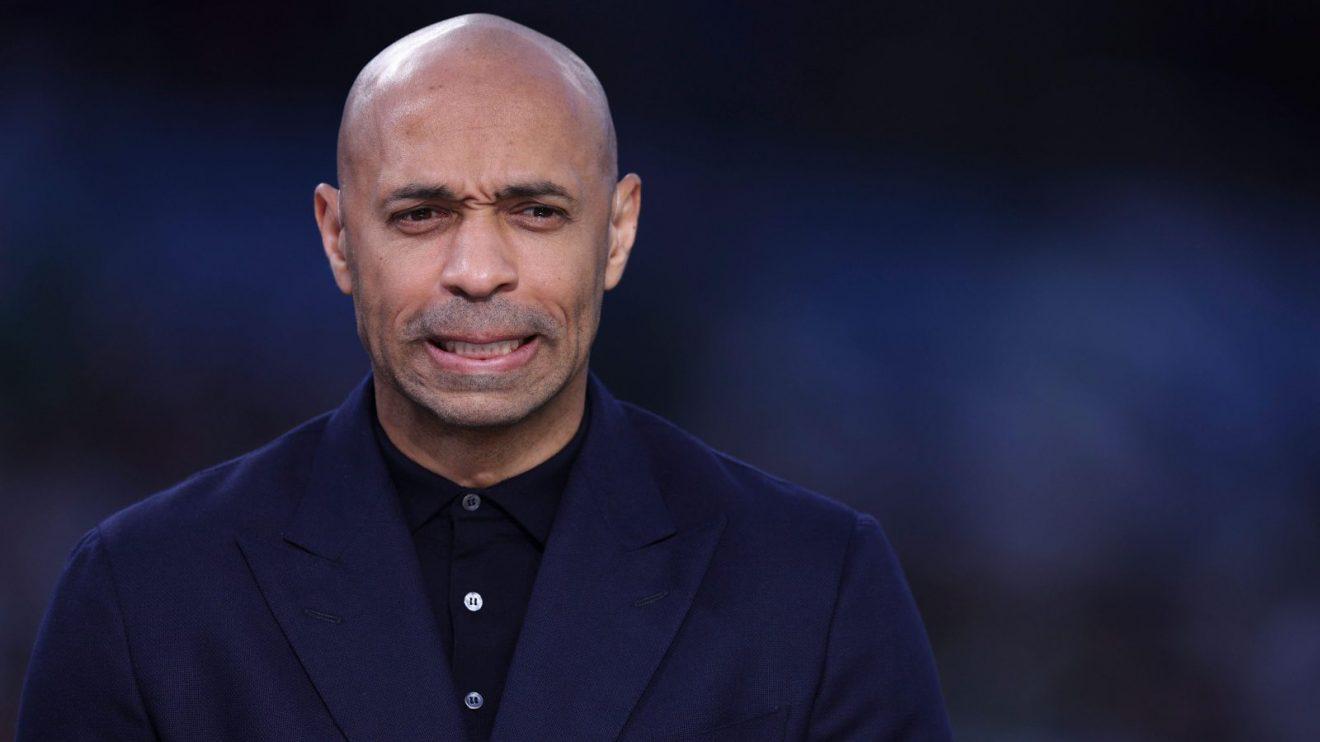
Thierry Henry, who lifted the World Cup with France in 1998 and now reads matches through tempo and space rather than sentiment, believes England's Congo template will not travel to Mexico City.
"You don't want to go there too soon, but you have to address the situation," Henry said. "If they start the same way they started today at the Azteca, dealing with the altitude, we don't know how the weather is going to be — it's one thing to play in a dome and another to play outside."
The environmental variable is not decorative. Azteca altitude sits roughly 7,200 feet above sea level. Oxygen availability, recovery intervals between high-intensity presses, and the speed at which central players can recover into defensive shape all compress when lungs and legs are taxed simultaneously. England's round-of-32 opener was staged under controlled indoor conditions; the last 16 moves outdoors into thin air with minimal acclimatization time on the calendar.
Henry's concern is therefore procedural, not emotional. Concede first against a side that has not surrendered a goal in four outings, and the probability of a second-half reset drops sharply — especially without the cooling break that reshaped Mexico's meeting with Ecuador, when the co-hosts looked vulnerable before the stoppage and tightened again after it.
England's Comeback Profile: Kane as System Override
The DR Congo sequence fits a recognizable England pattern at this tournament: absorb an early shock, stabilize through Kane's link play, then convert late pressure into goals. Cipenga's opener at the seven-minute mark forced Tuchel's side into chase mode for most of the evening. Kane's brace reversed the scoreline and preserved England's knockout path.
That outcome reinforces why Henry still names Kane as the exception clause in any pessimistic forecast.
"We all know this guy, Sir Harry, can be in a situation where he can open up any team at any moment," Henry said. "But you can't start like that, and you're not always going to have that cooling break that can give you a little chance. I mean Harry Kane… every time it's him saving them."
From a forecasting standpoint, leaning on a single finisher as the primary variance engine is high-risk arithmetic. Kane has repeatedly supplied the decisive output when England's structure wobbles, but Mexico's clean-sheet run suggests they are not offering the same defensive lapses DR Congo exposed. Ecuador ranked 23rd in FIFA's table on 1,594.78 points still could not pierce Mexico's back line across 90 minutes; DR Congo, 46th on 1,478.35 points, punished England inside the opening 10 minutes. The contrast highlights two different failure modes — Mexico limit chances; England have shown they can be punctured early.
Mexico's Four-Match Shutout Trend
Results That Define the Threat
Mexico's group-stage and early knockout data read like a control experiment: four matches, four wins, four clean sheets. Opponents spanned different tactical profiles — South Africa (FIFA rank 60), South Korea (25th, down three places on 1,588.66 points), the Czech Republic, and Ecuador — yet none found a breakthrough.
That consistency matters more than any single highlight reel. Teams that protect the lead without panicking into a low block tend to compress central corridors and force wide crosses into traffic — exactly the pattern that can suffocate England if full-back supply is compromised. Henry's reference to the Ecuador game is instructive: Mexico looked beatable in stretches, then reasserted control after the cooling break. England may not receive the same structural pause to reorganize if they trail on the clock.
Co-Host Momentum and Rankings Context
Mexico's FIFA climb — up one spot to 15th on 1,681.03 points — aligns with on-field output rather than reputation alone. Hosting adds crowd density and travel fatigue for visitors, but the altitude component is the multiplier Henry emphasizes. England's fourth-place standing (1,825.97 points, unchanged) reflects squad depth on paper; paper ratings rarely account for a 90-minute stress test at elevation with no prior goal to chase.
Rooney Flags a Right-Back Variance England Cannot Ignore
While Henry dissected game state and environment, Wayne Rooney shifted attention to a positional weak link that could amplify Mexico's wide threat. Rooney said he is "worried" about England's right-back situation after the nervy DR Congo win and argued Tuchel should have been "straight on the phone" to Kyle Walker once Tino Livramento was ruled out of the competition.
The data trail supports the concern. Jarell Quansah struggled against Panama and limped off in that fixture — Panama sit 33rd in FIFA's rankings on 1,540.64 points, a step down from Mexico's tier but still capable of exposing individual matchups in wide areas. Djed Spence, thrust in as replacement, endured a difficult evening tracking Cipenga, the same player who had put England behind within seven minutes.
In a last-16 tie where Mexico's wing play and rest-defense organization have been calibrated across four shutouts, a compromised right flank is not a cosmetic issue. It is a spacing problem: if the No. 2 cannot set the press trigger or recover into the channel, Mexico can pin England's rest shape deeper and drain the legs that Henry already expects to labor in thin air.
Forecast: Process Beats Heroics on Monday
England's path forward is not mysterious — it is measurable. Avoid the early concession that DR Congo manufactured in the seventh minute. Solve the right-back equation before kickoff so wide combinations do not depend on emergency cover. And treat Mexico's zero-goals-against line not as a narrative flourish but as a constraint on how much time Tuchel's side can afford to spend chasing the game outdoors at altitude.
Henry's warning lands because it maps onto trends already visible in the numbers: England have shown resilience, but resilience routed through Kane is not a repeatable team model against a co-host that has not yet been breached. Monday at the Azteca will test whether Tuchel can shift England from comeback dependency to first-half control — before the environment and the scoreboard start working against them.