















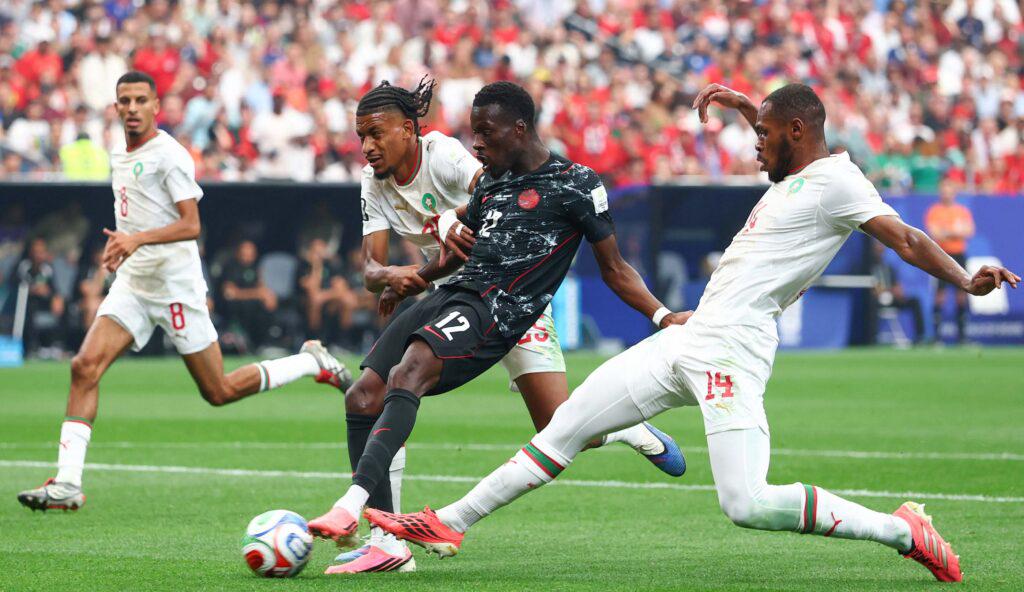
The whistle blew on a goalless first half at NRG Stadium, but the numbers behind Canada’s 0-0 deadlock with Morocco told two very different stories. In a knockout match where every touch inside the penalty area carries weight, the red shirts looked closer to breaking through even as the Atlas Lions kept the ball and the tempo largely to themselves.
Morocco held roughly two-thirds of possession through 45 minutes, yet Canada’s direct 4-4-2 repeatedly turned limited time on the ball into genuine danger. Expected goals sat at 0.42 for Canada against just 0.02 for Morocco. Shots favored the Canadians 4-1. Corners stood at 5-0. For a Round of 16 tie with everything on the line, the tension on the pitch matched the gap in those underlying metrics.
Two styles, one scoreline
With only about a third of possession, Jesse Marsch’s Canada side played with purpose rather than patience. They recorded 13 touches in Morocco’s box compared with a single visit for the Atlas Lions — a split that matched what unfolded in front of Yassine Bounou’s goal. Canada’s lone big chance was also the clearest moment of the half.
The shot map underscored the contrast in blunt terms. All four Canadian attempts came from inside the penalty area. Morocco’s only effort arrived from distance. Pair that pattern with a 5-0 edge on corners and the 0.42 expected-goals figure becomes less surprising: Canada were doing the harder work in the places that actually decide knockout football.
Despite the possession deficit, final-third entries finished 21-19 in Canada’s favor. That small margin hints at how quickly Marsch’s group transitioned once they won the ball — little time wasted, every progression aimed at Bounou’s six-yard area.
Canada’s front line turns pressure into presence
Tani Oluwaseyi led the line with physical intent, winning duels and finding pockets between Morocco’s centre-backs. From two attempts he generated 0.348 expected goals, put one shot on target, and missed that single big chance — the kind of moment that can define a knockout tie if the second half offers no reprieve.
Jonathan David tested Bounou once and repeatedly offered runs in behind that kept Morocco’s back four stretched. His movement did not always end in a shot, but it forced adjustments that opened lanes for teammates arriving from wide areas.
Morocco, lining up in a 4-2-3-1, still looked comfortable circulating the ball and managing spells of control. At the interval, though, comfort had not yet translated into a serious threat in the box — a reminder that possession alone rarely settles a last-16 meeting.
Set pieces and service tilt the territory
Corners often mirror territorial pressure, and Canada’s 5-0 advantage there captured the half in one number. Stephen Eustaquio sat at the center of that work. The captain attempted six crosses, completed three, created a key pass, and led Canada with 0.15 expected assists — the kind of delivery that turns a crowded penalty area into a genuine scoring platform.
Ali Ahmed added another route for service, creating one big chance, completing a cross, and showing why his direct running matters when every penalty-area touch is valuable. Richie Laryea contributed progressive carries and drew fouls in dangerous areas before the break, keeping Morocco’s defensive line honest on both flanks.
Canada finished the half 4 of 10 on crosses and found routes down both wings. The service was not always perfect, but the volume and variety suggested a team that knew where its best chances would come if the second half stayed tight.
What the break means for both camps
At halftime the scoreboard offered no separation, yet the underlying picture leaned Canadian in the metrics that forecast goals. Morocco will back their ability to grow into knockout games once the legs settle and the wide players find rhythm. Canada, ranked 30th in the world against Morocco’s place at eighth, will take confidence from creating the half’s clearest openings while asking less of the ball.
Bounou, tested but not beaten from close range, remains the barrier between Canada’s territorial edge and a breakthrough. Marsch’s task in the dressing room is familiar: keep the directness, sharpen the final action, and make sure a half of honest pressure does not slip away against an opponent built to absorb and respond.
The second half in Houston promises more of the same tension — possession against penetration, experience against urgency, and two nations still searching for the moment that turns a finely balanced Round of 16 tie into a place in the quarterfinals.