









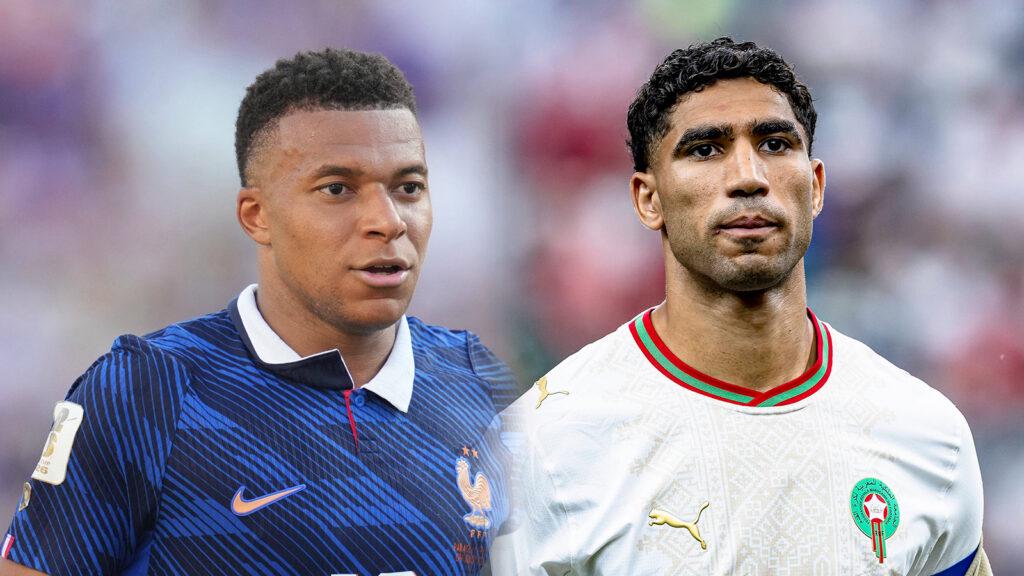
The World Cup 2026 quarterfinal at Gillette Stadium in Foxborough is more than a last-eight appointment. It is a rematch of the 2022 knockout meeting that still shapes how both camps are read, and it arrives with two national teams that look different on the surface yet share a similar appetite for controlling tempo.
France enter as FIFA's top-ranked side at No. 1, having climbed two places on the latest list with 1,877.32 rating points. Morocco sit eighth at 1,755.87 points, steady in position but hardened by a long run of competitive football. Both arrive with tournament momentum, clean defensive profiles, and enough shot quality to turn a tight 90 minutes into something far more volatile.
Two possession engines, one shared problem
On paper this reads like a stylistic collision: France's efficient defending paired with ruthless finishing against Morocco's consistency, energy, and transition threat. The deeper numbers tell a more nuanced story. France have averaged 60.6 percent possession across five matches, completing 88.3 percent of passes while generating 88 attempts and 39 on target. Morocco are nearly identical at 60.4 percent possession and 88.1 percent passing accuracy, with 25 shots on target from their own sample.
That convergence matters tactically. This is not a classic control-versus-chaos quarterfinal. Both teams want the ball, both trust their rest-defense, and both have shown they can win duels when the match tilts toward physical territory. France have won 64.7 percent of aerial duels and faced only 33 shots all tournament, with just nine on target reaching their goalkeeper. Morocco have posted 126 clearances and won 51.9 percent of total duels, covering 513.52 kilometers and logging 627 sprints across five games.
The tie may be decided less by who dominates the ball and more by who converts the isolated moments when the opponent's shape fractures.
France's control layer and finishing edge
France's tournament profile is built on early authority and sustained game-state management. They have scored 14 goals and conceded only two across five matches, averaging more than 2.5 goals per outing while keeping three clean sheets. Their chance creation has been selective but sharp: 21 big chances and 14 big chances created underline a front line that does not need endless volume to punish openings.
The rhythm before this quarterfinal has been unmistakable. France are on a six-match winning streak, scored first in nine straight outings, and led at halftime in eight of their last 10. That fast-start profile fits a team comfortable dictating terms before the opponent settles into its preferred defensive spacing.
Recent competitive data reinforces the same pattern4-2-3-1 setup against Morocco earlier in the World Cup 2026 cycle, France posted 22 shots and eight on target 2-0 with superior chance quality rather than territorial dominance. In another meeting from the same competition window, they controlled 76 percent of the ball, completed 90 percent of passes, and. The common thread is not one fixed game model; it is adaptability within structure.
Defensively, France have limited opponents to rare high-value entries. That discipline has carried into their wider international schedule as well, where recent fixtures against Italy, Belgium, and Turkey have all finished 0-0 — evidence of a back midfield screen that can compress space even when the attack is not firing.
Morocco's press resistance and transition leverage
Morocco's numbers are equally persuasive. They have scored 10 and conceded four through five matches, created 17 big chances, and converted three fast-break goals — a clear signal that their best weapon is not prolonged siege but rapid exploitation once the ball is won.
Their 34-match unbeaten run is the headline, but the tactical subtext is more important. Morocco have won four straight, scored first in seven of their last nine, and trend toward lower-card, lower-chaos fixtures. That profile suggests a team that protects leads, manages risk intelligently, and rarely allows the match to dissolve into the kind of open exchange that favors France's finishing quality.
Morocco's own single-game data captures both sides of that identity. In one World Cup 2026 fixture they dominated territorially with 55 percent possession, 82 percent passing accuracy, and a 3-0 win built on clinical finishing from limited volume — five shots, four on target. In another, they absorbed pressure in a 4-2-3-1, held 52 percent possession, and still could not break down a compact France block in a 0-2 defeat where they managed only one shot on target from five attempts.
That split is the tactical hinge of this quarterfinal. When Morocco find the first passing lane beyond France's first press, their transitions carry real danger. When they are forced to circulate in front of a set defensive line, their shot volume drops sharply.
Matchups that will shape the tie
The central duel begins in midfield, where France's double pivot must decide how aggressively to step toward Morocco's advanced creators without opening the channel behind them. Morocco's 4-2-3-1 has relied on disciplined spacing between the two holding players and the attacking three, allowing quick switches rather than long possession chains.
Wide areas carry equal weight. France's ability to win 64.7 percent of aerial duels could tilt restarts and second-ball phases, especially if Morocco sit deeper after scoring first — a habit they have shown in seven of their last nine matches. Conversely, Morocco's sprint volume and recovery runs suggest they can close crossing lanes if the French wide players delay final delivery.
Set pieces may be secondary rather than decisive. France have stayed under 10.5 corners in six of their last seven matches, while Morocco have generated only one corner in one of their sharper recent wins. This looks more likely to be settled in open-play transitions than from dead-ball overloads.
Form streaks and the psychological margin
Momentum is not a tactic, but it can compress decision-making time in a quarterfinal. France's habit of scoring first and leading early forces opponents into wider defensive spacing, which plays directly into their chance-creation profile. Morocco's unbeaten run, by contrast, breeds belief in game-state management: they do not need to chase the match to remain dangerous.
The 2022 knockout memory adds another layer without dictating the present. Morocco proved they could live with France's pressure for long stretches; France proved they could find the decisive action when the game tightened. Both lessons remain relevant, even as the personnel and structures have evolved.
Discipline could be a quiet factor. France have stayed under 4.5 cards in eight consecutive matches. Morocco have done the same in five of their last six. In a tie between two controlled sides, a needless suspension or tactical foul that invites sustained pressure could carry disproportionate cost.
What the data projects
The safest read is not a prediction of comfortable dominance for either camp. France bring the higher FIFA ranking, the stronger finishing efficiency, and the more reliable first-half authority. Morocco bring the longer unbeaten runway, the transition goals, and the defensive stubbornness that can drain an opponent's patience.
If France score early, their tournament trend — first-half leads, controlled game states, and efficient chance conversion — points toward a match played on their terms. If Morocco score first and settle into their low-chaos rhythm, the same data that highlights France's quality also shows how difficult it has been for opponents to generate clean shots against them.
Gillette Stadium will host a quarterfinal that looks in possession metrics and lopsided only in the moments that matter most. For a rematch with history attached, that is exactly the kind of tactical tension that defines a World Cup last eight.