











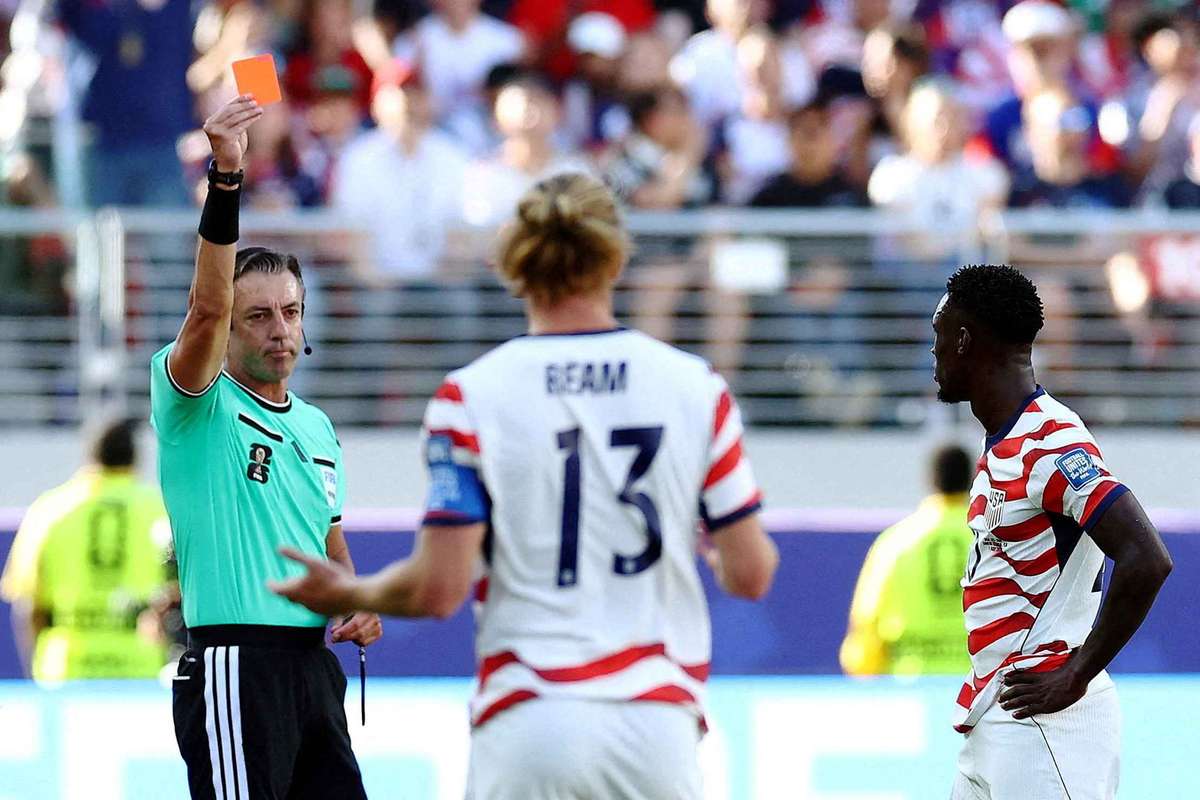
Football has a simple contract that everyone signs when they walk through the turnstiles: the referee's whistle is final on the day, and the laws exist so 22 players do not negotiate violence in real time. That contract held, bent, and then got a formal rewrite this week when Folarin Balogun was shown a red card in the United States' last-32 win over Bosnia and Herzegovina, FIFA publicly backed match official Raphael Claus, and the disciplinary panel later suspended the ban just in time for Monday's last-16 meeting with Belgium.
If you only saw the headline cycle, you might think the story was about politics. It is not—or at least it should not be. It is about how VAR, disciplinary committees, and tournament integrity are supposed to work when a World Cup tie turns ugly in the closing phases.
What the Laws Actually Punish
The incident itself was straightforward in the way serious foul play often is: slow to develop, obvious once frozen on replay. Balogun planted his boot into the ankle of Tarik Muharemovic during the Americans' round-of-32 victory over Bosnia and Herzegovina. Referee Raphael Claus initially allowed play to continue, but a VAR review reversed that leniency and the striker was sent off.
Under IFAB's framework—the shared rulebook FIFA operates under at the World Cup—that pattern fits serious foul play or violent conduct depending on force and context. Either way, a straight red is within the acceptable band of outcomes. Ankle stamps are not "passion." They are the kind of contact that ends careers if the angle is wrong, and VAR exists precisely because officials miss the worst of it at full speed.
Bosnia and Herzegovina, ranked 65th in the world and climbing six places in the latest FIFA chart, had already been stretched by a deep American run. Tarik Muharemovic was on the receiving end of a challenge that would have dominated the broadcast even without the broader noise that followed.
FIFA's Disciplinary U-Turn
What happened next is where tournament law gets murky for casual viewers. FIFA's disciplinary machinery reviewed the incident and ultimately suspended Balogun's red-card ban—meaning the sanction was set aside and he became eligible again under competition rules.
That is not a daily occurrence at a World Cup. Red cards are usually sticky. When they are lifted, there is almost always a procedural argument about evidence, classification of the foul, or application of minimum sanctions. FIFA did not need to trash Claus publicly to reach that outcome; overturning or reducing a card is a separate lane from declaring a referee incompetent.
The practical result landed cleanly on the team sheet: Mauricio Pochettino named Balogun in his starting lineup for the last-16 clash with Belgium. For the United States, that is not a cosmetic detail. Balogun is the focal point of a forward line that has carried much of the scoring burden in the knockout phase, and losing him through suspension would have reshaped the entire attacking plan against one of Europe's most polished sides.
Why FIFA Backed Claus Anyway
Even while Balogun's ban was being processed, FIFA issued a firm statement of support for Claus—before external pressure could turn a disciplinary review into a referendum on one official's career.
The governing body described Claus as one of the world's leading professional referees and a valued member of Team One, FIFA's elite group for the World Cup. That is not empty branding. Team One officials are filtered through years of performance data, fitness testing, and psychological screening. At 46, Claus is at his second World Cup after working in Qatar 2022 and has officiated more than 600 career matches.
Gianni Infantino added the line officials always repeat when storms brew: referees must be respected, and without them there is no football. Pierluigi Collina, FIFA's chief refereeing officer, went further and stated full confidence in Claus as a trusted match official. Claus himself was not made available for comment, consistent with FIFA's policy of keeping active referees away from mid-tournament media cycles where every sentence becomes evidence for one camp or another.
That silence is a feature, not a bug. Referees are not hired to win popularity contests in the stands or on social feeds. They are hired to apply a code that players agreed to before kickoff.
Political Noise Versus Sporting Process
The controversy gained an extra gear when U.S. President Donald Trump said he had asked for the decision to be reviewed and described Claus as "a little bit suspect if you check his past" without offering specifics. That kind of intervention is catnip for headlines, but it sits awkwardly next to how FIFA actually runs a World Cup.
Football's hierarchy does not operate like a court that takes phone calls from the cheap seats. Disciplinary panels work from footage, reports, and legal standards—not from whoever shouts loudest on a given afternoon. Infantino's public emphasis on respecting officials read like a boundary marker: the sport will absorb criticism, but it cannot function if every red card becomes a diplomatic incident.
Reasonable fans can hold two truths at once. You can believe Balogun's contact deserved punishment on the night and still accept that a later review might adjust the competitive consequence. You can disagree with a card without declaring the referee corrupt. Conflating those positions is how World Cup discourse turns stupid fast.
Belgium Waits in the Last 16
Monday's opponent is Belgium, ninth in the FIFA rankings and unchanged at that position in the latest update. The Red Devils represent a different class of problem for Pochettino's side: organized pressing, technical security in tight spaces, and a roster built for knockout football. Recent database form shows Belgium capable of dominant attacking nights—five goals and 35 shots in one recorded outing this cycle, plus comfortable three-goal wins with controlled possession.
For Bosnia and Herzegovina, the World Cup journey ends with the bitter aftertaste of a tie decided elsewhere. For the United States, the path forward now includes a fully available Balogun leading the line against Belgium after surviving a red-card scare against Bosnia and Herzegovina.
The Takeaway for This World Cup
Three layers will survive this story longer than any single clip. First, VAR did what it was designed to do by catching dangerous contact that the on-field angle missed initially. Second, FIFA's disciplinary channel corrected the competitive penalty even while defending the official who issued the card—two processes that look contradictory only if you pretend refereeing and sentencing are the same job. Third, the United States keeps one of its most important attackers on the pitch for a last-16 test that could define the tournament.
Claus will continue his assignments with FIFA's public backing. Balogun will start against Belgium. The laws remain the laws—but at a World Cup, what happens after the whistle matters just as much as the whistle itself.