

















The 2026 World Cup was never supposed to be a referendum on squad depth alone. Yet for England, the tournament has become exactly that — a rolling examination of how a national team absorbs pain, reprograms its spine on the fly, and still finds ways to win when the bracket offers no shelter.
Under Thomas Tuchel, the Three Lions have advanced through a knockout corridor that would punish even the healthiest roster. Defensive injuries have arrived in waves. Suspension risk now shadows every tackle. And the road toward a final keeps tilting toward harder opponents and harsher conditions. If England ultimately lifts the trophy, the case for Tuchel as the tournament's most consequential coach will be difficult to dispute.
The Mexico Win That Changed Everything
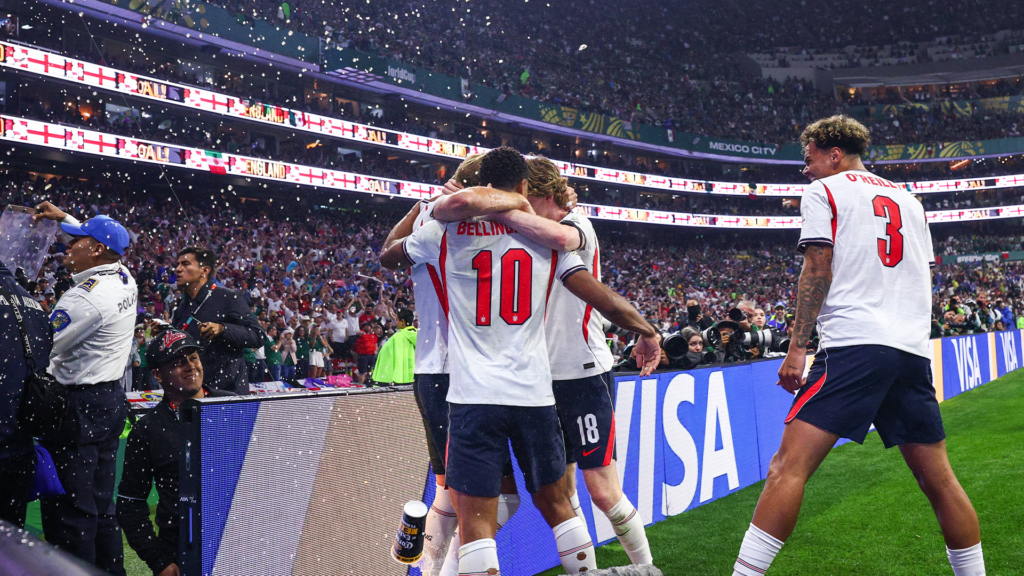
England's round-of-16 victory over Mexico was the kind of result that reshapes a nation's belief and simultaneously drains its resources. The 3-2 win came at Estadio Azteca, more than 7,000 feet above sea level, in front of more than 85,000 hostile voices. England became the first team at this World Cup to defeat Mexico, and they did it while racing the physiological clock that altitude imposes on lungs, recovery, and decision-making.
That context matters. High-elevation football is not merely uncomfortable; it alters tempo, sharpness, and the body's capacity to repeat high-intensity actions across 90 minutes. England did not simply survive the environment. They imposed themselves in it. The victory announced tactical maturity and competitive stubbornness. It also announced a bill that would arrive almost immediately.
Altitude as a Hidden Opponent
Modern tournament football increasingly treats environmental stress as part of the tactical brief. Hydration protocols, warm-up sequencing, substitution timing, and recovery windows all become competitive weapons when thin air turns routine sprints into debt. England's medical and performance staff have spent the past days managing that debt while Tuchel has been forced to manage another one entirely: personnel.
Mexico entered the tie ranked 15th in the world, a side built to make home conditions feel like an extra player. England, ranked fourth, arrived with reputation and structure. What neither ranking could forecast was how expensive victory would become.
Jordan Henderson and the Cost of Celebration
Central midfielder Jordan Henderson has been one of Tuchel's most trusted solutions in midfield — the player who stabilizes rhythm, carries instructions, and gives the team a credible alternative shape when plans fracture. That role made his post-match absence even more jarring.
After the Mexico win, Henderson broke his arm in a freak accident while celebrating with supporters beyond the pitchside advertising wall. Football often romanticizes the bond between players and crowds; here, that bond produced a injury with immediate competitive consequences. Henderson is out, and England must replace not only his minutes but the tactical insurance he represented.
John Stones and the Fragile Reliability Problem
The most obvious internal answer is John Stones. He is available now, and Tuchel has used him before as the emergency pivot when structure needs recalibrating. Yet Stones carries a history that no medical report can fully erase. Injuries have interrupted season after season, turning availability into a weekly question rather than a baseline assumption.
That is the cruel mathematics of England's current crisis: the replacement for one problem is himself a long-term risk. Tuchel can still build a coherent back line around Stones, but every selection now carries the subtext of what might happen if the next collision, twist, or overload arrives at the wrong moment.
Quansah's Red Card and the Suspension Tax
Center-back Jarell Quansah had only just returned from a twisted ankle when the Mexico tie demanded full commitment. He played, he battled, and he left the pitch under the tournament's most punitive sanction. A dangerous high sliding tackle on Jesus Gallardo brought a straight red card, meaning Quansah will miss the quarterfinal against Norway.
Suspensions are not merely absences. They force a coach to break the rhythm of a back line that has been learning in real time. Tuchel had begun to trust Quansah's recovery arc; now he must choose between Ezri Konsa and Stones to preserve a four-man defensive frame, assuming Stones is not already redeployed to cover midfield needs created by Henderson's injury.
The red card also raises the psychological stakes for everyone behind the ball. Norway, ranked 31st in the world, will arrive with pace, directness, and the knowledge that England's central defensive options are being stretched across multiple positions. In knockout football, one mistimed challenge can become a two-game problem.
Declan Rice and the Pain You Cannot See on a Teamsheet
If the defensive layer has been visibly fractured, England's midfield engine has been operating under quieter strain. Declan Rice has managed a hamstring issue since March, a condition that creates substantial neural pain even when scans do not reveal structural catastrophe. He recently worked through a dead calf as well, another reminder that elite players often compete while carrying discomfort the public never fully sees.
Rice has declared himself fit for the quarterfinal, yet his availability against Panama became a talking point after he was left out of that fixture. Rotation, precaution, and tactical preservation can look identical from the outside. The distinction matters only if England need Rice's tackling range, vertical passing, and emotional tempo against Norway.
Panama, ranked 33rd globally and playing home fixtures at Q2 Stadium in Austin, represent a different challenge profile than Norway. Sitting Rice for that assignment may have been workload management. Against Norway, the margin for experimentation narrows.
Norway and a Bracket That Offers No Mercy
England's quarterfinal opponent is Norway, a side climbing the rankings and confident after navigating their own knockout demands. Recent results in the broader World Cup cycle have shown Norway capable of grinding out results in tight environments, including a goalless draw against Panama and competitive outings against higher-ranked opposition.
For England, the bracket has offered no soft landing. Mexico in the round of 16. Norway in the quarterfinal. Each round has arrived with a new personnel puzzle and a new environmental or emotional stress test. That is why this campaign feels less like a simple title chase and more like a study in organizational resilience.
What Tuchel Must Solve in 72 Hours
The immediate task list is brutally clear. Replace Henderson's midfield authority. Replace Quansah's central defensive minutes. Decide whether Stones can shoulder multiple structural burdens without breaking the risk budget. Confirm whether Rice can deliver 90 minutes of high-intensity control or requires managed deployment.
Tuchel's reputation has always been built on clarity — clear roles, clear reactions, clear accountability. This World Cup has asked for something harder: clarity while the picture keeps changing. England have still found ways to rise when conditions turned hostile. The Mexico win proved that. The Norway quarterfinal will test whether that resilience was a peak or a habit.
A Tournament Defined by Adaptation, Not Perfection
No team wins a World Cup with eleven unchanged names across every round. The champions are usually the group that absorbs disruption fastest — the staff that rewrites recovery plans overnight, the coach who trusts a new center-back partnership after a red card, the veteran midfielder who steps into a unfamiliar role without collapsing the team's timing.
England are living that reality in public. Injuries, suspensions, altitude, and a brutal knockout path have not ended their tournament. They have defined it. If the Three Lions continue, it will not be because they avoided hardship. It will be because Tuchel and his players learned, again and again, how to keep functioning when the ideal version of the team existed only on paper.
That is the road to a final in 2026: not flawless, not comfortable, but unmistakably earned.