

















England's 3-2 last-16 victory over co-host Mexico at the Estadio Azteca was not merely a result on the bracket. It was a case study in how a national federation's long-cycle planning collides with the unscripted governance of a knockout tournament — altitude, crowd pressure, procedural delays, disciplinary sanctions, and the immediate pivot to a different tactical threat 48 hours later.
The Problem: A Hostile Regulatory Environment
Knockout football at a World Cup rarely unfolds in neutral laboratory conditions. In Mexico City, England entered a venue sitting more than 7,000 feet above sea level, in front of roughly 80,000 supporters, after a delayed kick-off that extended an already volatile pre-match environment. Former international goalkeeper Chris Kirkland framed the challenge in institutional rather than anecdotal terms: fitness protocols alone cannot substitute for acclimatisation when altitude, heat, and atmosphere compound simultaneously.
"I don't think people realise just how difficult those conditions are," Kirkland said. "When you're not used to them and people say, 'Well, they're fit, they're fit, they can get used to it'. It doesn't matter when you're not used to them. Having 80,000 fans in there, altitude, the heat, everything that's gone with it, the delays."
The structural stakes were equally stark. Mexico arrived unbeaten in the tournament and had not conceded a single goal before England's visit. Defeating the co-hosts also meant handing El Tri their first-ever World Cup defeat at the Azteca — a venue that functions as much as a political symbol for Mexican football as a sporting arena. England, ranked fourth in FIFA's latest standings, could not afford to treat the fixture as a routine away assignment.
Their path to the last 16 had already exposed fragility. Thomas Tuchel's side laboured past DR Congo in the round of 32, edged Panama in the group stage, and were held to a goalless draw by Ghana. Kirkland acknowledged that inconsistency created a governance question for the squad: could England convert structural advantages into repeatable outcomes when external variables turned hostile?
Agitation: Discipline, Dependence, and the Next Threat
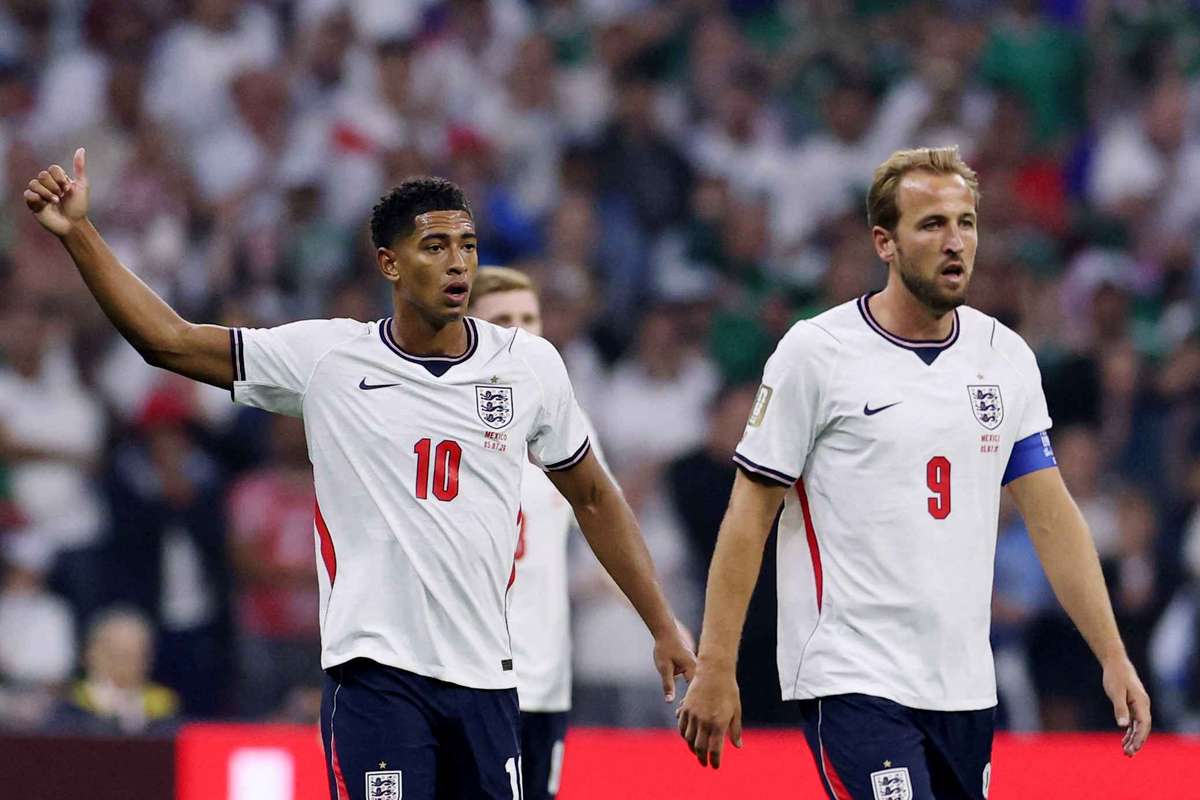
The Mexico City answer arrived in two phases — explosive efficiency followed by collective containment. Jude Bellingham, the Real Madrid midfielder, scored twice within 98 seconds in the first half, including a header from a cross and a finish set up by Harry Kane after Mexico turned over possession. Kane later converted a penalty — his sixth goal of the tournament — after goalkeeper Raul Rangel brought down Bellingham also produced a critical back-post intervention as England's most complete two-way contributor on the night.
Yet the match's regulatory turning point came in the 54th minute when Jarrell Quansah was sent off. Playing the majority of the second half with ten men transformed the fixture from an open contest into a stress test of squad depth, communication protocols, and defensive organisation. Mexico pulled a goal back through Julian Quinones and later converted a penalty after Kane fouled Brian Gutierrez following a VAR review, closing the score to 3-2. England survived extended stoppage time — reported at 11 minutes — to advance tempo and I think that suits England more in a way because of the pace we've got on the wings, that we can counter-attack. That game played right into our hands."
The agitation, however, is what follows. A single heroic night at share unmatched by any other nation at the tournament. Kirkland attributed that partnership to deliberate training integration rather than spontaneous chemistry: "That comes from talent, but it comes from work as well. They work on that in training. They know each other's games inside out."
Meanwhile, goalkeeper Jordan Pickford — questioned after conceding at his near post against DR Congo — reasserted institutional value with flying saves to deny Raul Jimenez and authoritative area management. Kirkland noted that major-tournament experience insulates Pickford from external criticism: "When needed the other night in a stadium where you need your keeper to be big and strong, he was."
The quarter-final opponent presents an entirely different governance problem. Norway, ranked 31st globally but riding historic momentum, eliminated five-time champions Brazil 2-1 with two second-half goals from Erling Haaland, reaching a first-ever World Cup quarter-final. England and Norway meet in Miami on Saturday, July 11 — a fixture Kirkland had flagged before the tournament alongside France and England as sides to watch.
The Solution: Supply England's midfield and back line must police collectively.
"We're going to have to stop the supply to him," Kirkland said. "That's the biggest thing. You can't let him get space because he can do damage. We've seen that with his second goal the other night where he's finished from near enough the edge of the box."
The statistical profile reinforces the policy urgency. Haaland has seven World Cup goals, level with France's Kylian Mbappe and one behind Argentina's Lionel Messi in the Golden Boot race. Against Brazil, he scored twice despite limited involvement before the 78th minute, finishing from just 30 touches with only three inside the penalty area. Kirkland warned against interpretive complacency: "He looks as though he's doing nothing at times and he's just standing there, but then, bang, he's in behind you, or he gets the ball."
England's Premier League corps understand Haaland's lethality from club competition, yet international knockout governance demands a higher coordination standard. Kirkland was explicit about the consequence of failure: "There'll be no England player thinking, 'Oh, we'll be OK here'. They'll be thinking, 'If we aren't on our game, he'll destroy us'."
On paper, Kirkland maintained England possess superior individual quality. Tournament advancement, however, has never been a paper exercise. Norway finished second in their group behind France and have demonstrated cohesive team play that compensates for any talent gap. England must replicate the Azteca model — adapt to the opponent's tempo, absorb adversity, and execute under reduced numbers if necessary — while adding a proactive defensive policy against the tournament's most efficient finisher.
Bellingham as Institutional Anchor
Kirkland identified Bellingham as England's current player of the tournament, citing both his ceiling and the governance of his career trajectory. "He's got another 10 years at least at the top level," Kirkland said. "He can do whatever he wants to do. You've got to be lucky. You've got to stay clear of injuries. You've got to stay in form as well. You've got to play well to stay in this England team."
That assessment matters because England's knockout sustainability rests on a small number of high-impact operators performing simultaneously. Kane supplies goals and link play; Bellingham supplies transition thrust and defensive recovery; Pickford supplies last-line stability. Remove or neutralise any layer against Norway, and the quarter-final becomes a referendum on whether one brilliant night in Mexico City was an anomaly or evidence of a squad capable of institutional learning.
What Quarter-Final Advancement Requires
Kirkland closed his assessment with a conditional verdict that mirrors how federations should evaluate knockout progress: merit confirmed, but proof still pending. "They thoroughly deserved to go through, one of the best fixtures you'll see, but it won't mean anything unless we back it up again."
England have reached the World Cup quarter-finals for the 11th time and will seek a fourth semi-final appearance. The immediate policy imperative is not celebration but recalibration — from surviving Mexico's cauldron to designing a collective defensive framework that denies Haaland the half-second he needs to decide a semi-final berth. In a tournament defined by environmental stress, disciplinary risk, and concentrated scoring dependence, that framework is the difference between a memorable last-16 narrative and genuine title contention.