










England never make things easy, do they? It almost would not feel right if the Three Lions had strolled past Panama in their final group fixture and then handled D.R. Congo in the round of 32 without a fuss. That is what France and Argentina do, not England. Patience, panic, and a late rescue from the usual suspects is the script this country knows by heart.
That was the story of Thomas Tuchel's week at the 2026 World Cup. Thomas Tuchel got the results he needed — group winners, still alive while Germany and the Netherlands are gone — yet neither performance will have supporters booking flights to the final. Still, as long as England remain in the tournament, a nation that has waited six decades for a trophy will dare to dream. And honestly, what is a World Cup without that kind of stubborn hope?
Saturday's meeting with Panama carried straightforward stakes. A win would confirm England as Group L winners, and with Panama having lost their opening two matches, there was little room for excuses. Tuchel's side controlled the ball — finishing with 60 percent possession and 16 shots — but Panama were organized, compact, and genuinely threatening on the break. For long stretches, England looked like a team waiting for someone else to solve the puzzle.
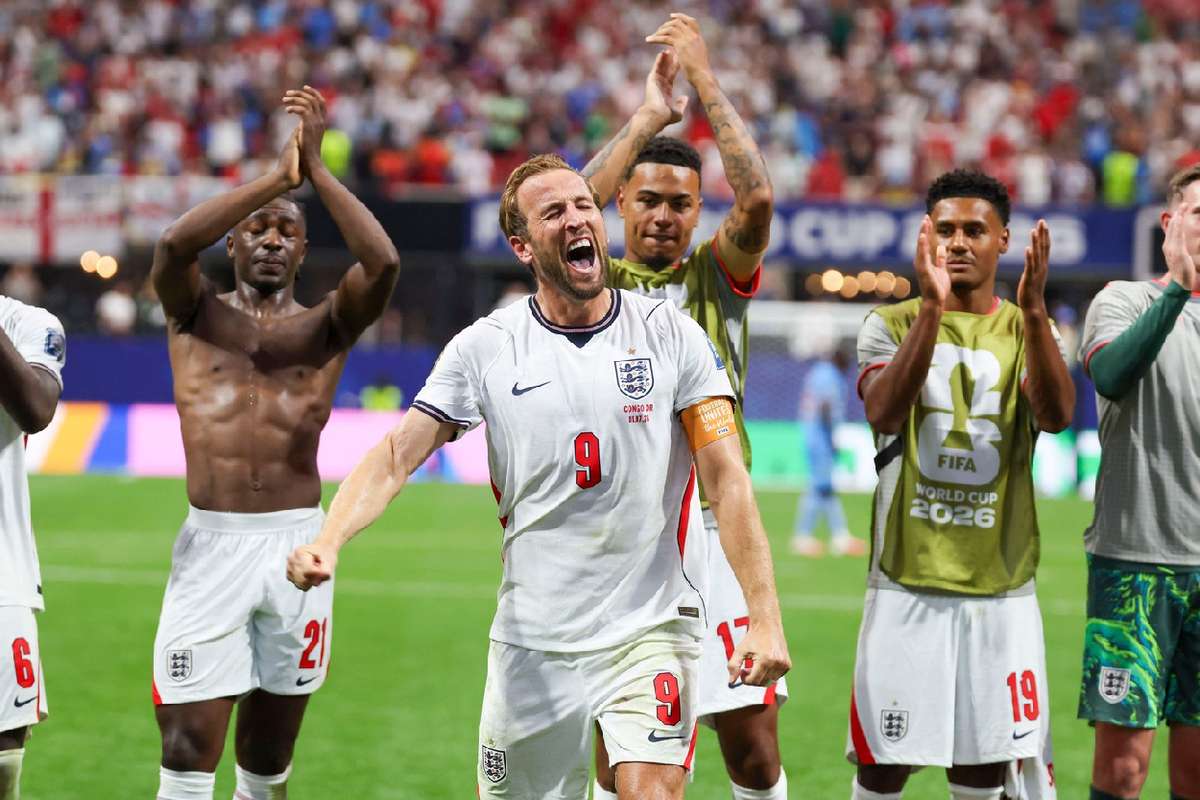
That someone, predictably, turned out to be Jude Bellingham. The Real Madrid midfielder broke the deadlock with an instinctive finish from a Bukayo Saka corner, the kind of moment that separates elite talent from ordinary possession. Bellingham was not finished. Quick feet on the left wing produced a whipped cross that Harry Kane met with the emphatic conviction of a striker who still defines this team when it matters. Two goals, a 2-0 scoreline, and England through as group winners — job done, just not convincingly done.
The familiar pattern should worry Tuchel more than it reassures him. England's stars delivered again, but the collective attack looked disjointed. Players who share a dressing room at club level did not always look like they shared a language on the pitch. Questions about chemistry, rotation, and the identity of his best starting XI will follow England into the knockout stage louder than any celebration from the Panama win.
Those doubts only grew in the round-of-32 tie against D.R. Congo. England were again forced to grind rather than glide, absorbing pressure and struggling to turn dominance into clarity. When the moment demanded a leader, Kane stepped forward — sparing blushes with the decisive contribution that kept Tuchel's tournament alive. The details were messy; the outcome was not. England advanced, which is the only currency that counts in July, even when the performance graph looks flat.
Panama, ranked 33rd in the world, tested England's patience. D.R. Congo tested their nerve. Both times, the answer came from individuals rather than a fully synchronized machine. That is enough to keep hope alive, but not enough to suggest England are ready to bully a co-host in front of a hostile crowd.
Next comes Mexico at the Azteca — a fixture that carries noise, history, and a Fifa ranking of 15 that undersells how uncomfortable English teams can feel in that stadium. Mexico will not need England to look generous. Tuchel must find a way to make the whole greater than Kane plus Bellingham plus Saka, because knockout football at the highest level rarely rewards teams that rely on last-minute heroics twice in one week.
England are still standing at the World Cup while several heavyweight rivals watch from home. That alone earns a exhale. But if Tuchel wants this run to extend beyond another near-miss and another summer of what-ifs, he needs more than patience and star power. He needs a team that looks like it belongs together — and he needs it before Mexico kick off.