



When Brazil and Norway meet in the Round of 16 of the 2026 FIFA World Cup, the fixture will look, on paper, like a routine mismatch between a five-time champion and a nation ranked 31st in the current FIFA standings. Brazil sit sixth globally with 1,761.16 rating points; Norway have climbed one place to 31st at 1,550.94. Yet the institutional record between these two programs tells a different story — one that tournament administrators, federation planners, and knockout-stage analysts have been revisiting for weeks.
This is only the fifth senior men's meeting between the nations, and just their second on World Cup soil. The sample is tiny by any serious statistical standard. What makes it politically and competitively charged is how disproportionately that sample has shaped expectations around a Seleção side that topped Group I with seven points, and a Norwegian outfit that advanced from Group J behind an attack led by Erling Haaland and Alexander Sørloth.
The Problem: An Unbroken Record in a Knockout Framework
Brazil have never defeated Norway. Across four previous encounters — two wins and two draws for the Scandinavians — the Seleção remain the only nation Brazil have faced at least four times without recording a victory. Norway's aggregate edge stands at eight goals to five.
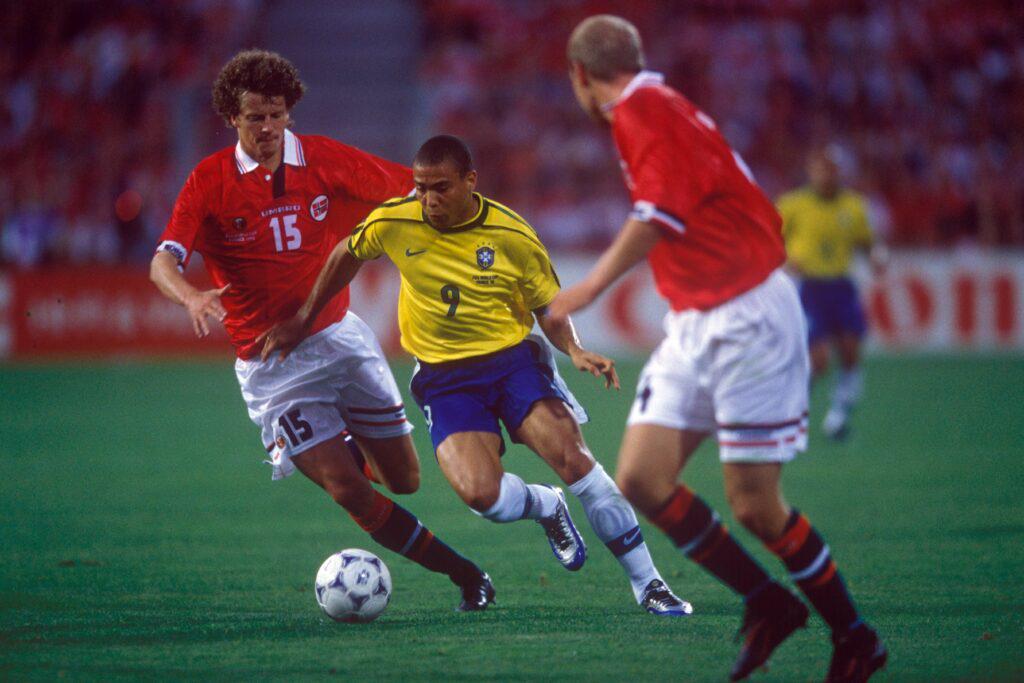
The World Cup chapter is brief but decisive. At France 1998, Bebeto put Brazil ahead in the 78th minute at the Stade Vélodrome. Norway responded through Tore André Flo in the 83rd and Kjetil Rekdal in the 89th to seal a 2-1 group-stage win. Brazil still topped the group and reached the final; Norway were eliminated by Italy in the Round of 16. The result did not alter Brazil's tournament trajectory, but it lodged itself in the institutional memory of both federations.
Friendly history reinforces the pattern. Norway won 4-2 in Oslo in May 1997 and drew 1-1 in August 2006 at Ullevaal Stadion. The 1988 opener also finished 1-1. Twenty years have passed since the last meeting, yet the hoodoo narrative has resurfaced across Brazilian media precisely because the most recent competitive defeat came at a World Cup.
For Brazil, the Round of 16 has otherwise been a reliable stage. They have progressed in nine of their last ten ties at this level at the World Cup, the sole exception a 1-0 loss to Argentina in 1990. The structural tension, then, is not about whether Brazil belong in knockout football — it is about whether a historically specific opponent can again disrupt a program that has otherwise mastered the format.
Agitation: European Knockout Patterns and Norway's 2026 Trajectory
The Norway fixture arrives inside a broader institutional problem Brazil have not solved since their 2002 triumph over Germany in Yokohama. In six consecutive World Cup knockout ties since that final, European opposition has eliminated the Seleção: France in 2006, the Netherlands in 2010, Germany in the 2014 semi-finals, the Netherlands again in the 2014 third-place match, Belgium in 2018, and Croatia in 2022.
Ending that run against a European side they have never beaten would carry symbolic weight disproportionate to Norway's global ranking. Conversely, another continental exit would extend a pattern that federation leadership and coaching staff have publicly framed as a structural issue rather than a sequence of isolated failures.
Norway's 2026 campaign has already altered their own institutional baseline. This is their second knockout match at the World Cup — a landmark in a program that, before this tournament, had played only two knockout fixtures across all major competitions, both Round of 16 ties at previous World Cups. Norway are operating inside unfamiliar territory while Brazil chase a positive streak of their own: four consecutive World Cup victories would mark their best run since an 11-match sequence between 2002 and 2006.
The contrast in tournament experience is stark, yet Norway's group-stage performance demonstrated that knockout inexperience does not automatically translate into knockout vulnerability. Their ascent through Group J validated a squad construction built around direct attacking talent — a model that stress-tests Brazil's defensive organization in ways some group-stage opponents did not.
Brazil's Efficiency Shift at This World Cup
Brazil's shot profile at the 2026 World Cup reflects a deliberate efficiency trade-off. They are averaging 15 attempts per match — their second-lowest rate at a World Cup since 1966 — while recording an expected-goals-per-shot figure of 0.16, the highest in that same span. Fewer attempts, higher quality: the data suggests a program that has prioritized chance creation over volume.
Recent competitive indicators align with that reading. In a 2026-season outing, Brazil posted 19 shots, seven on target, 69 percent possession, and a 92 percent pass completion rate in a 2-0 win playing a 4-3-3. The system is controlling territory and converting pressure selectively.
Whether that model holds against Norway depends on whether the Scandinavians can deny the central corridors Haaland and Sørloth exploited during the group phase. Norway's own 2026 statistical record includes a 2-0 win built on nine shots, four on target, and 53 percent possession — a profile of compact efficiency rather than territorial dominance.
Solution Frame: What the Numbers Actually Govern
Institutional analysts often caution against over-weighting head-to-head samples below a meaningful threshold. Four meetings across 38 years is not a predictive dataset; it is a narrative dataset. Brazil's unbeaten record across 11 World Cup fixtures on United States soil — eight wins and three draws — carries more recent competitive weight than a 1998 result in Marseille.
Yet knockout football is not governed by regression models alone. Federation psychology, media framing, and opponent-specific tactical preparation all influence outcomes in single-elimination structures. Norway head coach Ståle Solbakken was part of the 1998 squad, though he did not appear against Brazil in that match; he entered as a substitute in the 4-2 friendly win a year earlier. That institutional continuity — a coach who lived inside the last competitive upset — adds a human layer the raw rankings cannot capture.
The fixture also sits at the intersection of two FIFA ranking trajectories moving in opposite directions. Brazil dropped one place to sixth; Norway gained one to 31st. The gap remains substantial, but Norway's upward movement signals a program consolidating gains rather than arriving as a static underdog.
Structural Takeaways Ahead of Kickoff
Three governance-level observations frame the tie without overstating any single metric.
First, Brazil must reconcile a historically anomalous opponent record with a knockout-stage profile that remains among the strongest in World Cup history. The institutional mandate is clear: convert territorial and ranking superiority into a first-ever result against Norway.
Second, Norway's task is to extend a small-sample advantage into a knockout environment where they have rarely operated. Their 2026 run has already rewritten the federation's tournament ceiling; a Round of 16 result against Brazil would represent a step change in competitive classification.
Third, the European knockout streak that has defined Brazil's post-2002 World Cup governance will either end or extend in this Round of 16 tie. The opponent makes the stakes narratively sharper; the format makes them absolute.
The numbers do not decree an outcome. They define the institutional pressures both federations carry into a Round of 16 tie that is far more structurally complex than a sixth-versus-31st ranking suggests. Brazil's efficiency metrics, Norway's unbeaten ledger, and the knockout-stage architecture of the expanded 2026 tournament converge on a single question: whether history's smallest sample or the present tournament's largest stage will prevail.