

















The conversation before kickoff was never really about tactics alone. It was about Folarin Balogun, the forward whose one-match suspension had been lifted just in time to face Belgium in the Round of 16. Mauricio Pochettino trusted his leading scorer to carry the United States attack on the biggest stage, and in a tournament where individual narratives often travel faster than team sheets, that decision framed the entire evening as a clash between a rebuilt American project and a Belgian side still leaning on its golden-generation polish.
What unfolded over 90 minutes was less a debate about star power and more a lesson in how elite teams convert reputation into results. Rudi Garcia's side did not wait for the drama to find them. Within 45 seconds, Timothy Castagne tested Matt Freese from 25 yards, forcing the American goalkeeper into an early save that set the tone for a night of Belgian pressure. The Red Devils, ranked ninth in the world and carrying the memory of their 2018 bronze medal run, looked intent on doing in regulation time what had required extra time when these nations met at this same stage in 2014.
De Ketelaere Becomes the Face of the Night
The breakthrough arrived in the ninth minute, and it carried the kind of simplicity that makes great attacking brands look effortless. When the United States failed to clear their lines, Nicolas Raskin drove into the box and squared for Charles De Ketelaere, who tapped into an open goal. For a player whose commercial appeal has grown alongside his movement between top European clubs, it was the sort of poacher's finish that travels well on highlight reels and sponsor decks alike.
Belgium's momentum was briefly interrupted when Amadou Onana left the field with an apparent knee injury, a reminder that even the most carefully managed squads cannot fully control the injury economy of a World Cup summer. Yet the setback did not derail the narrative on the pitch. The United States needed a response, and for a moment they found one.
Malik Tillman, fresh from scoring a free kick against Bosnia in the previous round, stepped up again from 25 yards on the half-hour mark. His strike took a deflection and beat the Belgian wall, restoring parity and giving Pochettino's side a lifeline in front of a global audience hungry for an American comeback story. For a program trying to convert growing domestic interest into credible international respect, that equalizer felt like the kind of turning point brands love to package.
Belgium answered within two minutes. De Ketelaere rose above the American back line to head home from close range after Leandro Trossard had stood the ball up in the box, completing a brace that shifted the match back in Belgium's favor and left Pochettino visibly furious with his team's defending on both goals conceded from the right flank.
Pochettino's Gamble and Belgium's Control
The halftime change told its own story. Pochettino replaced Sergino Dest with Giovanni Reyna, an attacking swap that underscored how much the coach believed this night could still be rescued through star influence rather than structural repair. Reyna's arrival carried expectations beyond football: he remains one of the most recognizable faces in the U.S. setup, a player whose name still moves merchandise, social engagement and broadcast graphics even when the result line turns against him.
The substitution, however, could not reverse the flow. Belgium punished a slow American restart in the 57th minute when Freese rushed out to close down De Ketelaere, only to leave Hans Vanaken with time and space 35 yards from goal. Vanaken curled an inch-perfect finish into the net, a goal that will live in campaign reels not only for its quality but for the composure it represented. Here was a veteran presence delivering under pressure, the kind of moment sponsors attach to reliability narratives long after the final whistle.
Armed with a two-goal cushion, Belgium managed the final half hour with the calm of a side that understands tournament economics. Possession figures from the match told part of the story: the United States held 56 percent of the ball, yet Belgium's 15 shots and seven efforts on target reflected a team that valued efficiency over ornament. In a World Cup where every knockout tie becomes a branding exercise for federations, sponsors and broadcast partners, the Red Devils had produced the sharper product.
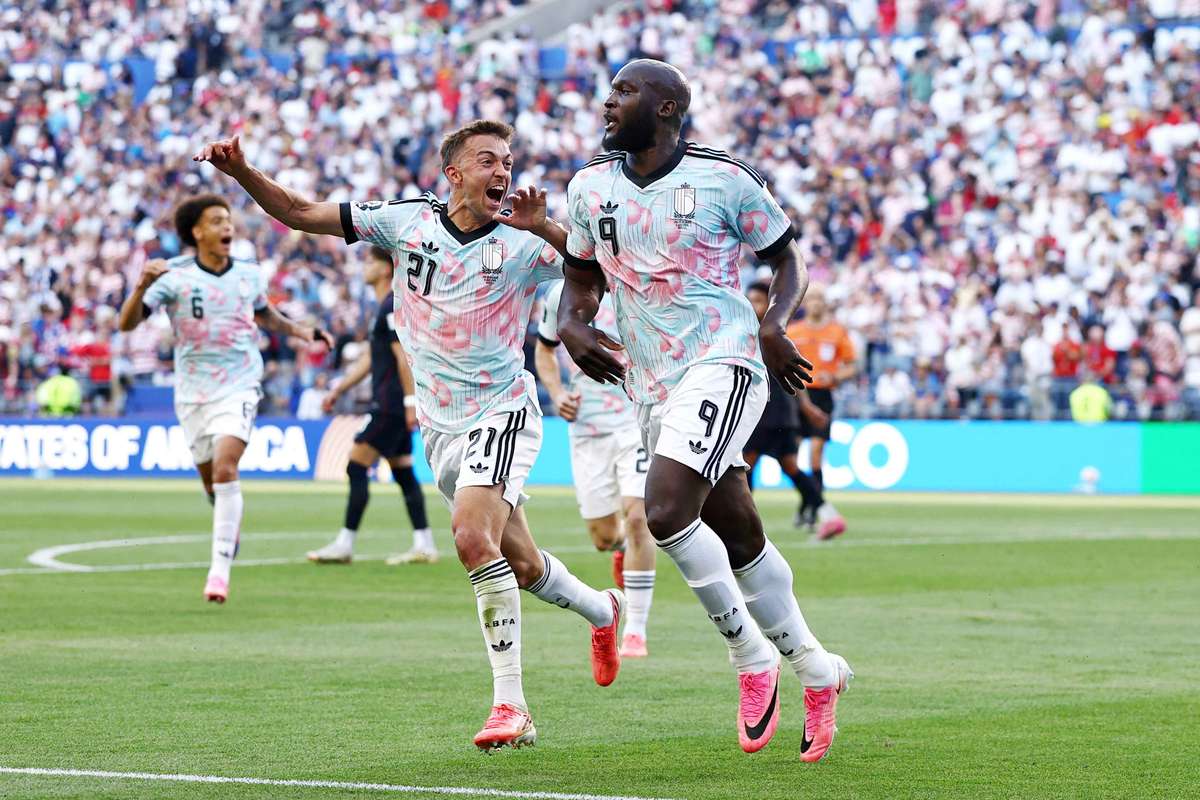
Romelu Lukaku added a late fourth goal with a clinical finish against a deflated American side, sealing a 4-1 scoreline that matched Belgium's ruthless edge in front of goal. For Lukaku, whose career has long existed at the intersection of elite finishing and outsized public attention, the strike was another reminder that knockout football rewards players who can define a night in a single touch.
What the Result Means Beyond the Scoreline
For Belgium, the victory is more than a place in the quarter-finals. It is validation for a squad still trying to prove that its experienced core can deliver when the margins tighten in a World Cup bracket. Garcia's team showed they could absorb a setback, respond to an equalizer within minutes and close out a talented opponent without surrendering control of the emotional arc of the match.
For the United States, the defeat carries a different commercial weight. Balogun started as planned, Tillman delivered a moment of individual brilliance, and Reyna entered with the hope of changing the game's branding as much as its tactics. Yet the defending that frustrated Pochettino on both Belgian goals, particularly down the right, exposed the gap between ambition and execution at this level. A FIFA ranking of 16th still signals progress for the program, but nights like this are when global audiences decide whether a team is ready to be marketed as a true contender or still framed as a compelling work in progress.
Belgium move on with momentum, a multi-goal hero in De Ketelaere, and the kind of statement result that travels well far beyond the stadium. The Red Devils did not just win a Round of 16 tie. They turned a knockout night into a showcase of finishing, experience and star-driven moments that will shape how this World Cup chapter is remembered.