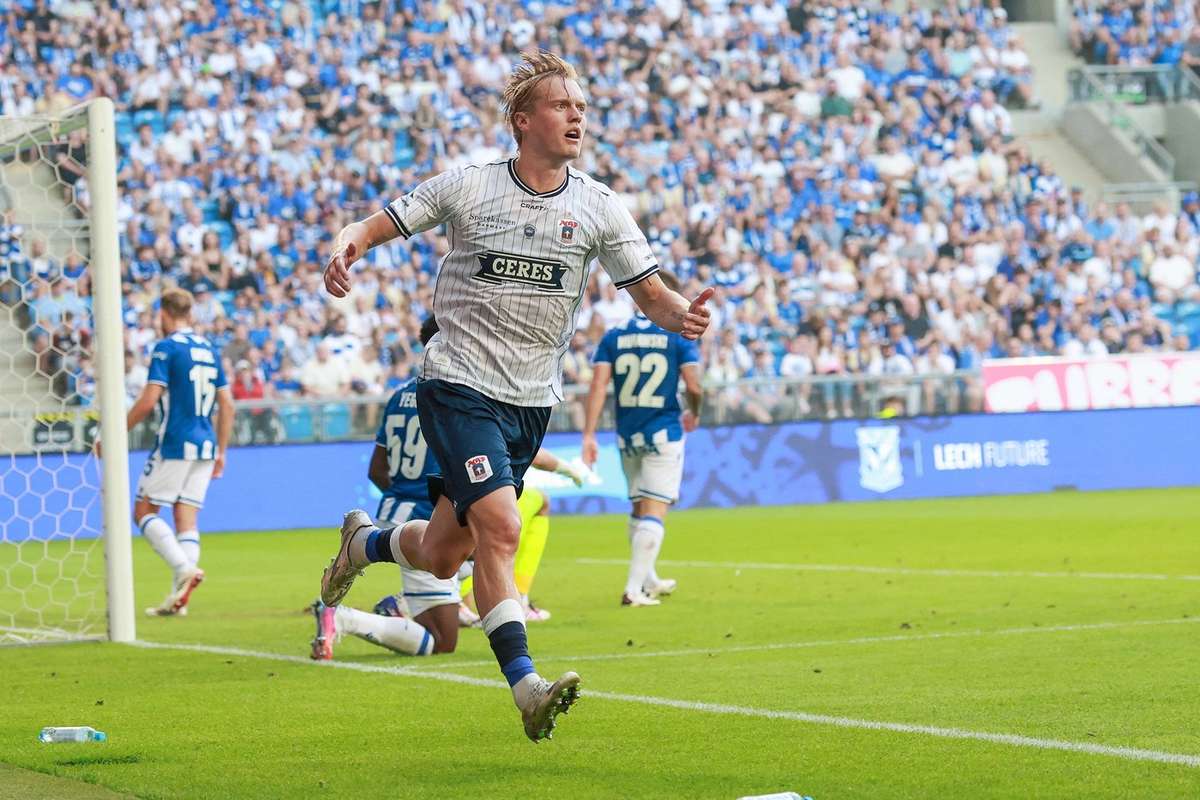


















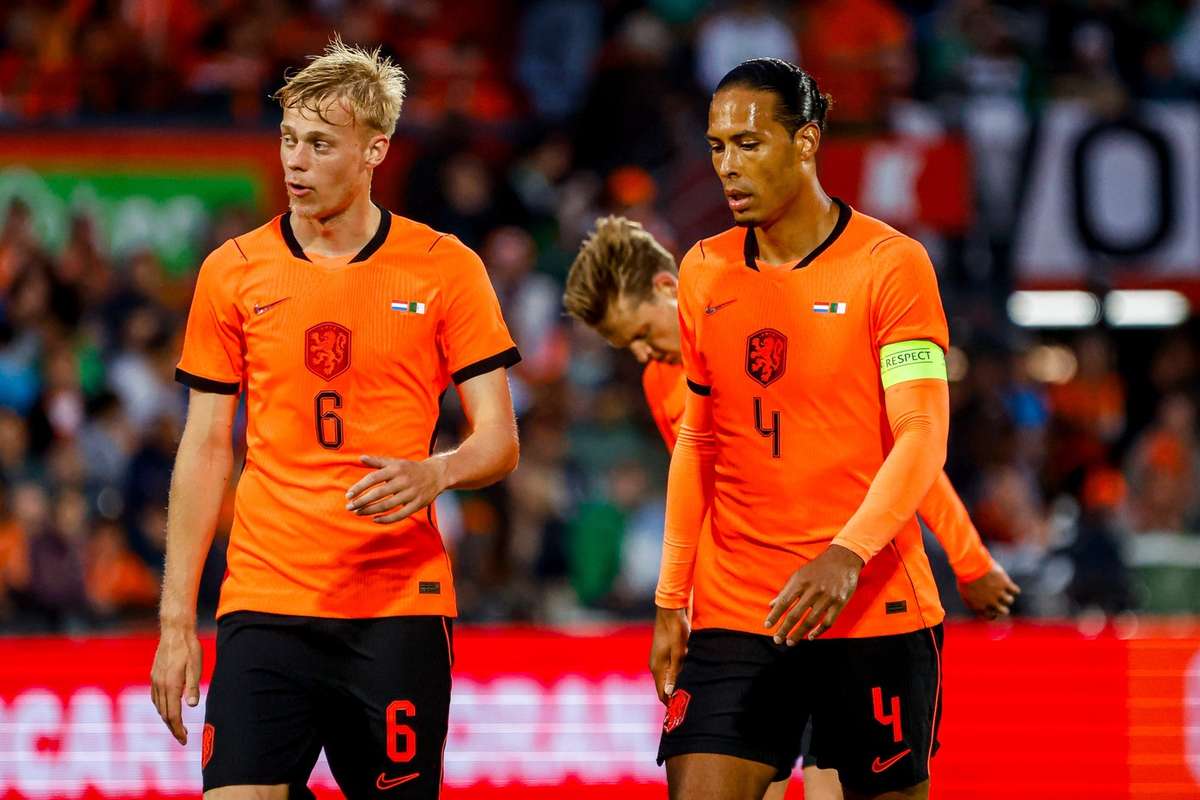
After Timber was ruled out of this World Cup through injury, the Netherlands' center-back ranks underwent an emergency reshuffle: Brighton defender Van Hecke is expected to start in Sunday's Group F opener in Dallas, partnering captain Van Dijk in a two-man center-back partnership against Japan. For the 25-year-old defender, this is more than a positional stopgap — it is a major test shaped by family heritage and national-team selection logic.
Timber Ruled Out, Backup Center-Back Steps Into the Spotlight
\n
Timber's injury exit directly rewrote the Netherlands' defensive starting order. At the pre-match press conference, Van Hecke admitted that stepping onto the World Cup stage brought "a huge sense of pride," but also expressed sympathy for his teammate: "This was his dream too, and unfortunately that dream has been shattered." Behind this positional swap lies typical emergency squad selection for a major tournament — the head coach must, in limited time, elevate a player with stable club form and solid tactical understanding into the starting XI.
Van Hecke has been with Brighton this season, regularly operating in both three-at-the-back and four-at-the-back systems, with ability in passing from the back, physical duels, and reading the game. The Netherlands are currently ranked seventh in the FIFA rankings with 1,757.87 points, still firmly among the elite tier; Japan sit 18th, up one place from the previous edition, with 1,660.43 points. The gap in rankings does not mean the Netherlands can cruise through the opener — in a recent win, Japan fired 18 shots with seven on target, held 55% possession, and completed 88% of their passes, showing a refined attacking structure.
The 1978 Script, Replayed in 2026
The van Hecke family's World Cup story begins with his uncle, Jan Poortvliet. Ahead of the 1978 finals, Poortvliet was picked for the Netherlands squad as a last-minute outsider, making his international debut only two weeks before kickoff. When first-choice left-back Hugo Hovenkamp went down injured, he was thrust into the breach and went on to play all six matches in Argentina — at left-back, right-back and in defensive midfield — as the Oranje marched to the final, where they fell to hosts Argentina after extra time.
Half a century on, a similar injury-driven reshuffle has landed on van Hecke. This time, though, he is no fringe standby but the most natural replacement in defence with Timber sidelined. On the selection side, the Netherlands' centre-back pool has long prized multi-position versatility and big-tournament composure — Poortvliet earned trust through his all-round qualities back then; van Hecke, meanwhile, has moved into the core setup on the strength of his steady Premier League form in recent years.
Uncle and Nephew: Two Generations of Selection Logic
Poortvliet is now 70. Since retiring he has managed several Dutch clubs, had a brief spell in charge of Southampton, and coached van Hecke at U17 level. He rates his nephew as "extremely steady — hard to knock off his stride on or off the pitch": "He may have the odd flat game, but he always pulls his focus back quickly." That mentality is precisely what is hardest to find ahead of a World Cup opener.
The path from training pipeline to tournament demand is clear for van Hecke: tactical discipline drilled in by his uncle in the youth setup, high-intensity battle experience at Brighton as an adult, then learning van Dijk's on-field communication within the national-team system. With Timber out, he does not need to mimic the latter's playing style, but must take on more proactive covering and ball-playing duties in the centre-back pairing — in line with the Netherlands' recent tactical lean toward building attacks from the back.
The Tactical Brief for the Japan Opener
Van Hecke sounded the alarm for the entire squad last week: the Netherlands face a stiff test right from the off. Japan had previously beaten England 1-0 at Wembley, a result that more than demonstrated the Blue Samurai’s counter-attacking efficiency and collective discipline. Van Hecke was blunt: his teammate Kaoru Mitoma had been one of Japan’s standout performers, and his withdrawal from this tournament through injury was a genuine shame; but even without Mitoma, Japan still have a complete and stubbornly difficult system in place.
For the Netherlands, the tempo of their Dallas curtain-raiser is unlikely to be slow. Japan regularly deploy either a 3-4-2-1 or a 4-2-3-1, with wide progression and half-space infiltration among their signature moves; Van Dijk and Van Hecke will need to protect the spaces between the lines while restricting second-wave attacks. Given that Japan’s passing success rate has long hovered above 80 percent, if the Netherlands’ front-line press cannot cut off the first passing outlet, the match could easily settle into a tug of war. The England defeat Van Hecke referenced was, in essence, the textbook example of Japan turning possession into a lethal blow.
From club backup to World Cup starter
From Van Hecke’s personal standpoint, this may be the most significant “opportunity conversion” of his career to date. He does not carry Timber’s big-club halo at Arsenal, nor the dramatic substitute storyline his uncle once had at a final tournament, but he used his availability and performances over the past two seasons to write himself onto the Netherlands’ list of trusted players. The World Cup stage does not reward players who are “almost starters”; it rewards only those who can immediately match the intensity.
Sunday’s clash in Dallas will test three things: first, whether Van Hecke and Van Dijk can quickly establish their understanding under pressure; second, whether the Netherlands can contain Japan’s wide threat; and third, whether the other players coming off the bench can maintain the defensive communication efficiency the back line had with Timber on the pitch. If the Netherlands secure a winning start, Van Hecke will not only complete his personal debut but also settle nerves for the rest of the group stage; if they are dragged into a gruelling contest, this seventh-ranked Oranje side will still need to prove that injuries have not shaken the foundations of their title credentials.
Bloodline, injury, call-up, debut—with these keywords stacked together, Van Hecke's story is about far more than a rotation spot. For Dutch football, the ability to pull match-ready players from existing depth at the decisive moment is part of what makes a major-tournament contender; for Van Hecke himself, Sunday in Dallas is where he begins writing his own chapter into his family's World Cup memories.