

















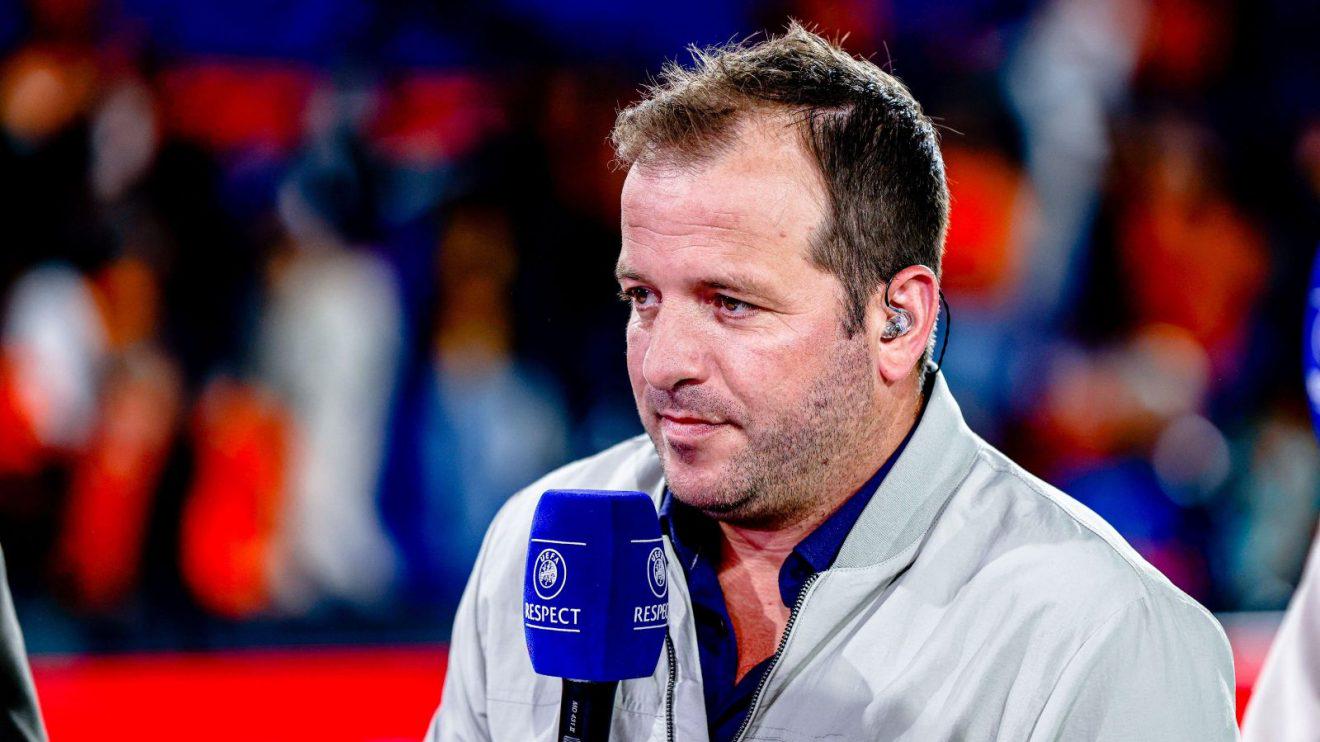
Dutch football legend Rafael van der Vaart has publicly apologized for offensive remarks about Japanese players in his post-match analysis of the Netherlands' 2-2 draw with Japan in the World Cup group stage. The offhand "joke" thrown out while reviewing Daichi Kamada's last-gasp equalizing corner kick quickly ignited controversy, forcing the outspoken former international to issue a statement through his agency.
This was a marquee fixture in Group F. The Netherlands ranked seventh in the FIFA rankings with 1757.87 points, while Japan sat eighteenth, having recently climbed one spot to 1660.43. On paper the Oranje held the edge, but Japan leveraged tighter pressing and set-piece efficiency to wrest a point from the Dutch.
The "Joke" in the Corner Kick Breakdown
Van der Vaart served as a post-match pundit for the game. When replaying Kamada's equalizer from a corner, he first broke down the delivery and trajectory from a technical standpoint: "A perfect corner is extremely hard to defend. This one had the right pace, and the curve carried it just over the six-yard line. With a bit more luck it would have gone in—the quality of the corner itself was impeccable."
But then he pivoted with a remark that sparked outrage: Japanese players "all look alike," perhaps causing Van de Ven confusion when marking—before adding, "just kidding, these days I hardly dare say anything." The comment, rooted in racial stereotyping, ironically contrasted with his earlier complaint that "you can't say anything anymore nowadays," and ruined what had been a professional tactical breakdown.
From a tactical standpoint, the heart of corner-kick defending lies in man-marking assignments and protecting the first ball. Daichi Kamada made a late run from deep to attack the header, and the Dutch back line left a gap in how it handled the second ball — that was the direct reason the equalizer went in. Rafael van der Vaart could have stopped at the technical details — runs, pace, the goalkeeper’s positioning — but he steered the conversation toward appearance and ethnicity. That is where he crossed the line.
Apology and backlash
After fierce criticism, the 43-year-old van der Vaart responded through his management team. The statement said he had “never intended to insult, hurt, or discriminate against anyone,” understood that some listeners were offended, and “sincerely apologizes” for that.
The statement also stressed that he “takes the reactions seriously,” acknowledged that his “wording could be interpreted in different ways,” and sought to clarify that there was “no racist or discriminatory intent behind the remarks,” hoping the explanation could restore the context and original intent at the time. Even so, beyond the public apology, critics still ask: if he did not mean to cause harm, why choose remarks like “Japanese people all look the same” as a vehicle for “humor”? That goes beyond a slip of the tongue in the commentary booth and touches the basic boundaries of a professional pundit.
Half-time “Boeing 747” and tactical criticism
Beyond the controversy, van der Vaart was equally scathing about the performances of Koeman’s players. At half-time, he said he was “quite shocked” by captain Van Dijk — especially when turning: “something didn’t look right; turning looked very difficult, a bit like a Boeing 747 trying to turn around — hopefully he can turn a bit faster in this tournament.”
The metaphor may have been playful, but it highlighted a real pain point for the Dutch back line in the Netherlands–Japan match: facing Japan’s short passing combinations and thrusts into the half-spaces, Van Dijk was clearly slow on several recovery turns, and the flanks were exploited again and again. Van der Vaart also criticized the team for “dropping too deep and sitting too far back,” arguing that this clashed with the Liverpool-style high-pressing habit and led them to surrender the initiative in the first half.
The data shows that despite the Netherlands holding advantages in ranking and squad depth, they exposed problems on both ends of transition play and set-piece defending—Daichi Kamada's corner kick proved to be the final straw that broke the Dutch defense. The 2-2 result added uncertainty to the Oranje's qualification prospects in Group F, and served as a wake-up call for Ronald Koeman's rotation and defensive setup.
The Boundaries of the Commentary Booth
Rafael van der Vaart was renowned throughout his career for his refined technique and expansive vision, and since retiring, his blunt commentary style has often made headlines for its outspokenness. But there is an uncrossable professional line between technical analysis and discriminatory jokes. The World Cup is the world's grandest stage, where every public-facing remark is magnified; while breaking down corner routines and marking errors, any quip that uses ethnicity or appearance as a punchline directly harms players, teams, and audiences.
For the Netherlands, the apology controversy is an off-field distraction; the more pressing concern is the next stage of the tournament: Virgil van Dijk's mobility, set-piece defensive organization, and whether Koeman adjusts his defensive retreat strategy will determine whether the Oranje can hold onto their qualifying initiative in Group F. For Japan, Kamada's high-quality corner was not only a reward on the scoreboard, but once again demonstrated his pivotal value in set-piece tactics—and the hard-fought point earned on the pitch is far more worth remembering than the controversy in the commentary booth.