

















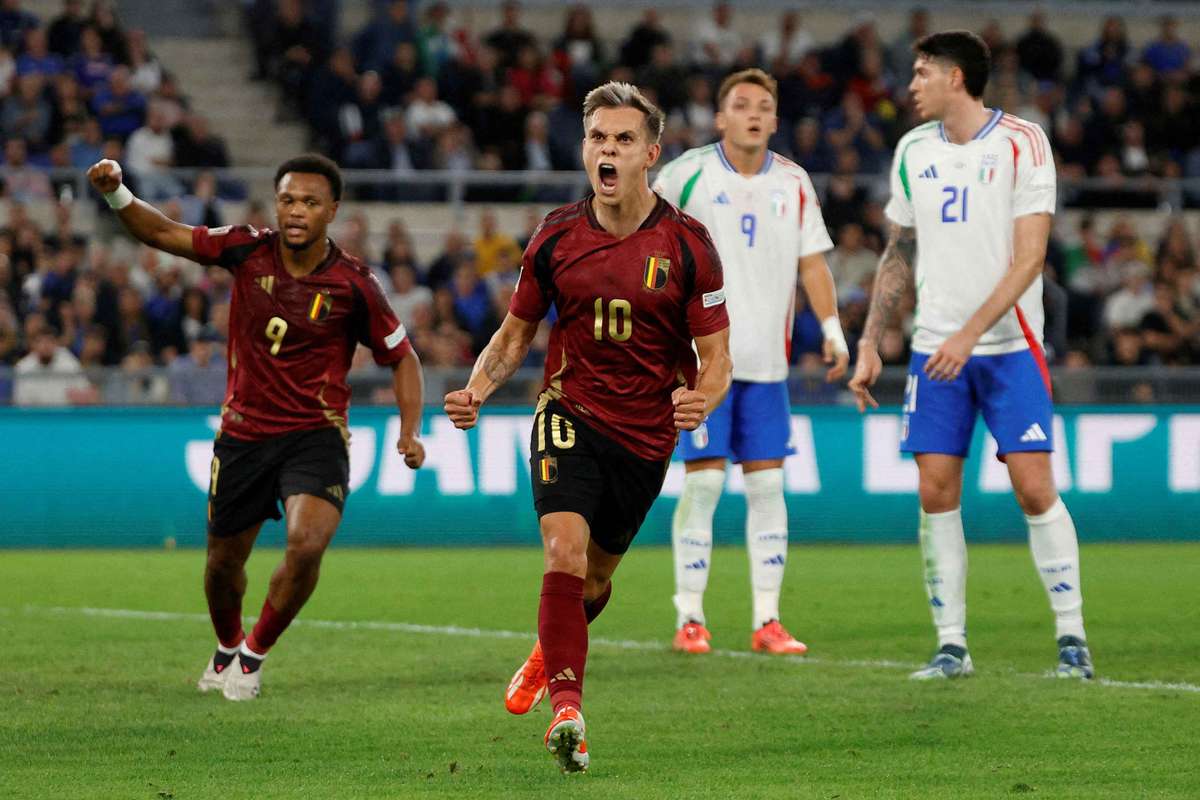
Arsenal forward Leandro Trossard has publicly stated that he will approach the World Cup in strong form after arriving late to Belgium's training camp. Speaking at Friday's press conference, he said he is "eager to get started," as the squad begins its World Cup preparations with full enthusiasm.
Trossard only wrapped up his Champions League final commitments last week and rejoined his national teammates on Thursday, having completed just one training session together so far. Even so, he has already felt a dressing room atmosphere that is "focused and ready." When asked whether he is in the best form of his career, he admitted it is hard to quantify, but said he is "definitely in good shape" and hopes to carry his end-of-season club momentum onto the international stage.
The institutional pressure behind delayed camp arrivals
Modern football scheduling squeezes the club season's peak and the international tournament window onto the same timeline, leaving players like Trossard — who sit at the heart of title-chasing sides — to make a hard split between trophy parades, media duties and national-team reporting. After Arsenal's penalty shootout defeat in the Champions League final, he did not fly straight to the training base; instead, he joined camp slightly later in line with his club's end-of-season schedule. That was not a question of attitude, but the common "dual obligation" conflict professional players face under the current calendar.
According to site data, Belgium currently sit ninth in the FIFA rankings with 1,734.71 points, unchanged from the previous update. The team have drawn 0-0 with France twice in recent meetings; their defensive organization has been solid overall, but the attack still needs more immediate firepower from first-choice players based in Europe's top five leagues. Trossard won the Premier League with Arsenal this season, and although his time with the squad has been brief, it is directly tied to whether Belgium can turn their talent on paper into match-ready strength in the group stage.
Club-season legacy: gains and regrets intertwined
Trossard views Arsenal's title triumph as a positive signal. He noted that players arriving at the national team with championship experience is "always a good thing." While it does not automatically change one's standing within the squad, he will strive to bring a winning mentality and experience under pressure to his teammates. Looking back at Arsenal's season, topping the Premier League was a tangible achievement; falling in the Champions League final on penalties felt like a "lottery-style" setback — though he did not feature, he endured the psychological pressure from the bench throughout.
From a tactical contribution standpoint, Belgium deployed a 3-4-2-1 formation in a recent victory, registering eight shots, four on target, and two goals, with 43% possession and an 83% pass completion rate. These numbers show that the team can still be efficient even when not dominating possession, and Trossard's strengths within his club system — half-space runs, weak-side finishing, and counter-pressing — can precisely add depth to wide attacking play. Transplanting the rhythm of a Premier League title-winning season into the national team setup is more practically meaningful than simply debating whether he will start.
World Cup Window: Schedule, Group Draw, and Immediate Match Fitness
Per the established schedule, Belgium will face Tunisia in a friendly in Brussels on Saturday, their final public test before the tri-nation World Cup in North America. The squad departs on Monday for the tournament camp jointly hosted by Canada, Mexico, and the United States, and on June 15 will open Group G play in Seattle against Egypt.
This timeline compresses "integrated training — warm-up — overseas deployment" into an extremely narrow window: Trossard has so far taken part in only one full-team session, and Saturday's friendly is effectively his sole buffer to assess physical load and tactical chemistry. For Belgium, the Group G opener leaves no room for error — the opening match of the group stage often sets the psychological threshold for qualification, and Egypt's physicality and counter-attacking organization will set an early hurdle for European heavyweights.
Ordinary People's Perspective at the Community Level
For fans in Brussels and across Belgium, this weekend friendly was more than a routine affair. After months of following their club season from afar, they could finally see a familiar face who had just won the title with Arsenal on home soil. The cheers of the victory parade and the quiet training session upon reporting for national team duty captured two starkly different football lives for the same player: on one side, cannon fire and confetti in the city streets; on the other, crisp passing and movement drills at the training base.
At the press conference, Trossard recalled the title parade as "fantastic" and said he was "able to celebrate properly with the whole team," his tone still carrying a genuine sense of ease. Turning that relaxation into steady confidence before a major tournament is exactly the kind of detail ordinary fans pick up on most keenly—not slogan-style talk of "title contention," but the concrete state of a player moving from the end of a league season to the starting line of a World Cup.
Beyond title talk: the more pragmatic logic of squad building
Trossard did not shy away from ambition, but he also anchored expectations in the process: the squad is brimming with enthusiasm, players are in form, and they are eager to share the club's winning experience with the national team. Compared with empty rhetoric, such messaging better fits Belgium's current personnel makeup—plenty of individual talent stacked together, yet limited time to gel.
The problem is that a wave of champions arriving en masse does not automatically upgrade the tactical system. The gruelling output at the end of a Premier League season brings muscle fatigue and psychological residue; the hangover from a Champions League exit on penalties can also, in subtle ways, affect key players' mindsets heading into a major tournament. Belgium's coaching staff must accomplish two things in just a few days: quickly integrate late-returning players into the tactical setup, and ensure "club identity" does not overshadow "national team role."
Club future uncertain, national team mission in focus
Asked about his summer transfer situation, Trossard offered only a minimal response: "I'm still an Arsenal player right now; we'll see what happens in the summer." That line redirected attention back to the World Cup itself—on North American soil, he represents Belgium first and foremost.
For fans and analysts, the bigger question is whether he can carry his Premier League title-winning finishing into the World Cup. Belgium need more than another name up front—they need a player who can improve their conversion rate even when they do not dominate possession. If he can deliver a full 90 minutes of high-intensity output against Tunisia on Saturday, the confidence boarding the flight to North America on Monday will carry more weight than any press-conference sound bite.
What to Watch Next
Saturday’s fixture in Brussels will test the chemistry of Belgium’s attack in the post-Hazard era with Trossard now in the fold; the meeting with Egypt in Seattle on June 15 is the first real gauge of Group G’s qualification picture. If Belgium can fuse the defensive resilience shown in recent 0-0 draws with the title-winning attacking edge Trossard brings, their so-called “title ambitions” will finally have a tactical foundation they can actually execute.
At the institutional level, this route from London’s title celebrations straight to the World Cup in North America again exposes the difficulty of aligning the international and club calendars; at the individual level, Trossard’s story is a case study in how an ordinary professional can switch identities within two weeks and translate league success into immediate national-team impact. The World Cup will not wait for anyone to finish perfect preparation, but Belgium have at least arrived with the in-form striker they needed.