


















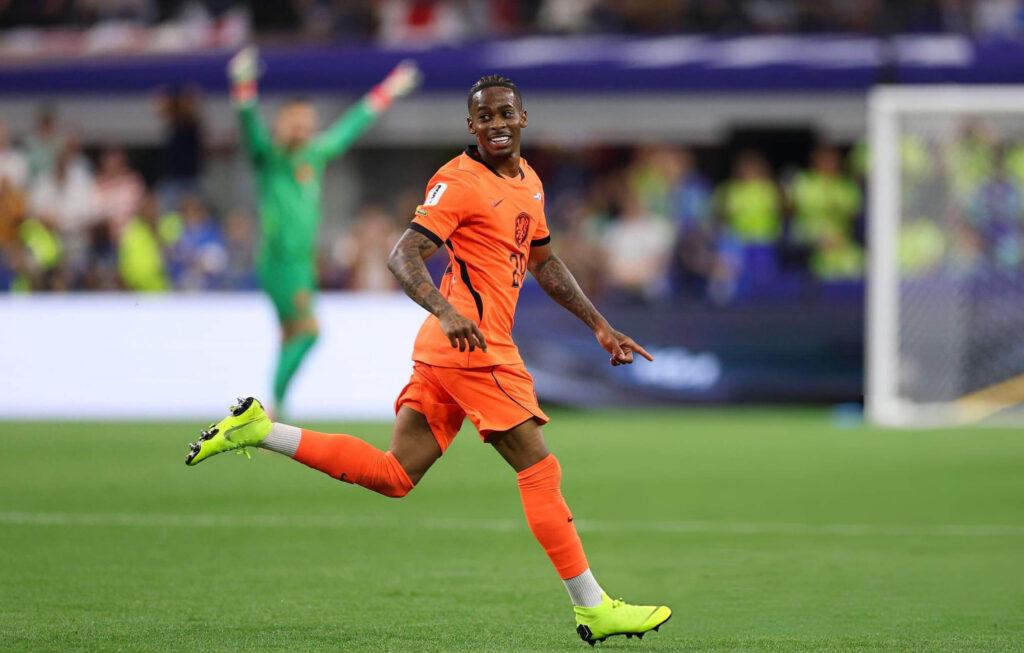
Arlington Match Report: Summerville Leads the Oranje Attack
At AT&T Stadium in Arlington, United States, the 2026 FIFA World Cup group stage continues to heat up. Information from our correspondents on site shows that the Netherlands held a 2-1 lead over Japan at the break thanks to a goal from Crysencio Summerville. The West Ham United winger, wearing the No. 7 shirt, delivered the decisive blow with his only shot in 70 minutes, earning a match rating of 8.2 and becoming the turning point of this contest.
One Strike Decides It: Efficient Finishing from a Low-Probability Chance
Summerville's goal did not come from outright dominance, but it was lethal enough. The data shows he managed only one shot in the match, with an expected goals (xG) value of just 0.02, rising to 0.15 in post-shot quality — meaning the chance itself was hardly "friendly," yet the finish was clean and decisive. Of 39 touches, he completed 25 of 29 passes for an 86% success rate; 24 of 28 passes into the opposition half found their target, and he delivered two crosses with 0.14 expected assists (xA). This is not the type of player who repeatedly creates clear-cut openings, but rather one who pushes every touch toward dangerous areas — a classic "controlled-risk" output profile.
Carrying and Duels: Front-Foot Tempo in Short Bursts
Beyond the goal, Summerville completed 19 carries for a total of 131.2 meters gained, with only one classified as a major forward carry and a longest single carry of 8.42 meters. The overall pattern is short-range, high-tempo carrying to maintain the Netherlands' pressure on the edge of the box, rather than relying on long solo runs. In duels, he won 5 and lost 2, claimed one aerial battle, and drew three fouls; Japanese defenders were repeatedly forced into fouls when applying tight marking. He also made one ball recovery, while seven turnovers remain within a reasonable range for a winger frequently receiving under pressure.
Trend Watch: Ranking Gap and Group Trajectory in Focus
From a periodic rankings standpoint, the Netherlands are seventh in the FIFA rankings with 1,757.87 points, unchanged from the previous edition; Japan are 18th, up one place with 1,660.43 points. During the group-stage buildup, when both sides faced the likes of Tunisia and Sweden, several matches ended 0-0, with the overall tempo cautious and transitions slow. Leading 2-1 in this game means the Oranje have found a more direct way to break through in a tough fixture—Summerville is right at the front of that trend.
In recent years the Netherlands' technical profile has leaned toward possession dominance: group-stage data show possession as high as 59%, 10 shots with six on target, 499 passes at an 89% success rate. Japan typically operate with possession around 41%, 331 passes at an 84% success rate, stressing compact defending and quick switches. Summerville's 24/28 pass completion in the opposition half fits neatly with the Dutch "high possession, high accuracy" style; Japan's back line did not collapse, but their finishing phase was punished when No. 7 seized a low-probability opening.
What to watch next: Can the edge turn into control of qualification?
The match is still in progress. Whether the Netherlands can take a 2-1 scoreline to the final whistle will directly shape the group's qualification picture. For Japan, they must focus before the restart on limiting Summerville's cuts inside and pivots on the ball—his three fouls won show that when Japanese defenders press too tight, they risk giving away set pieces or fouls. If the Netherlands keep using their wing pattern of short carries plus precise switches, that approach could well be replicated against other group opponents. Whether Summerville can sustain an 86% pass success rate and the efficiency of one decisive shot and one goal will be the variable most worth tracking over the coming rounds.