




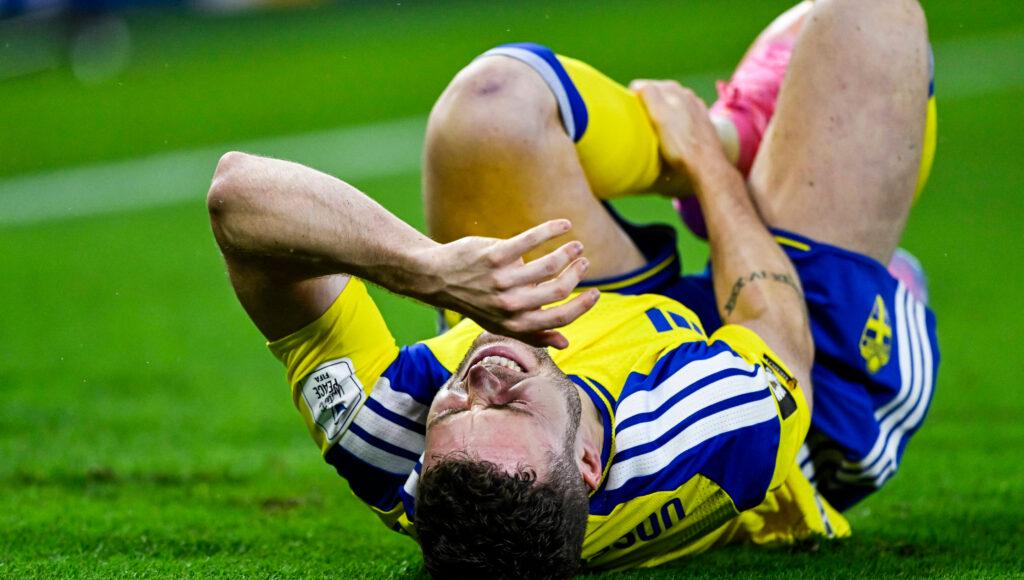
The 2026 FIFA World Cup has yet to kick off, but squad lists are already being rewritten by injuries. According to information we have gathered, as the tournament jointly hosted by the United States, Canada, and Mexico enters its final countdown, several top contenders including Brazil, the Netherlands, Germany, France, Japan, and Spain have all been hit by a heartbreaking wave of "last-window" injuries before kickoff. Some players have already been ruled out of the World Cup entirely, while others, although named to the squad, are still racing against time, and whether they can be ready for the opening whistle remains unknown.
The sheer concentration of injuries is enough to reshape the title race. Brazil currently sit sixth in the FIFA rankings, down from fifth in the previous edition with 1,761.16 points; France lead the way with 1,877.32 points; Spain are ranked second, the Netherlands seventh, Germany tenth and Japan eighteenth. On paper, those numbers suggest a deep pool of genuine World Cup contenders, but as key players have fallen one after another at the tail end of the club season, each side's preparation rhythm has been completely thrown off.
The first shock came from Brazil forward Rodrygo. In March 2026, the 25-year-old international suffered a ruptured anterior cruciate ligament in his right knee, along with damage to the lateral meniscus, while playing for Real Madrid in a La Liga match against Getafe. Surgery was required immediately, ending his club season early and officially ruling him out of the 2026 World Cup. For the Selecao, who have their sights set on winning the title, losing a player capable of providing pace out wide and cutting inside to deliver the final pass will noticeably thin their attacking rotation.
Netherlands' plight is equally grim. In April, 23-year-old midfielder Harvey Simons suffered the same fate—a ruptured ACL in his right knee—during Tottenham's Premier League clash with Wolves. After undergoing surgery in May, his 2025-26 Premier League campaign came to an abrupt halt, and his World Cup dreams were dashed. The Oranje already lean on creative link-up in the final third to knit their attacks together; without Simons, they lose a key metronome in central progression and half-space penetration.
Germany's attack has been hit again. In April, 30-year-old forward Serge Gnabry sustained a severe tear to the adductor muscle in his right leg during Bayern Munich's final training session, and is expected to require around three months of recovery, forcing him out of the 2026 World Cup. For Germany, the loss is not just about firepower—it also affects width on the flanks and the pace of their transitions. Players like Gnabry, who can cut inside to shoot and drift wide to stretch the space, are already in short supply.
France's loss arguably carries even greater weight. In April, 23-year-old forward Ekitike ruptured his right Achilles in a non-contact incident while representing Liverpool in the second leg of their Champions League quarter-final against Paris Saint-Germain. Following surgery, he could need up to nine months of rehabilitation, ending any hope of making the 2026 World Cup. France may still boast depth across the squad, but losing a young striker capable of offering a target and intelligent movement in high-intensity knockout football will narrow the head coach's room for experimentation in the front line.
Japan, Asia’s representative, has not been spared either. Kaoru Mitoma, 28, suffered a serious hamstring strain in May during Brighton’s match against Wolves, collapsing suddenly in full stride before undergoing surgery. He missed not only the closing stages of the Premier League season but was also left out of Japan’s 2026 World Cup squad. For the Samurai Blue, who rely heavily on pace out wide and rapid transitions, Mitoma’s absence will directly weaken their left-flank penetration and the first thrust of their counterattacks.
Brazil’s back line faces another complication. Wesley França, a 22-year-old defender, picked up a left adductor injury just 15 minutes into a friendly against Egypt and was promptly ruled out of the 2026 World Cup. The Roma full-back had been seen as a key rotation option at right-back, but the injury came out of nowhere. Head coach Carlo Ancelotti has been forced to reassess his personnel as he plans wide defensive setups and set-piece work before kick-off.
Looking at the timeline, nearly all of these injuries were concentrated in the March-to-May closing stretch of the club season: anterior cruciate ligaments, Achilles tendons, adductors, hamstrings—different types, but all with recovery windows that clash directly with the World Cup schedule. For fans, that means the star-studded matchups they had been anticipating may be missing from the group stage; for teams, it means multiple preset tactical plans will have to be torn up and reworked.
Our frontline read: this wave of injuries will not alter the participation of hosts the United States, Canada and Mexico, but it will significantly affect how complete the title favourites look on paper. France and Spain still boast overall squad depth, yet losing a cutting edge up front or on the flanks will be magnified in tight knockout ties; Brazil, the Netherlands and Germany must quickly establish alternatives within their existing squads, or group-stage tests that look manageable could expose weaknesses once the round of 16 arrives. In the final week of warm-ups and closed training camps, medical reports will draw more attention than training footage—whoever is fit to start before the opener will do so; everyone else will begin their World Cup journey from the bench.