













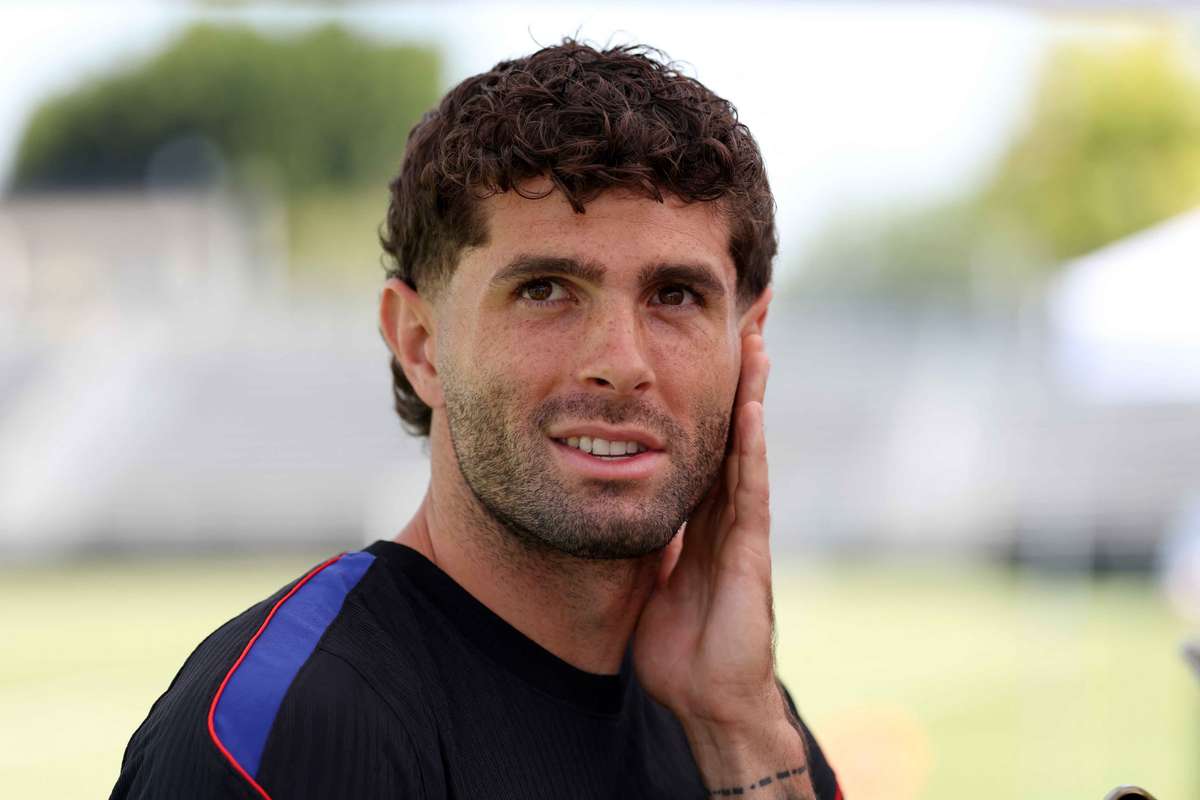
With less than 24 hours until the United States opens its home campaign at this year's World Cup in Los Angeles, captain Pulisic went public with a message: this team "has the ability to compete with any opponent," and intends to show the world what American soccer is really about across its first three group-stage matches. Waiting in the opener is South American tough nut Paraguay.
Home Debut Under Tri-Nation Co-Hosting
The 2026 FIFA World Cup is co-hosted by the United States, Canada, and Mexico, with the U.S. welcoming the global game as host for the first time in 32 years. Based on information available to us, the United States–Paraguay match kicking off at 6 p.m. local time in Los Angeles will be the tournament's first official fixture on American soil; a Hollywood-style opening ceremony will precede it, tying the sporting stage, commercial exposure, and city marketing together on the same timeline — for the hosts, both a moment of pride and a stress test.
From an event operations standpoint, the opening week's tempo has been deliberately raised: high-profile ceremonies, prime-time kickoffs, homegrown stars taking center stage — each link in the chain designed to deliver the "American soccer calling card" on the global broadcast stage for the first time. Pulisic's role therefore goes beyond scoring goals: his remarks are essentially setting the media narrative for the entire national team — not a quiet period of settling in, but entering the group stage as a "genuine force."
Pulisic: Pretty Football Isn't Enough — You've Got to Battle
"We want to be a real force in this tournament." Pulisic's words were blunt and to the point. He also stressed that the team has "three good games" with which to prove itself to the outside world—opening against Paraguay, then facing Australia and Turkey, fixtures that together will shape the picture of progression from Group D.
Head coach Pochettino's warning was equally straightforward: Paraguay has already shown in qualifying that they are hard to beat, even defeating Argentina and Brazil; the competitive mentality and aggression of South American teams will make anyone who underestimates them pay the price. Pulisic agreed with that view and revealed that Pochettino is sharpening a talent-rich U.S. side to be more "street" and more pragmatic. "We know we have to be ready for a physical battle—this isn't just about playing pretty football."
On the pitch, Pulisic finally ended a five-month goal drought last month: he contributed a goal and an assist in a friendly against Senegal as the team won 3-2, injecting a crucial inflection point into their pre-World Cup form curve. The expected starting front line will see Monaco striker Balogun through the middle, flanked by Pulisic and PSV full-back Dest; the midfield is likely to feature McKennie, Tillman, and Adams—all three lines drawn from Europe's top leagues, in line with Pochettino's approach of using intensity to counter South American physicality.
Paraguay: Lowest Ranked, But Far From Short on Confidence
Among the four teams in Group D, Paraguay are ranked 40th by FIFA, the lowest on paper; the United States are 16th, down one spot from the previous update with 1673.13 points. The gap in the rankings is real, but the World Cup has never been decided on paper—Paraguay possess big-tournament pedigree no worse than their group rivals, with head coach Álvaro having guided Ecuador to the last World Cup, deploying a tactical style that stresses simplicity, direct play, and aerial threat, in keeping with the traditional physical edge of South American football.
In terms of the lineup, former Newcastle winger Miguel Almirón and newly signed Strasbourg man Julio Enciso will carry the advancing duties; defensive leaders Omar Alderete and Gustavo Gómez are the key pillars in set-piece situations and physical battles. Data from this site's database shows Paraguay have already been battle-tested during this tournament cycle: a draw featuring 38% possession, seven shots with three on target and six corners highlighted their efficiency in creating danger from set pieces and counters even when under pressure; another away draw with just 23% possession showed they do not rely on possession to survive, treating defensive organization and transition speed as their core strengths.
Group D Landscape and Key Points for the Opener
From the group structure, Australia and Türkiye will battle the United States and Paraguay for a place in the knockout rounds; if the U.S. want to go further on home soil, the result of the opener will directly shape subsequent squad selection and the psychological toll. Mauricio Pochettino, an Argentina native with deep ties to Paraguayan football, said plainly that their "South American brothers" are not to be underestimated—both a mark of respect for the opponent and a way to temper expectations within his squad: a host-nation halo does not guarantee three free points.
For us, the focal points for the Los Angeles opener can be boiled down to three threads: first, whether the first post-opening-ceremony goal can be delivered by Christian Pulisic or Folarin Balogun to fully turn the page on the slump five months ago; second, whether the Tyler Adams–Weston McKennie–Tanner Tillman midfield triangle can maintain a balance of ball progression and counter-pressing under South American physicality; third, whether Sergiño Dest's recovery chain is tight enough when facing the wide thrusts of Enciso and Almirón. If Paraguay can grab points on the road, the Group D picture will quickly become more complicated; if the U.S. win, they can turn the slogan of "becoming a force" into tangible initiative on the standings table.
The whistle is about to blow. This is no ordinary group-stage curtain-raiser, but the first formal test of the tri-nation World Cup on American soil—competitive results and the operational narrative will be judged on the same pitch at once.