


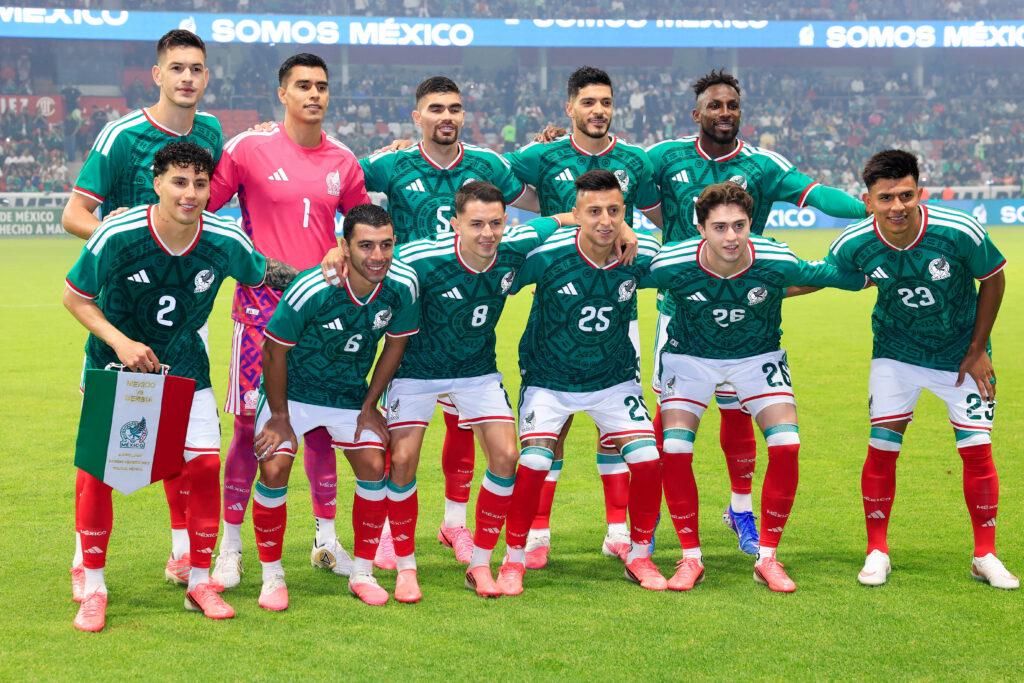
距离2026 World Cup开幕越来越近,墨西哥又一次成为社媒讨论焦点——不是因为某条突发转会,而是因为一组被反复转发的“考勤数据”:自1966年以来,墨西哥已踢满46场世界杯正赛,与德国并列历史第八,仅比比利时多一场。对习惯在ScoreZ、X等平台刷战报的年轻球迷来说,这组数字比口号更直观:墨西哥不是偶尔露脸的“黑马”,而是几乎每一届都不缺席的常规核心。
Behind 46 Matches: A World Cup Regular With Consistent Appearances
Zoom out, and the top of the list reads Brazil with 85, Argentina 76, Italy 66, England 60, France 59, Spain 55, and the Netherlands 53. Mexico sit between Germany and Belgium — the ranking is not at the very top, but it says enough: they have long belonged to the World Cup’s “main tier.” That stability translates directly into depth of experience: multiple generations of players, multiple tactical systems, and multiple high-pressure scenarios all show up as continuous samples on data platforms.
For a World Cup cycle, Mexico’s presence is rarely in doubt — it is the default. FIFA rankings on the site also mark their current position: Mexico are 15th, up one place from the previous update, on 1,681.03 points; Belgium are 9th, Germany 10th, and Paraguay 40th. Beyond their status as hosts, Mexico still need to prove with their form before 2026 whether their bank of experience can translate into a knockout-round breakthrough.
1986 on Home Soil: Mexico's High-Water Mark
If you ask where the brightest benchmark sits on Mexico's World Cup timeline, the answer almost always points to 1986. That tournament was played on home soil. Mexico beat Belgium 2-1 in the group stage, drew 1-1 with Paraguay, and advanced with a 1-0 win in the third match. In the Round of 16, they eliminated Bulgaria 2-0, then drew 0-0 with Germany in the quarter-finals before bowing out on penalties. Across five matches, they scored six and conceded two—the best goal-difference record in Mexico's World Cup history, with clean sheets in regulation time over the final two rounds. It stamped the label of "discipline plus efficiency" on the national team's story.
The image from that tournament that never expires in social-media clips is Manuel Negrete's volley against Bulgaria in the Round of 16. The shot tucked into the corner and has been repackaged again and again in "classic World Cup goals" montages; on shot-heat-map platforms, that strike still sits like a pin, fastening 1986 Mexico to the header of history. To today's fans, Negrete's name may not ring a bell, but the GIF of that bicycle-kick/volley goal often travels further than the full squad list from the entire tournament—precisely how historical memory works in the data-and-imagery age.
From 1986 to 2026: New Questions for the Hosts
The 2026 World Cup will be jointly hosted by the United States, Canada, and Mexico. As one of the hosts, Mexico automatically qualifies without the pressure of navigating qualifying, and will enjoy home scheduling and group-stage arrangements as a co-host. That differs from the 1986 narrative of a single host nation and a home-soil campaign, yet it still pushes expectations to a peak: can 46 matches of accumulated experience be converted into a deeper knockout run in a joint-host cycle?
Belgium and Germany remain the benchmarks for measuring Mexico’s ceiling—the former ranked ninth and the latter tenth in the FIFA rankings. In recent UEFA Nations League fixtures, both have repeatedly ground out 0-0 stalemates against elite opposition, a sign that top-tier defensive standards have not slipped. In one standout 2026 campaign stat line, Belgium registered 27 shots with 12 on target, held 66% possession and scored five goals in a single match; Germany also produced a winning template with 12 shots and 48% possession. If Mexico hope to replicate the 1986 formula of conceding fewer goals and delivering when it matters most, midfield control and transition efficiency will be the non-negotiable metrics.
Paraguay sit 40th in the rankings and are clearly a tier below Mexico on paper, but in a World Cup context, rankings alone never tell the whole story—the 1-1 draw with Paraguay in the 1986 group stage is a reminder of that. For Mexico, the real tests in 2026 will still come from Europe’s top tier and the fine margins of knockout football; a 46-match World Cup résumé shows they belong on this stage, 1986 showed they came within reach of the semifinals, and a Negrete-style moment proves they have what it takes to command global attention.
The headlines will shift and the numbers will move on, but the three-layer narrative of steady World Cup presence, a home-soil peak and iconic moments is putting Mexico at the center of the 2026 pre-tournament conversation. What to watch next: squad turnover under a host-nation schedule, the trend in friendly results, and whether a No. 15 FIFA ranking can translate into genuine knockout-round depth.