








Monterrey Stadium held its breath long after the final whistle. Extra time had come and gone without separating Morocco and the Netherlands, two nations separated by geography and football tradition yet bound together on this June night by the oldest tension in the sport: the belief that history can be rewritten in ninety minutes, and sometimes in five more from the penalty spot.
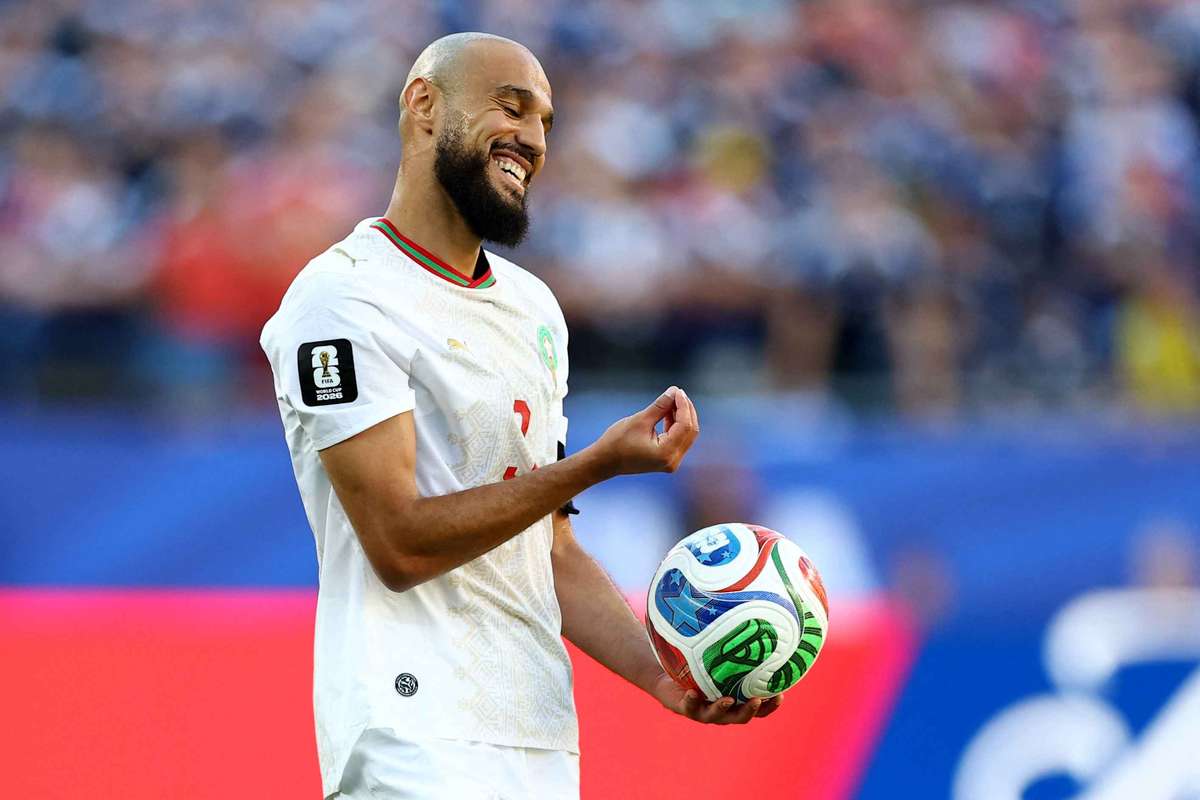
When Soufiane Rahimi, Chemsdine Talbi and Ismail Saibari converted and Yassine Bounou stood firm again, Morocco won 3-2 in the shootout after a 1-1 draw. The result carried weight beyond the scoreline. The Atlas Lions became the first team from Africa to secure a place in the World Cup Round of 16 at this tournament, a distinction that lands differently when measured against decades of near misses, proud campaigns and the long memory of what happened four years ago in Qatar.
The Atlas Lions and the Weight of Continuity
Moroccan football has learned to speak in chapters. The semi-final run of 2022 was not merely a result; it altered how the country sees itself on the global stage and how the world reads African football. That story did not end in Doha. It became a reference point, a standard, and occasionally a burden.
Noussair Mazraoui understands that inheritance. Speaking after the victory, the Manchester United defender framed the win as proof of direction rather than destiny. Every World Cup, he said, demands something new. What Morocco achieved in 2022 belongs to that edition. This one asks for its own evidence.
"We are on the right path as a federation and as a national team," Mazraoui said. "I am happy, and we will stay humble until the end."
The language was deliberate. Humility, in Moroccan football discourse, is not modesty for its own sake. It is the discipline of a squad that knows how quickly a tournament can turn, how loudly praise can echo, and how dangerous it is to confuse one dramatic night with a completed journey.
A Match That Refused to Break
The Netherlands arrived as one of the tournament's most credible contenders. Ranked seventh in the world with 1757.87 FIFA points, they sat one place above Morocco in the global order and carried the reputation of a side built to control phases of play and punish mistakes in transition.
For long stretches, that reputation looked justified. Cody Gakpo gave the Dutch the lead in the 72nd minute, finishing a move that reflected the tactical plan Morocco would later describe with clarity rather than complaint. The Netherlands wanted space behind the ball. They were prepared to absorb pressure and strike on the counter, and for a time the approach worked exactly as drawn.
Morocco refused to accept the narrative of elimination. In stoppage time, Chemsdine Talbi delivered the pass and Issa Diop met it with a header that felt less like a late equalizer and more like a statement of temperament. The Atlas Lions had not lost composure when the match tightened, when the opponent retreated, or when the clock became an adversary.
"We never lost our composure throughout the match, even in the final moments," Mazraoui said. "We did not panic, even when they began to sit back and defend. In the end, there was a brilliant ball from Chemsdine Talbi, and Issa Diop equalised with an incredible header."
Thirty additional minutes produced no further goals. What followed was the cruel democracy of penalties, where technique and nerve must survive the silence between steps. Bounou, already a figure associated with decisive interventions on the biggest stages, again became the story's final authority.
What the Numbers Said Beneath the Drama
The box score alone cannot contain a match of this texture, yet the underlying data helps explain why Morocco believed in themselves even after falling behind. Deployed in a 4-2-3-1, Walid Regragui's side finished with 70 percent possession, 878 passes at 91 percent accuracy, 11 shots and five on target. The Netherlands, operating in a 3-4-2-1, managed six attempts and two on target while holding 30 percent of the ball across 373 passes.
Those figures align with Maz. Morocco increasingly imposed rhythm and territory. The Dutch, by design, invited that trade. They accepted periods without the ball in exchange for the chance to attack the space Morocco left exposed.
"We controlled the ball more in the second half, and I think that was also part of the Netherlands' strategy," Mazraoui said. "They wanted to play on the counter-attack and allowed us to have possession. Their plan worked to some extent because they scored the first goal from a counter-attack."
That honesty matters. Morocco did not pretend they had dominated every minute or that fortune played no role. They acknowledged the quality of the opponent and still claimed the result, which is often the mark of a team mature enough to win without needing a perfect performance.
Beating a True Contender
Mazraoui did not soften his praise for the vanquished. The Netherlands, he said, were among the strongest opponents Morocco could face at this stage, a side capable of winning the entire competition.
"It was a very difficult match against a very strong opponent," he said. "They are one of the best teams you can face, without doubt. They are among the top 10 teams in the world and contenders to win the World Cup. The way we managed to win today says a lot about the work we have put in as a national team."
There is historical symmetry in that remark. Morocco's rise has often been measured against European football's established hierarchies, not because those hierarchies define African ambition, but because defeating them on equal terms remains one of the clearest signals that a national project has matured. To survive Gakpo's goal, survive extra time, and survive penalties against a seventh-ranked European power is to pass a test that statistics alone cannot simulate.
A Continent Watches, One Berth at a Time
Morocco's advancement arrived on a day when the wider African picture shifted elsewhere. South Africa's defeat to Canada closed their campaign, narrowing the continent's remaining hopes even as the Atlas Lions advanced. That contrast is part of the World Cup's emotional geography. Progress for one nation can feel like collective uplift; elimination elsewhere reminds every supporter how narrow the path is.
For Morocco, the immediate task is to protect the tone Mazraoui articulated. Round of 16 qualification is an achievement worth honoring, yet the knockout rounds punish teams that begin to narrate their own legend too early. The defender's insistence on humility was not performative caution. It reflected a squad that remembers 2022 not as a finish line but as permission to expect more of itself.
The Road Ahead Stays Unwritten
Monterrey will remember the shootout, the roar after Diop's header, and the image of Moroccan players gathering around Bounou. The tournament will remember something broader: the first African passport stamped for the last sixteen in this edition, earned against a elite opponent in a match that demanded patience, belief and execution under maximum pressure.
Mazraoui returned to the theme that will likely define Morocco's remaining days in the competition. The federation's work, the coaching staff's methodology, and the players' collective temperament have aligned long enough to produce another signature night. Whether that alignment can survive the next round remains unknown, and that uncertainty is precisely why the Atlas Lions say they will stay humble.
In Moroccan football, pride and restraint have never been opposites. They are the twin conditions that allow a nation to honor its past without being imprisoned by it. On this night in Monterrey, Morocco proved it could win a modern knockout epic. The harder art, as Mazraoui suggested, is to carry that victory forward without letting it become the end of the story.