

















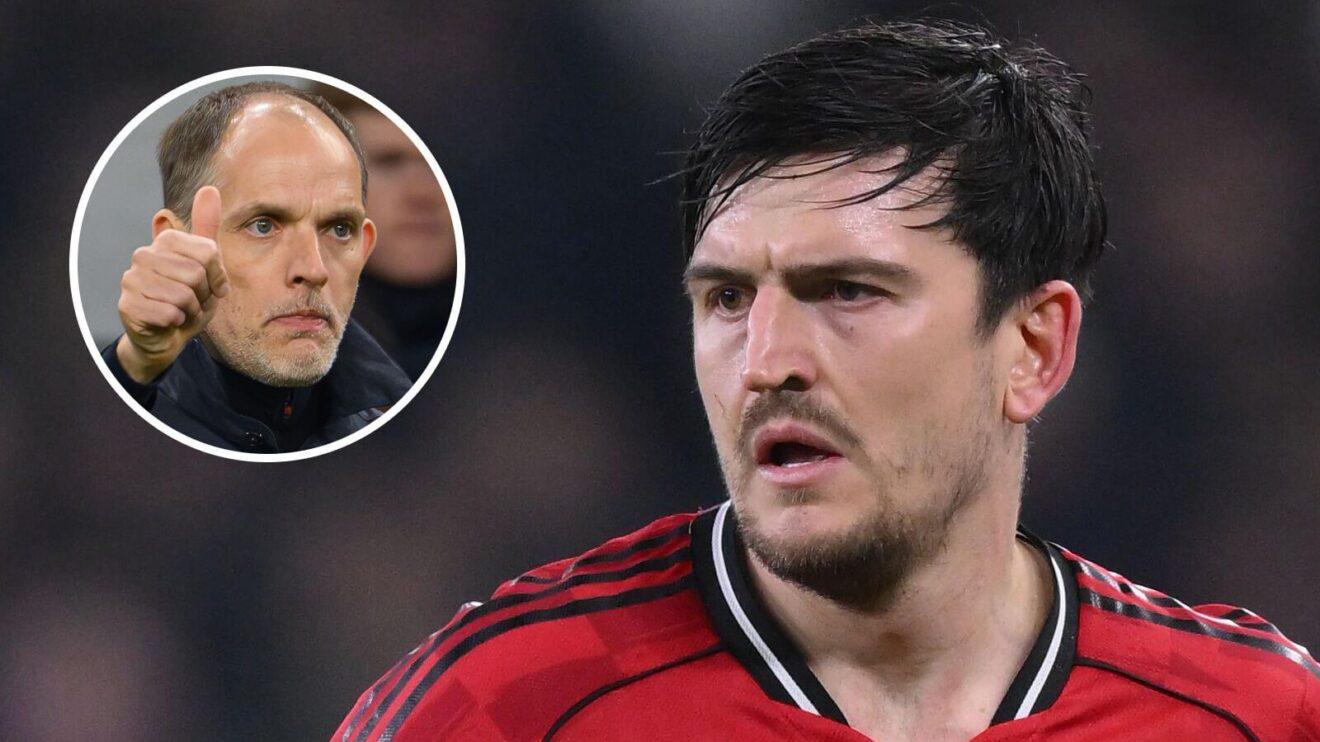
England centre-back Harry Maguire has spoken in detail for the first time about why head coach Thomas Tuchel left him out of the World Cup 26-man squad. The experienced defensive mainstay was steady in the closing stages of the 2025-26 season, yet ultimately lost out to Dan Burn, Jarell Quansah, Ezri Konsa, Marc Guehi and John Stones, among others.
An "Awkward" Video Call
Maguire admitted he was "genuinely surprised" and "very disappointed" when he received the news of his omission. According to our information, Tuchel did not simply notify players individually; he held one-on-one video calls with each of those left out — the players had to face the camera while the head coach struggled to fully read their immediate reactions, making the whole process "quite awkward."
Maguire said he expressed his surprise and disappointment on the spot: "I felt I had done enough to be selected and could help the team; whether on or off the pitch, I still felt I had something to offer." But he also stressed that the manager had chosen his 26 and that this is part of football, and he would move on as quickly as possible.
Six Autumn Matches Became the Selection Dividing Line
On the specific reasons, Maguire relayed Tuchel's explanation: the head coach "found it hard to give an excuse," but clearly favoured keeping the four centre-backs who had stood out during the autumn qualifying window and training camp — in other words, the pairing that had built understanding and completed tactical integration through those six matches.
From a selection-logic perspective, this was not simply about comparing individual highlights from a single phase, but about prioritising those who had "already proved themselves within the system." England faced the Czech Republic, Croatia, Spain and others during the autumn training window, and several 0-0 scorelines underscored that Tuchel at the time placed greater emphasis on defensive organisation and positional discipline rather than risky tactical changes.
Physical Depth in the Centre-Back Line and Tactical Continuity
For a World Cup center back, the toll often does not come from one burst of pace inside 90 minutes, but from repeated accelerations, aerial duels and landings, and deceleration changes under sustained high-intensity contact. For a 193cm defender weighing close to 100kg, maintaining stable output late in the season suggests his lower-body strength and core control have not dropped off noticeably; yet the final national-team squad for a major tournament adds another variable: whether a player fits the existing tactical template and can integrate quickly during a short training camp.
Tuchel’s final five-man center-back setup covers different body types and passing profiles: Stones leans toward build-up play, Konsa and Guehi offer more pace, Quansah represents the new generation, and Burn brings Premier League physicality. Maguire’s strengths lie in experience, aerial duels, and set-piece play at both ends, but faced with a back four already tested across six autumn training-camp matches, the head coach chose to reduce integration costs—a common but ruthless professional call in a tournament cycle.
England remain fourth in the FIFA rankings at 1825.97 points, unchanged from the previous update. The squad reflects immediate competitiveness while also revealing the coaching staff’s read on injury cover and rotation depth: if a center back accumulates muscular load during the group stage, whether a substitute can slot in seamlessly often matters more than carrying one more high-profile veteran.
After missing out, where does Maguire go from here?
For the 31-year-old Maguire, the omission is a real blow, but not a career end point. The 2026 World Cup, co-hosted by the United States, Canada, and Mexico, will still bring a congested schedule and recovery strain from travel and heat for England; if Maguire continues as a regular starter at Manchester United, his numbers and availability next season will be the hard metrics for re-entering the national-team conversation.
According to the thread ScoreZ has pieced together from front-line reporting, Maguire has not publicly questioned the head coach, instead framing his response as understanding the decision and moving on quickly—helpful for keeping his focus at club level. For England, the final quality of the World Cup center-back line will only be tested by the intensity of match action once the group stage begins; for Maguire personally, the most telling professional question ahead is how he turns disappointment into more controlled load management.