

















Houston Night Battle: The Playmaker's Breakthrough Answer
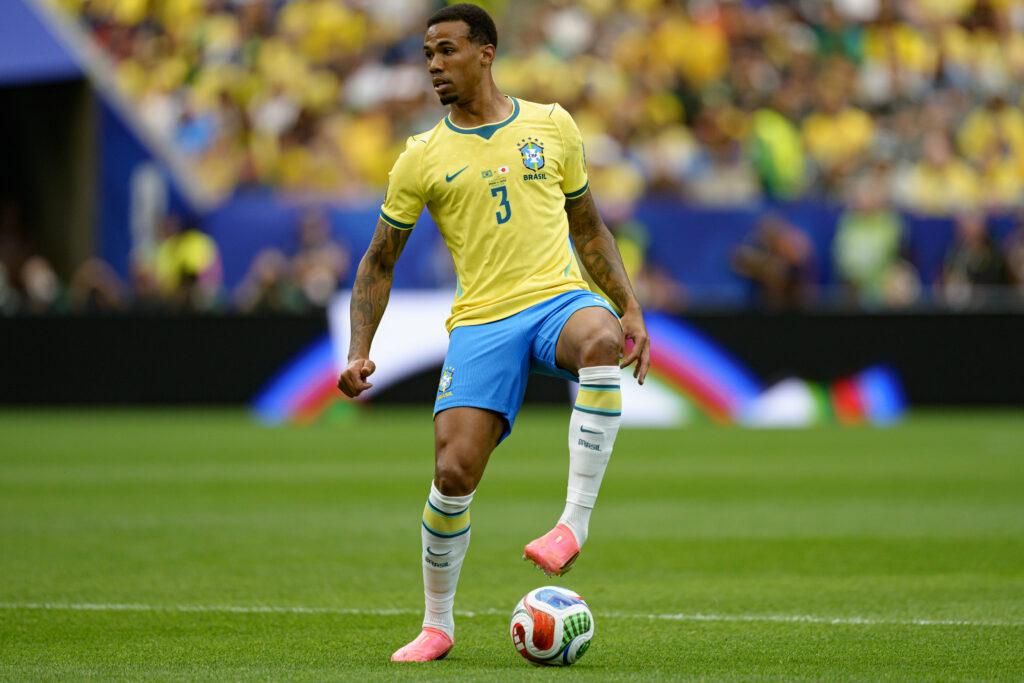
In the 2026 World Cup Round of 32, Brazil and Japan faced off at NRG Stadium in Houston, with Brazil winning 2-1. Amid Brazil's attacking dominance of 69% possession and 19 shots, left center-back Gabriel Magalhães emerged as the true engine of progression: he provided an assist and connected defense to attack with exceptional precision.
Pitch Conditions and Match Risks
NRG Stadium's artificial turf and enclosed setting helped possession-oriented teams maintain passing rhythm, but also made the opponent's first line of pressing more targeted. Japan deployed a deep 3-4-2-1 block, holding just 31% possession and only five shots while committing 13 fouls, aiming to disrupt Brazil's rhythm through physical confrontation. In that structure, whether the back line could play out cleanly directly determined whether the knockout tie would be dragged into a grueling battle.
What the Passing Numbers Reveal About Control
Gabriel completed 130 of 135 passes for a 96% success rate, matching the World Cup single-match accurate-pass record for a Brazil player since 1966. He completed 48 of 49 passes in his own half and 82 of 86 in the opposition half, showing his distribution was not conservative recycling but sustained pressure on Japan's half. One hundred forty-four touches, two key passes, and one big chance created formed the underlying logic behind Brazil breaking the deadlock.
Methods of Progression: From Carrying to Switching Play
He completed 49 carries for a total of 388.7 meters, including 104.3 meters of progressive distance, with his longest single carry reaching 16.8 meters, repeatedly helping Brazil break through Japan’s front-third press. Against a low block, he completed 2 successful crosses from wide areas and attempted 4 long diagonal switches, connecting on 1, creating space to switch play for attacks down the left. Stacked together, these tools forced Japan’s compact shape to absorb the risk of being pulled to the far post beyond their central blocking duties.
Lookahead
The value of a ball-playing centre-back lies in combining tempo with risk reduction, but recovery runs after losing possession remain a knockout-stage concern. Gabriel balanced distribution and defensive intensity over 90 minutes, proving a key piece in Brazil’s victory; if they face more aggressive high pressing in the next round, whether a secondary outlet can share the load will determine how far this approach can go.