

















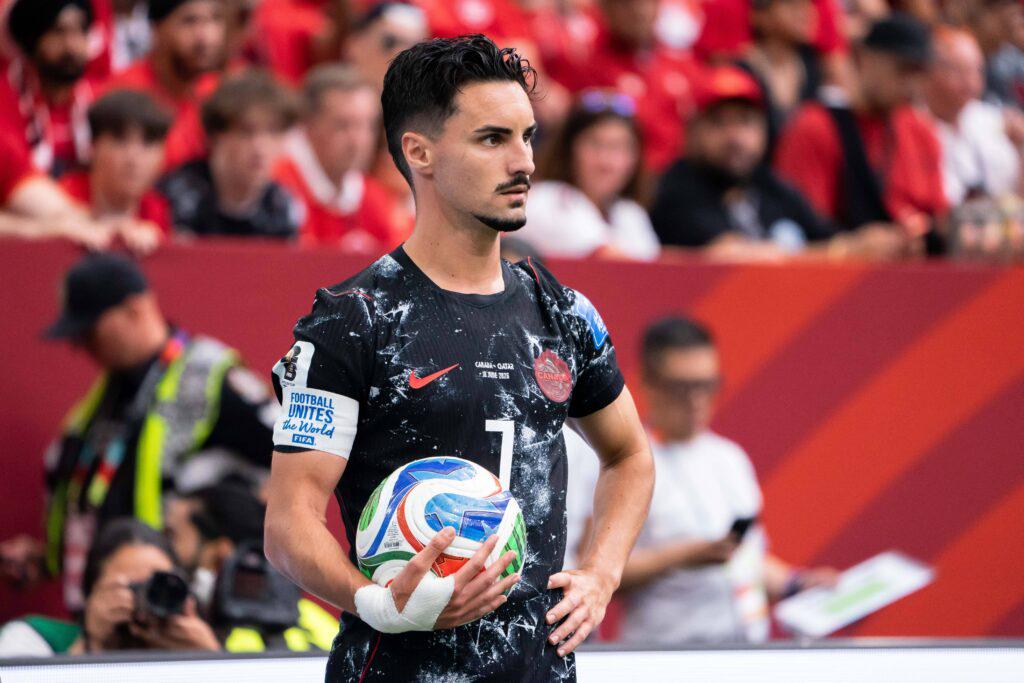
SoFi Stadium drew 69,237 fans, and a summer night in Inglewood brimmed with World Cup knockout tension. When Canada faced South Africa in the World Cup Round of 32, the scoreline settled at 1-0—not a wide-open shootout, but a contest that wore “details” on its face. At center stage was LAFC midfielder Stephen Eustáquio. Club season in California, World Cup knockout in California—for him, it felt like everyday training moved in front of a bigger mirror.
One strike to seal it—timing matters more than the numbers
Eustáquio played all 90 minutes, earning an 8.8 rating from ScoreZ. He took 2 shots, 1 on target, and converted the decisive chance, with expected goals of 0.1124 and expected goals on target of 0.6642—the gap between those two figures shows how cleanly he struck it. Sixty-seven touches, 8 possession losses, and just 1 notable first-touch error—in the high-pressure rhythm of a knockout, those numbers do not read as flashy, but they read like a reliable midfield manual: no forced drama, strike when it counts.
The site’s technical stats also reflected how tight the match was: Canada 12 shots, 7 on target, 42% possession; South Africa 6 shots, 1 on target, 58% possession. South Africa controlled the ball more, yet Canada converted chances in fewer sequences. Knockouts never reward who passes more—only who gets the key pass and the key shot right. Eustáquio’s goal wrote “quality over quantity” into the result.
Organization and defense—one man holding both ends of midfield
On passing, he completed 43 of 48 attempts—18 of 18 in his own half and 25 of 30 in the opposition half. He hit 2 of 3 long balls, recorded 5 key passes and 2 big chances created, and completed 5 of 7 crosses, with 0.61 expected assists. Those numbers underpinned an 8.8 rating and explained why he was the game’s best organizer—not a one-man explosion, but a steady stream of deliveries that put teammates into dangerous areas.
Off the ball he was just as solid: 2 of 3 tackles won, 1 interception, and 6 ball recoveries. Canada needed someone in central midfield who could both lift the tempo and snap back into position the moment possession was lost—Eustáquio did exactly that from first whistle to last. For the casual reader, it’s much like the “all-around role” in work or training: highlight-reel moments get all the attention, but what usually decides whether you’re trusted on the field are the plays that never make the clip package.
From club to national team: treating the “backyard” as a proving ground
Eustáquio plays day to day for LAFC; BMO Stadium and SoFi Stadium sit in the same Southern California soccer ecosystem. A World Cup knockout round played in a setting that felt both familiar and strange—familiar sunshine and rhythm, unfamiliar pressure and stakes. To go the full 90 at a moment like that and score the winner speaks to growth that shows up not only in attacking numbers but in mental steadiness: hold the tempo when it’s time to hold it, push forward when it’s time to push, drop back when it’s time to drop back.
Canada are 30th in the FIFA rankings, South Africa 60th—on paper there’s a gap, but knockouts are never decided by rankings alone. The 1–0 scoreline reminded everyone that in a major tournament, one right decision can undo a whole match of stalemate. For anyone who cares about mass sport and personal growth, the value of Eustáquio’s performance wasn’t how “star” he looked, but the replicable mindset he showed—breaking a complex situation into small, executable choices, then sticking with them for 90 minutes.
In closing
There is no replay button in the World Cup Round of 32. With a match-winning goal and an 8.8 performance across the entire match, Eustáquio sent Canada into the next round while leaving behind a simple lesson: what often truly determines your ceiling is not the peak of your talent, but the lowest rate of mistakes under pressure. Next time you feel anxious in your own "knockout" moment, think of this night—one fewer unnecessary touch, one more accurate pass, and the decisive ball will naturally find you.