









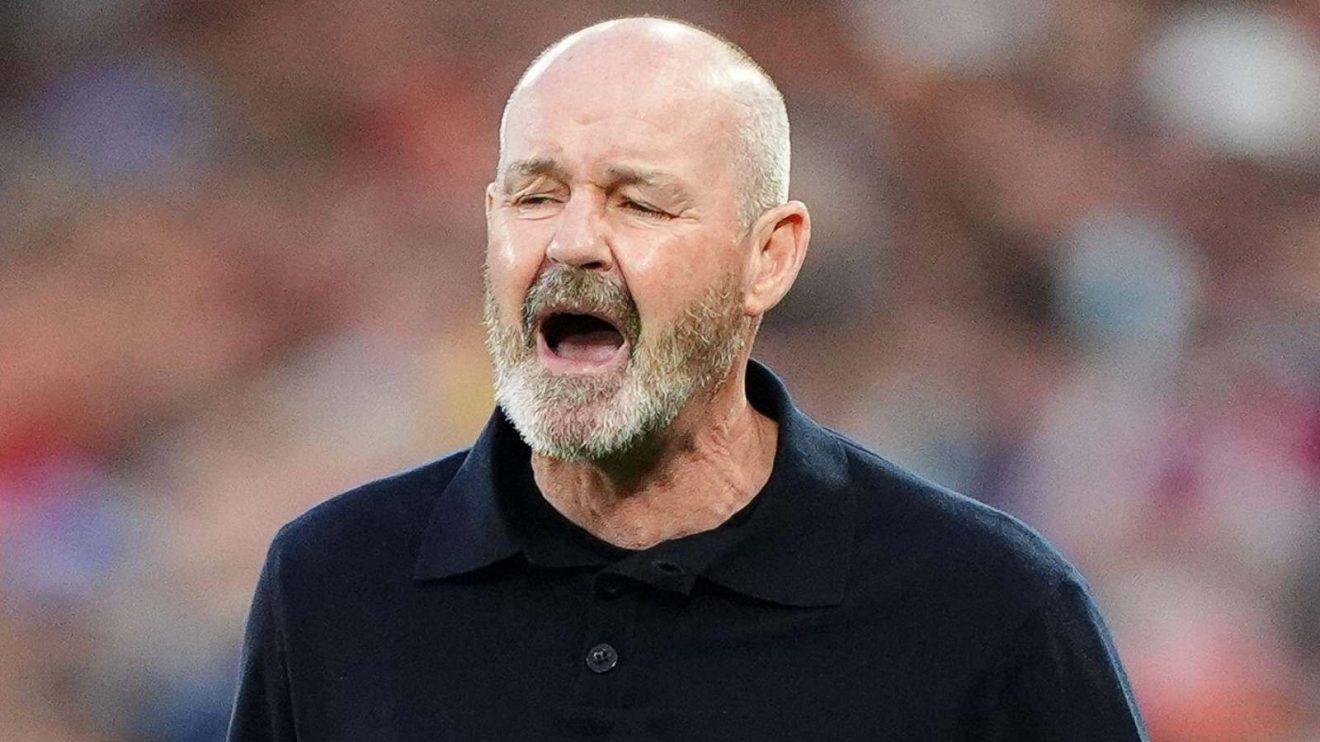
On June 28 local time, Steve Clarke decided to step down as national team head coach after Scotland confirmed they would not reach the World Cup knockout stage. The Scottish FA confirmed the news in an official statement, bringing to a close the 62-year-old coach's seven-year tenure at the end of the World Cup campaign across three North American host nations.
Question: Elimination and resignation arrived almost in tandem
This tournament had been seen as an important window for Scotland to reach the knockout stage for the first time in their history. With the 2026 World Cup expanded to 48 teams and a new round-of-32 stage, more sides theoretically had a path into the knockouts. However, Scotland ultimately finished third in Group C and failed to qualify among the eight best third-placed teams; after Saturday evening's elimination was confirmed, Clarke promptly chose to leave his post.
Group stage opponents include Haiti, Morocco and Brazil. According to FIFA rankings, the three opponents are clearly tiered in strength — Brazil are ranked 6th, Morocco hold steady at 8th, Haiti are 83rd, and Scotland sit 43rd, having dropped five places from the previous update. The expanded format has not changed the brutal logic that results speak for themselves: failure to reach the knockout stage makes it hard to keep the head coach's job.
Escalation: institutional tension between May's contract renewal and elimination
The timing of this resignation stands in stark contrast to the Scottish FA's earlier long-term planning. In May this year, Clarke had just signed a new deal, originally set to lead the team through the 2030 World Cup and continue in charge for Euro 2028 — when the tournament will be jointly hosted by the UK and Ireland. The "long-termism" at contract level and the "short-term result" of a World Cup group-stage exit collided sharply within the same summer window, forcing the Scottish FA to respond quickly between public sentiment and organisational governance.
The Scottish FA in its statement still referred to Clarke as "one of the most successful managers in national team history," emphasizing that during his seven-year tenure he led the team back to the men's World Cup—Scotland's first appearance in the World Cup finals in 28 years—and achieved consecutive European Championship qualifications. Chief Executive Ian Maxwell acknowledged that the group-stage exit disappointed everyone, but "the undeniable progress made during Steve's seven years in charge should not be overlooked."
From an institutional perspective, such official framing is not merely emotional consolation. When Clarke took over in 2019, Scotland was still positioned as a fourth-tier team; since then they topped their World Cup qualifying group, completing the FA's core mission of "returning to major tournaments." Clarke's departure is therefore not just a personnel change, but a recalibration of the relationship between "results—planning—contracts": when immediate tournament results fall short of expectations, even with long-term contributions recognized, the head coach position remains hard to hold.
Analysis: Seven-Year Legacy and Subsequent Governance Issues
In his farewell statement, Clarke reserved his most heartfelt words for the players. "Without them, none of the memories we have built from 2019 to today would exist," he said. "Being called their Gaffer is truly an honor." He thanked the Scottish FA and fans, and wished his successor well. This formulation places personal sentiment alongside the handover of duties, and also sets clear boundaries for the Scottish FA's upcoming manager selection process—the new coach must build on the existing major tournament qualification and address the problem of being unable to advance further in the World Cup group stage.
Maxwell specifically mentioned the Tartan Army's performance in the three North American host countries: thousands of fans traveled to places such as the United States, making huge financial investments to support the team's return to the World Cup. Success at the fan-culture level, juxtaposed with stagnation at the competitive level, forms the two parallel narratives of Scotland's story at this tournament. The FA stated that as the disappointment of elimination gradually fades, supporters will ultimately cherish the memory of proudly following the team to major tournaments again—essentially making room for the next phase of public opinion management and the manager selection window.
From a scheduling and fitness management standpoint, the 48-team World Cup format means a denser group-stage rhythm and shorter recovery windows. Scotland repeatedly posted 0-0 results during qualifying, showing some defensive resilience, but major tournaments demand greater attacking efficiency and squad depth. Group rivals Brazil and Morocco have both produced strong attacking numbers at the World Cup—high possession, shots, and pass completion rates. If Scotland is to advance from the group at future tournaments, beyond the choice of head coach, how to keep key players sharp within limited recovery periods and optimize rotation strategy are also issues the FA must put on its governance agenda.
Outlook: Euro 2028 and the New Manager Question
After Clark’s departure, the Scottish FA’s foremost institutional question is who will take charge of Euro 2028 and related home and regional fixtures. The original contract plan for the “Clark era to continue through 2030” no longer holds, and selection criteria will inevitably weigh “maintaining tournament continuity” against “seeking a tactical breakthrough.” With the team already on the path to the European Championship, the timing of the new appointment, coordination with clubs, and whether a tactical rebuild can be completed before 2028 will directly determine whether Scotland can turn the milestone of “returning to the World Cup after 28 years” into sustained competitiveness at major tournaments.
For Scottish football, Clarke's seven-year tenure has already left a clear mark in the history books: from Pot 4 to the World Cup, from absence to consecutive European Championships. The disappointment of a World Cup group-stage exit is real, but the FA's choice to define his contribution as "one of the most successful managers" shows that at an organizational level, it still tends to evaluate this cycle from a long-term perspective. What comes next is how to translate that assessment into a governance plan for the new cycle—that is the real next test facing Scottish football.