














When the World Cup reaches the knockout stage, what Canada and South Africa are about to play is not just an ordinary first-round-of-the-last-16 tie—for both sides, this is uncharted territory.
Canada had been eliminated in the group stage at their previous three World Cups; this time they have finally rewritten history. South Africa, appearing at the World Cup for the fourth time, finally sealed a place in the knockout rounds with an attacking display in the final group match. Two teams still finding their way through rebuilding and transformation will meet in Los Angeles, and the ups and downs of their respective group stages already tell the story of how potential translates into on-pitch impact.
South Africa: From Doubt to Response
South Africa's group stage was like a steep learning curve. In the opening match against Mexico, the team set up in a defensive-minded shape and barely produced anything, and 74-year-old Hugo Broos soon came under fierce criticism. In the second match against Czech Republic, Broos switched to an attacking approach but had to rely on a somewhat fortunate penalty to scrape a draw.
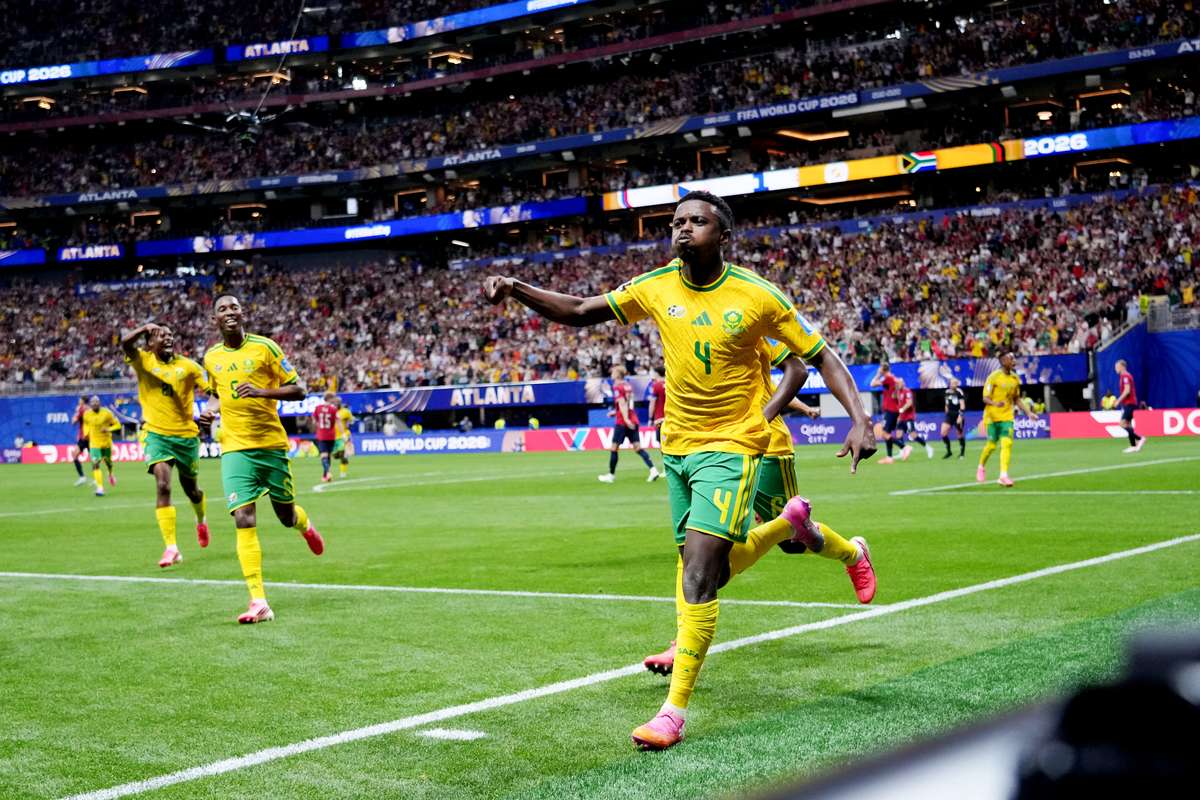
The turning point came in the final match against South Korea. The entire South African side looked like a different team, with pressing and transition speed in attack that bore little resemblance to what had come before. In the 63rd minute, Thapelo Maseko scored to help the team win 2-1 and advance as group runners-up—behind only hosts Mexico.
“I am very proud of the team’s performance,” Broos said after the match. “I think we have given an answer to those who have been talking big for weeks and felt we had to change the guard.”
For South Africa, Maseko’s goal was not just a winner—it was an example of young players stepping up at a critical moment. Currently ranked 60th by FIFA, the team’s late surge in the group stage gave real match images to the idea that “the fourth time would finally be the breakthrough.”
Canada’s group stage was also full of shifting roles. A 6-0 rout of Qatar in Vancouver was their first World Cup win in history; sandwiched between that was a draw with Bosnia, and a 0-1 loss to Switzerland in the final round, as they advanced as group runners-up. Ranked 30th by FIFA, the regret of being just one step from the top was that they could not keep playing in Vancouver.
“We’re sorry we have to leave you, but you don’t have to leave us,” the Canadian team told home fans on social media, hoping supporters in red could cross the border to Los Angeles.
The bigger variable is captain Alphonso Davies. Due to injury issues, Davies did not appear in any of the three group-stage matches; Jesse Marsch revealed that he is expected to return on Sunday (in the knockout stage).
"He can make a huge impact physically, on the football side, and mentally—getting our captain, our best player, back in the lineup," Marsch said.
For Canada, Davies' return is not just about adding a full-back—it puts the anchor of their entire growth trajectory back on the pitch. During the group stage, Ismael Kone was sidelined with a fracture against Qatar, and questions remain over the match fitness of Stephen Eustaquio and centre-back Moise Bombito—the depth of rotation in midfield and defence will determine whether they can turn a "first-ever qualification" into a "first-ever knockout win."
Personnel Battle: Suspensions and Returns
On the South Africa side, key midfielder Teboho Mokoena returns from suspension, bringing the metronome of their transitions back into the fold; but veteran Themba Zwane remains in the final match of a three-game ban triggered by a red card against Mexico and is unavailable. Zwane's absence means Bafana Bafana will need to keep backing a younger, more aggressive pressing approach in attack—consistent with the path that worked in the final group-stage round.
Before They Meet
This is the first time Canada and South Africa have met in a knockout match in World Cup history, and also a stacking of each team's respective "firsts": the first knockout fixture after a first group-stage exit, the first test of their growth under do-or-die pressure.
South Africa must prove that the attacking football they showed against South Korea was no flash in the pan; Canada must prove that, with Davies back, the team can carry Vancouver's momentum to Los Angeles. For observers watching how young players step up into new roles on the big stage, that may be precisely what this match is all about.